
Many anglers focus on crappies during spring when the fish move shallow to feed and spawn, but they give up after the water warms and crappies head for deeper water. Big mistake.
Sure, springtime crappie fishing can be off-the-charts fantastic. That said, the action can be fickle during early season. For example, let’s say you have a 3-day outing planned for spring crappies, and a cold front hits the day before your trip? There’s a good chance the fish will leave the shallows and stop feeding, leaving you scratching your head.
Contrast that situation with summertime crappies, which often position themselves in deep weeds on breaklines, or suspended over deep water a short distance away from underwater points, inside turns and humps. A summertime cold front doesn’t affect deeper crappies to the same degree. Sure, the bite might slow a touch, but their location doesn’t change dramatically.
I love pursuing crappies during summer because they are usually eager to strike, and it’s rare for me to see another angler targeting them. And as I just explained, a cold front doesn’t negatively affect them to the same degree as it would in spring.
Forget Live Bait
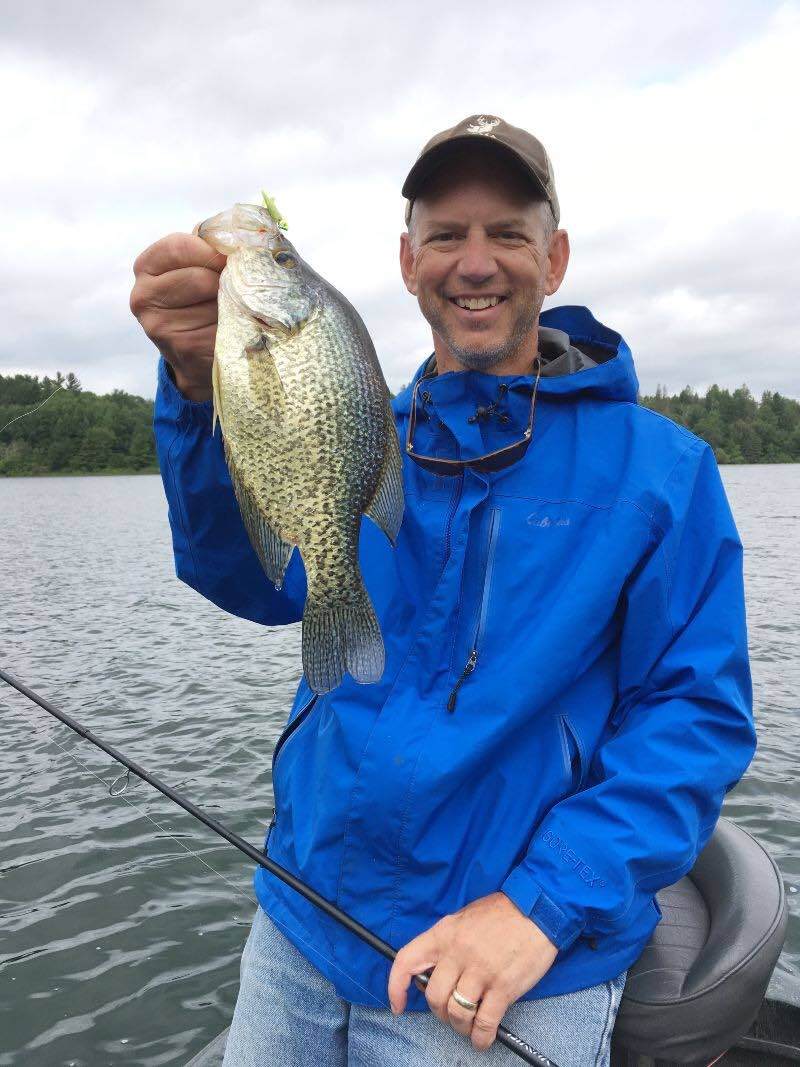
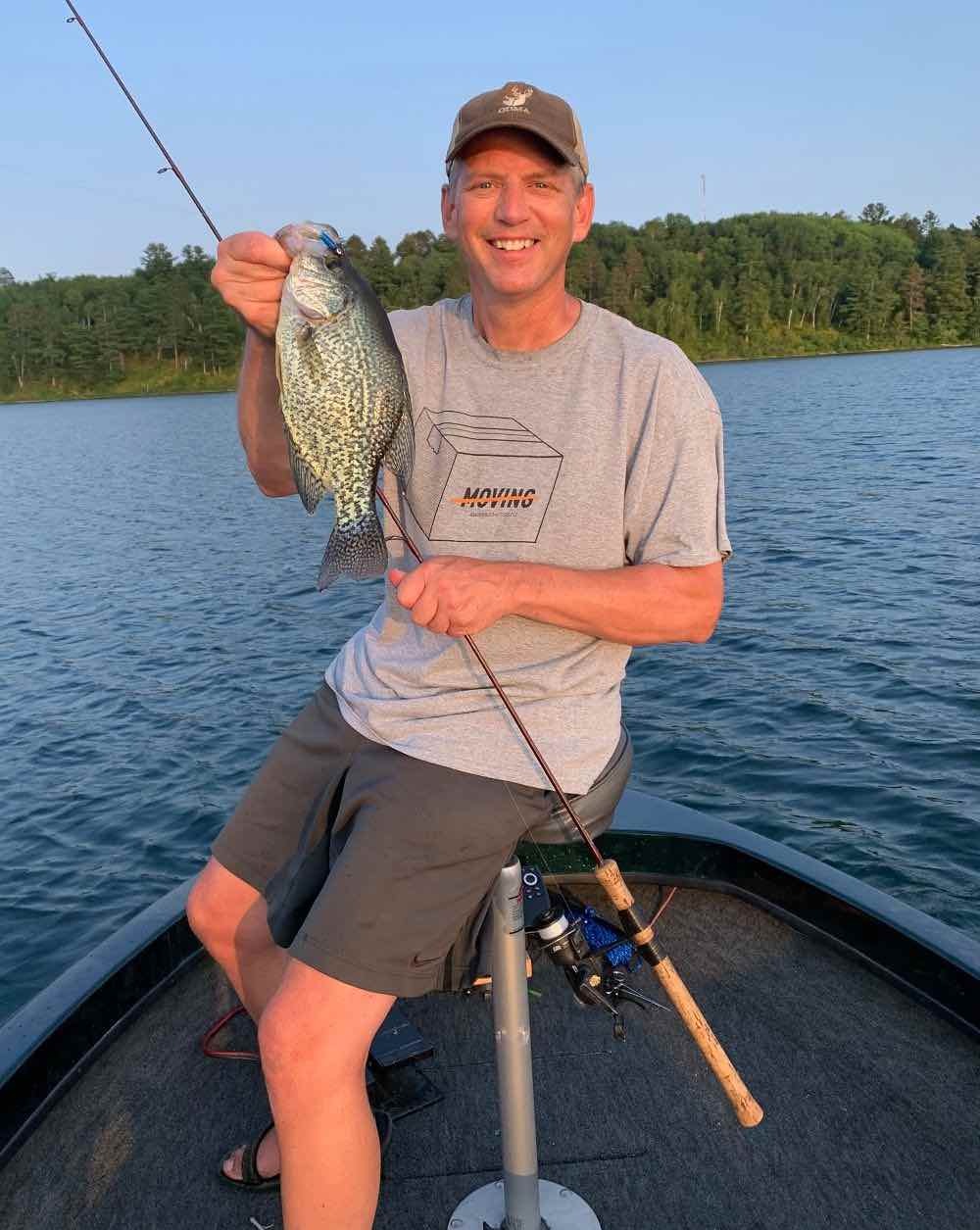
Because I don’t own a forward-facing sonar unit, I find summertime crappies by casting my favorite crappie lure — a 1/16-ounce tube jig. This is not the time to soak a live minnow under a bobber, which is the preferred method for many springtime crappie anglers. Trust me, you can catch far more crappies — big ones, too — with artificial lures that imitate real minnows, and a tube jig is the No. 1 choice.
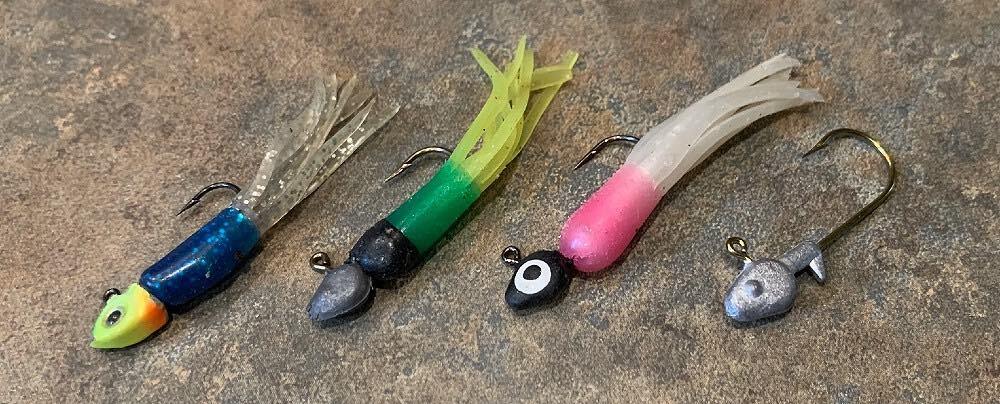
In my opinion, the reason a tube jig is so effective is because it closely mimics a minnow, provided you rig it on the right jighead and retrieve it correctly.
For best results, your tube jig should feature a wedge-shaped head (see photo below). This head will cause the lure to dart side to side, much like that of a live minnow. In contrast, a round-head jighead will move up and down during a slow retrieve. Will a round head work at times? Sure. But when using tube bodies, I’ve never seen someone in the boat using a round-head jighead outfish someone using a wedge-shaped jighead.
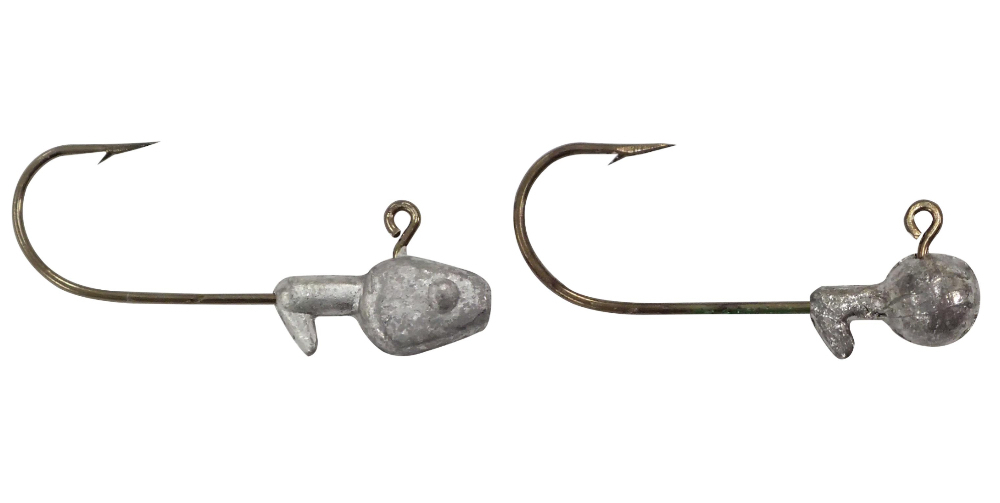
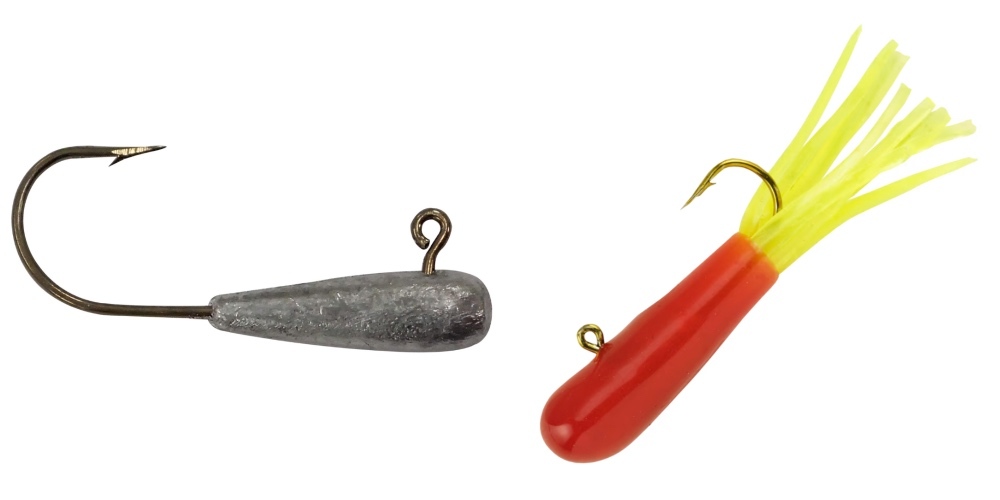
The tube body itself is a perfect marriage for the wedge-shaped jighead. Unlike a twister-tail body, which fights the side-to-side darting action of a wedge head, a tube body provides zero resistance. And the tube’s squid-like tail section undulates slightly, giving the lure even more triggering action.
As for tube body colors, if I could only choose one, it’d be all white. In clear or dark water, white seems to show up well to crappies. You can purchase tube jig lure kits that include a wide variety of tube body color options; this allows you and your boat partners to experiment. Note: The tube bodies often come two-tone; the front half is one color and the tail section is another color. You’ll even see tubes featuring three colors.
In addition to all white tube bodies, my go-to tube colors include green (front) with chartreuse (tail), blue with silver, and pink with white. If I can find summertime crappies, I know they will bite one of these four color options.
I mentioned earlier that I prefer a 1/16-ounce wedge-head. At times I’ll go lighter, a 1/32-ounce head, when the depth is less than 8 feet, or when crappies are positioned high in the water column, say suspended only 5 feet down. The problem with the lighter jig is it’s more difficult to cast, especially if there’s much wind. Note: Most of the tube jig kits come with 1/32-ounce jigheads; you’ll likely have to purchase 1/16-ounce jigheads apart from a kit.
Click here to see a wide variety of jigs from Southern Pro Tackle, which is the author’s favorite brand when it comes to jig heads and tube bodies. Click here to see the company’s tube body choices. I use the 1.5-inch Lit’l Hustler bodies on 1/32- and 1/16-ounce heads, but move up to the 2-inch bodies when big fish are likely. Note: The 1/16-ounce heads have a larger hook, which also makes them a better choice for hooking and landing large crappies.
Rods, Reels, Lines and Retrieves
I use a 7-foot, graphite, ultralight spinning rod for fishing tube jigs. I match it with an ultralight spinning reel, spooled with 4-pound-test Trilene XL clear mono. To effectively cast a lightweight tube jig, you’ll need an ultralight rod-and-reel combo.
How you retrieve a tube jig is critical for success. You’re trying to make the tube jig look like a darting minnow. Begin by making a long cast (at least 15 yards). Let the jighead sink for a few seconds, then Immediately lower your rod tip toward the water, but don’t point your rod tip at the lure. Instead, hold your rod tip at nearly a 90 degree angle to your fishing line and lure.
The retrieve is a slow pull-and-pause sequence. You wind up slack line during the pause. The pull (about a foot-long, slow sweep of the rod) causes the tube jig to move forward and dart to one side or the other. The short pause allows the jig to fall a few inches toward the bottom, which mimics an injured minnow.
As you pull-and-pause the tube jig, watch your rod tip. It will load (flex) and unload (straighten) as you pull and pause. A crappie strike won’t be violent. In fact, when I teach anglers this technique, I tell them, “It’ll feel like your tube jig has hooked a wet sock.”
You usually won’t see your line twitch during a strike. And you usually won’t feel a tap through the graphite rod blank. The reason is a crappie almost always sucks in your tube jig during the pause, when the lure is falling and your line is slack. It’s only when you go to slowly pull the lure again that you feel weight on the end of your line. Again, it’ll feel like you’ve hooked a wet sock.
When you feel the weight, there’s no need to set the hook hard. I simply wind a bit faster and sweep the rod away from the fish, keeping my rod tip low. Crappies have the nickname “papermouth” for a reason; if you apply too much pressure on the hookset or during the fight, you could rip out the hook. Take your time and enjoy the fight.
One more tip: Bring a small landing net. With an ultralight rod and 4-pound-test line, you can swing into the boat only small crappies, those measuring less than 7 or 8 inches. Any fish larger than that and you’ll want to reach down and land them by hand. Remember, you’re using only 4-pound-test line. Knots can break, mono can get nicked, etc. For crappies measuring 12 inches or more, it’s handy to have a net. Really big crappies — 15 inches or more — are strong fighters, and they often shake their heads violently at boatside when you attempt to grab them; use a net to avoid the heartbreak of losing one at your fingertips.