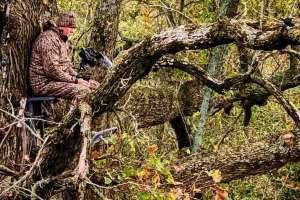

This spring my 23-year-old son Elliott introduced two of his buddies to turkey hunting. Matt is a casual hunter for ducks and deer, and Sawyer had never hunted anything before.
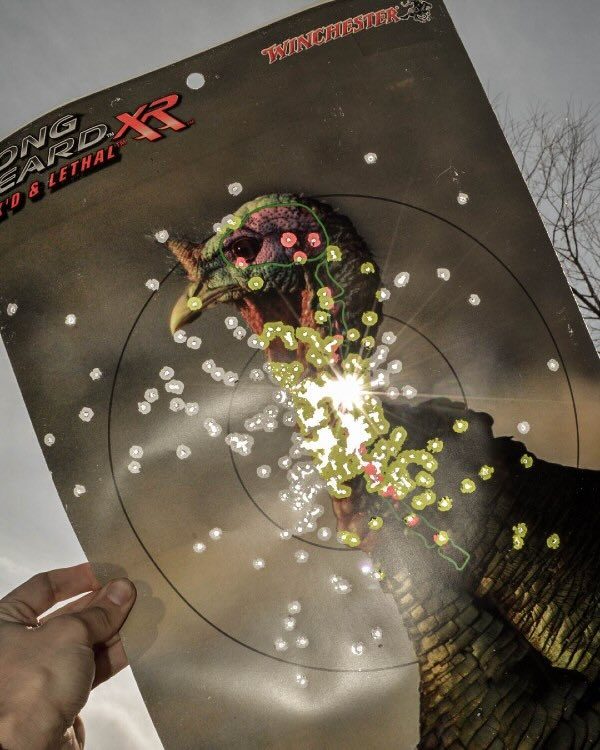
Because he understands that shotgun chokes and loads should be tested/verified before going into the field, Ellliott spent an afternoon with his buddies shooting paper (turkey targets) at 30 yards. Once everyone was dialed in at 30, Elliott tested a couple rounds from 40 yards, too.
The plan was his buddies wouldn’t shoot beyond 30 yards, and they’d have decoys set up at 20-ish. Elliott’s friends would be hunting private land. Elliott’s testing at 40 was simply in case both of his buddies tagged out and then Elliott could run-and-gun on some nearby public land.
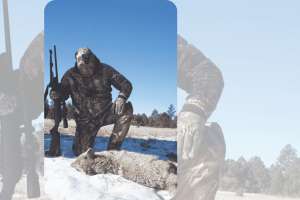
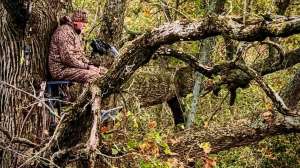
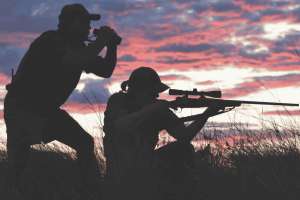
Thankfully, the turkeys read the script and both newcomers dropped mature toms on the first morning of their hunt. Elliott was sitting with Sawyer, and Matt was sitting a few hundred yards away with his dad, who owns the land. (This was also the dad’s first time experiencing a turkey hunt. He didn’t buy a turkey tag for 2026 but plans to next spring!) Both gobblers were strutting beside jake decoys when the No. 5 copper-plated lead pellets hit home. The two birds died within an hour of sunrise (top photo).
The following afternoon, Elliott filled his tag with a well-placed 42-yard shot on a public land jake that was slipping away through the woods (not coming anymore to the call).
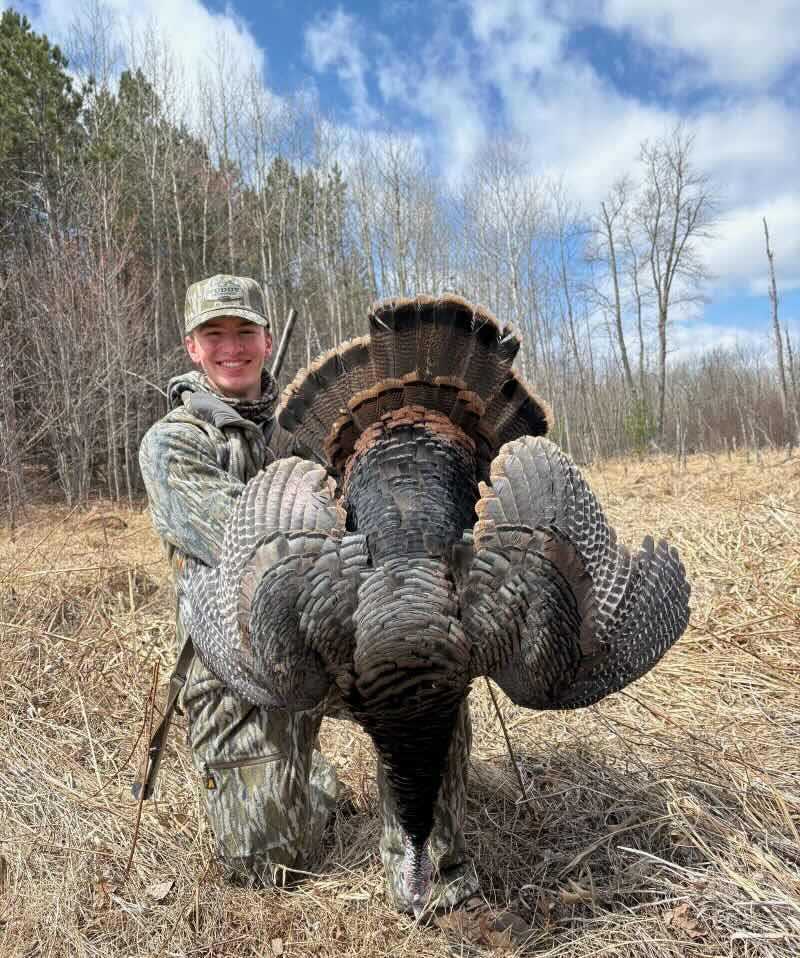
Success stories like these are possible provided hunters do everything right during the moment of truth. Sadly, the results aren’t always so positive, and here are the top three reasons why.
1: Shooting Too Far
Knowing your shooting range and the pattern of your gun/choke/load at a given range are critical to avoid missing or wounding a turkey. You likely won’t have the luxury of checking the range with a laser rangefinder; a turkey will spot your movement. Instead, simply range objects beforehand. On a field, it’s smart to push a large branch into the ground to mark your maximum range.
Here’s my 2 cents on long-range shots on turkeys: Don’t do it! Turkey hunting is a game of “how close” not “how far.” Depending on pattern density, even a well-placed long-range shot can miss or injure a turkey. There’s nothing wrong with passing a shot because it’s not ideal. I can promise you this: If no one shot beyond 45 yards, we’d have far fewer misses and bad hits. And 30 is better than 45. And 20 is better than 30. So if a tom or jake is slowly approaching your decoys, let him get closer.
2: Not “Hunkering Down”
In the spring woods, my son prefers to carry my ancient Remington Model 870 turkey gun instead of his more modern semiauto waterfowl gun. Why? Because my 870 has two beads on the ventilated rib to help with aiming at a stationary target; his waterfowl gun has only a single bead.
When aiming with a single-bead shotgun, it’s common for turkey hunters to not “hunker down” on the barrel; their head is too high. Yes, the bead at the end of the barrel might be on a turkey’s lower neck when the trigger is pulled, but the pellets fly high because the shooter wasn’t looking down the barrel properly; the rear of the gun is too low.
The shooter must have his or her dominant eye low to the barrel. Having two beads is a huge help. Sure, you could use a red-dot scope, but then the same gun can’t be used for waterfowl, grouse, etc. Two beads work well. If your shotgun has only a single bead, ask a gunsmith about adding a second.
3: Not Having a Solid Rest
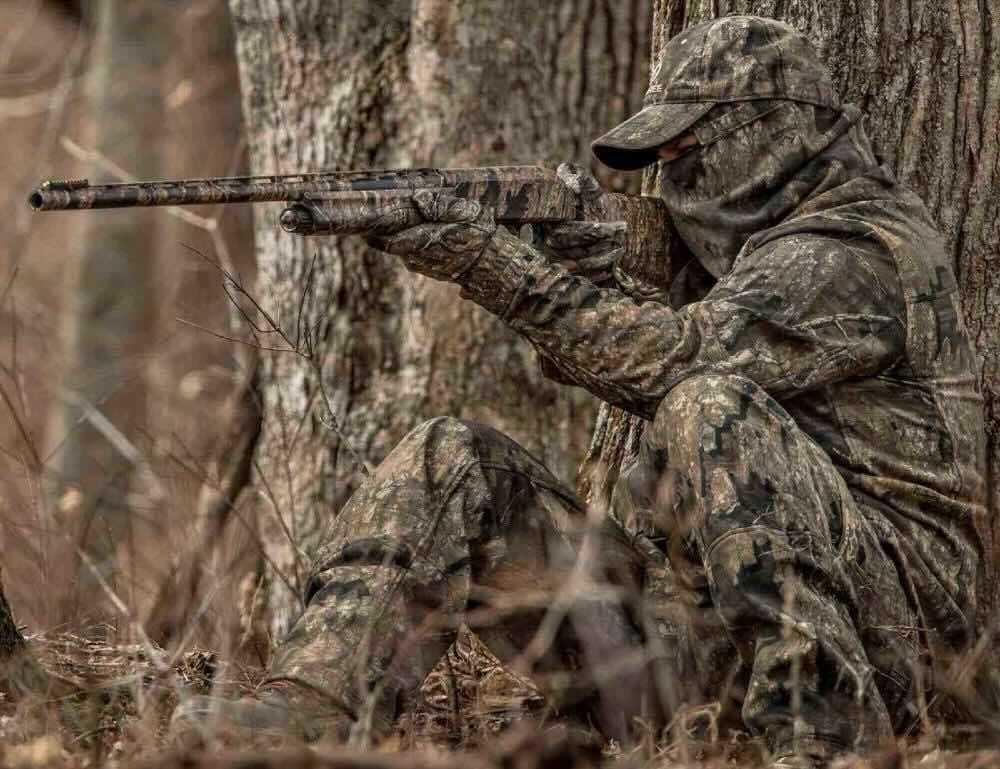
Most turkey hunters sit with their back to a tree, lift a knee and then rest an elbow or hand on their knee to stabilize the shotgun when aiming. Almost all shotguns have heavy triggers, so shooting one freehand at a stationary target such as a turkey is a recipe for disaster. I’m also a big fan of using a monopod for a shooting rest while waiting on a turkey.
Elliott’s two buddies shot their birds from stable sitting positions, guns resting on elbows supported by raised knees. Solid.
Elliott was standing at the moment he spotted the exiting jake, and he smartly dropped to a position with one knee on the ground. Resting his elbow on his other knee, Elliott quickly built a solid base for his shot. He didn’t simply fire freehand and hope; that’s how you miss — or worse.
This spring in the turkey woods, take the time to verify that your gun/choke/load is patterning well at 30 and 40 yards; and don’t feel pressured to shoot at 50 or beyond. Hunker down on the barrel and aim properly; pick a spot. And finally, make sure that you have a solid rest.
Good luck, and be safe in the turkey woods!