
The animal was digging for all it was worth at the bottom of a canyon. I watched it through my binocular, and seeing only its dull gray-brown backside, I was convinced it was a raccoon. For whatever reason, my teenage brain decided to hike down there and mess with it. That turned out to be a bad idea.
It was a spring day in central California in the 1980s, and I was shooting ground squirrels with my Ruger 10/22, just enjoying my time outside. At 19 years old, I was exploring public-land hunting opportunities near my home, and with this wildlife sighting, the day was about to become memorable for the wrong reason.
Down in the canyon, I snuck within feet of the preoccupied animal. Using the butt of my rifle, I bumped the rear end of the almost buried critter. Without warning, the badger exploded out of its burrow and began chasing me down a narrow creek bottom. Running backward through the dry creek, the growling, snarling animal chased me for close to 100 yards before peeling off down a side drainage. Out of breath and a bit shocked, I sat there recovering from the encounter. That was my first experience with a badger.
American Badger
The American badger is a squat animal, barely standing 6 inches at the shoulder. Referred to as a low-slung mammal, its body is flattened and stocky with a broad back. The badger is known for its digging ability, with long, strong front claws designed for excavating burrows and foraging for rodents. It has a distinctive black-and-white striped face and thick, tannish fur. Badgers are typically solitary, nocturnal animals found in open grasslands, forests and fields.
Badgers feed primarily on ground-dwelling rodents such as ground squirrels, prairie dogs, gophers and marmots. They also opportunistically take insects, reptiles and carrion. When they locate a reliable food source, they often dig a series of burrows nearby. I’ve routinely seen badgers set up in the center of active ground squirrel populations or prairie dog towns. Their presence is tied directly to food.
They are considered furbearers here in Idaho. Despite that designation, their season is essentially open year-round, running from July 1 through June 30. There is no bag limit, and they are widely viewed as a crop pest. This makes them a practical off-season target for predator and varmint hunters.

Habitat Preferences
When I hunt badgers, I focus on two types of habitat: open grasslands with an active food source and edge habitat surrounding agricultural fields. Both offer everything a badger needs. When hunting agricultural ground, I always secure permission from the landowner before entering.
The next step is identifying a consistent food source. If you find concentrations of ground squirrels or prairie dogs, badgers won’t be far away.
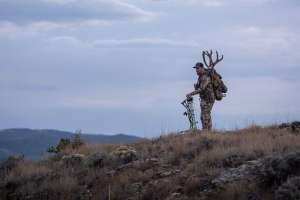
Badger hunting is primarily a spot-and-stalk pursuit. Once you’ve identified a productive area, find a vantage point and glass. While badgers are mostly nocturnal, they can be active during daylight, especially in spring. I prefer early morning or late afternoon. Idaho does not allow night hunting for badgers, and I don’t consider hiking around in the dark, surrounded by badger holes, a good idea.
When badgers aren’t hunting, they’re digging. They can create several burrows in a single day. These holes are typically 4 to 5 feet deep and large enough to accommodate a basketball. Hunters can often spot active digging by plumes of dust and dirt being thrown into the air. About half the badgers I’ve taken were located while they were digging.
Fresh burrows have loose dirt piled around the entrance. Old burrows are hardened, often filled with vegetation and unused. When hunting agricultural areas, I often drive on access roads looking for fresh diggings. Badgers will dig just about anywhere — including the middle of ranch roads.
Best Badger Medicine
Badgers are tough animals that can absorb a surprising amount of energy. It’s important to use enough gun to anchor them where they stand. If they make it back to a burrow, recovery could require digging.
I’ve taken badgers with the .17 HMR, .223 Rem., .204 Ruger and .22-250 Rem. All will kill a badger, but not all will anchor one. While the .17 HMR is accurate, I’ve had animals make it back to their holes after being hit. With the larger calibers, they’ve consistently gone down where they stood.
Another thing to understand — badgers are almost always in a bad mood. When confronted, they’ll turn toward the threat, growl and posture aggressively. If they think they can run you off and make it back to cover, they will. I’ve been chased more than once. I’ve come to think of them as angry little bath mats.

Cheryl’s First Badger
Starting in 2021, my wife Cheryl developed an interest in hunting. She’s had success with small game and upland birds, but had yet to take a badger.
One fall day, we were driving a two-track in the Idaho flatlands when we spotted a badger running down the road. I tried to close the distance, but it veered off into knee-high grass and disappeared. We followed its tracks to a burrow. I looked down into the hole and saw the badger staring back at me before it disappeared underground. I knew if we acted quickly, Cheryl might get another chance.
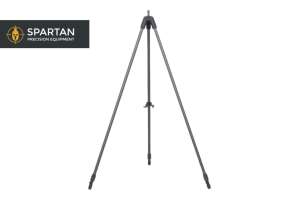
Back at the truck, I set her up about 75 yards from the burrow. The only rifle we had was a Savage .17 HMR, which she shot well. Once she was settled on shooting sticks, I drove off to give the impression we had left.
Watching through my binocular, I saw her get ready, and about 15 minutes later I heard the shot.
When I returned, she told me the badger had poked its head out but didn’t offer a shot at first. After a few minutes, it climbed out and paused at the entrance. She placed the crosshairs behind the ear and fired.
At the burrow, we could see the badger lodged near the bottom, nearly 4.5 feet down. It was dead — but out of reach. We returned with tools and spent the better part of an hour digging it out. At one point, Cheryl climbed into the hole herself and pulled the badger free — a 23-pound male, and her first. She was beyond excited.
Badgers are common across much of their range and active throughout the year. Focus on productive habitat, locate a food source and glass from a distance before making your approach. Hunting regulations for badgers vary by state, so check before heading out.
If you’re looking for something different during the predator hunting offseason, badgers are worth your time. Just remember two things: Bring a shovel — and never, ever crawl headfirst into a badger hole!