
When it comes to catching largemouth bass, nothing is more exciting than using topwater lures, but unfortunately the window of opportunity for this technique is rather limited. The vast majority of the time, you’ll need a sub-surface lure to entice strikes, and one of the best — and most versatile — choices is a soft-plastic stickbait.
In the same way people refer to facial tissue as Keenix, some anglers often call all stickbaits by the name Senko, which is actually the model name of a stickbait made by the company Yamamoto.
The Senko has reached legendary status because they catch bass like crazy. Period. That said, the Senko isn’t my No. 1 choice when it comes to using a stickbait for three reasons: cost, durability and sink rate.
- Cost: A 10-pack of 5-inch Senkos (the most popular size) sells for $7.99 (MSRP), and many online retailers sell them for $7.69. So best case, a Senko is 77 cents per worm. A 100-pack costs $64.99, reducing the price per worm to 65 cents.
- Durability: Check out the 2-minute YouTube video below and you’ll see that the Senko is pretty soft, at least compared to most of the other stickbaits on the market. Yes, under certain conditions, this softness could possibly result in more strikes from bass. This softness does give the worm a bit more of a shimmy on the fall when rigged wacky style. In my experience, however, I haven’t noticed more strikes when fished side-by-side with another stickbait brand, and there’s no doubt that other stickbaits will catch more fish per worm because they don’t tear as easily.
- Sink rate: Watch the video below and you’ll also see that an unweighted Senko falls pretty fast. I’ve fished many types of stickworms during the past few decades, and without question, the Senko has the highest sink rate. While this can be an advantage in a few instances, I much prefer stickbait designs that fall slower.
Advantages of the YUM Dinger
As teased in the title, my favorite stickbait is the YUM Dinger. I specifically prefer the 5-inch model; it’s also available in 3-, 4- and 6-inch sizes.
- Cost: An 8-pack of 5-inch YUM Dingers sells for $3.99 (MSRP and most online retailers). That’s 50 cents per worm. A 100-pack costs $27.99, reducing the price per worm to 28 cents. Compare that to the Yamamoto Senko: when bought in bulk, the Dinger is less than half the price.
- Durability: The durability test in the video below showcases the difference between a YUM Dinger and a Yamamoto Senko. A Dinger is much tougher, meaning you can catch more bass on a Dinger than you can a Senko before the solf plastic rips. Important note: Make no mistake, the YUM Dinger doesn’t feel hard to the touch; just the opposite. It’s a very soft worm, and bass don’t spit them out because they feel unnatural.
- Sink rate: As I mentioned before, I don’t like the fast sink rate of a Yamamoto Senko. As shown below, an unweighted YUM Dinger falls very slowly, which is perfect for targeting shallow-water bass, either rigged Texas-style or as a wacky rig.
Top Rigging Options
While a Yamamoto Senko was the original stickbait, in my opinion, the YUM Dinger is a better choice for the reasons I’ve described here. It’s no exaggeration to say that I use a Dinger almost every time I’m on the water for bass during spring, summer and fall, and often it’s the only lure I use.
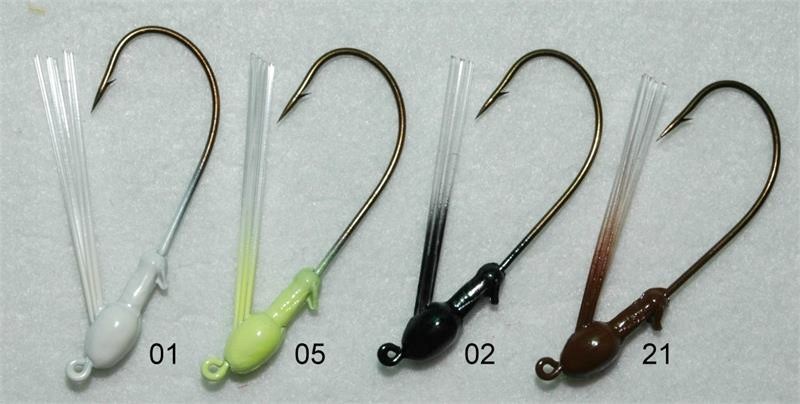
When bass are in shallow water and the cover is minimal, I’ll rig the YUM Dinger wacky style, using a 1/0 VMC Weedless Neko Hook. When bass are deeper, I’ll thread it onto a weedless 1/8-ounce J-mac Finesse Jig Head; if the wind is more than 10 mph, then I’ll go up to the 1/4-ounce J-mac option. Of course, you can rig it Texas-style, too.
One final comment about using stickworms: Because of their bulky shape, you tend to get fewer annoying strikes from sunfish as compared to using a soft-plastic worm with a thinner profile, and especially one with an action tail.
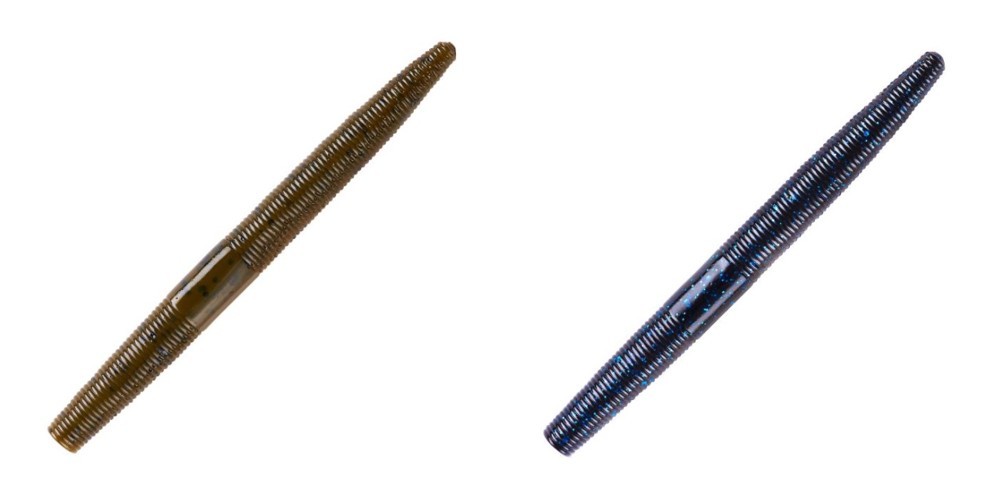
If you’ve never used a YUM Dinger, I urge you to give it a try. I buy 100-packs of 5-inchers every winter in preparation for spring, and it’s money well spent. My favorite colors are Black/Blue Flake (works best in murky/dark water), and Green Pumpkin (clear to moderately dark water).