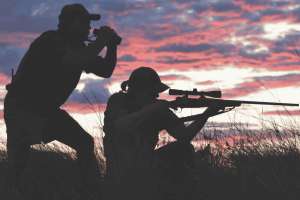

In the 1-minute YouTube video below, Dr. Grant Woods from GrowingDeer TV discusses how to adjust your aim when rifle hunting for whitetails. Note: This same advice holds true for pursuing all big game, provided you’ve chosen a deep-penetrating bullet that will pass through an animal’s shoulder bone and then through the chest cavity.
The margin for error is smaller when an animal is quartering-toward vs broadside because the kill zone is smaller. That said, my preferred shot angle with a rifle is quartering-toward. The reason is a quartering-toward deer hit with a proper bullet will either drop in its tracks or run a short distance, often less than 20 yards.
A well-placed shot through both lungs of a broadside deer will quickly kill it (in my experience, approximately 10 seconds in most cases), but it can still run up to 100-ish yards in that time before expiring. This distance might not sound like a lot, but if those 100 yards are down into a steep ravine or across a river, it can make recovery much more difficult.
Example: When I’m pursuing whitetails on a food plot and I have a rifle in hand, I’ll never pass up a quartering-toward shot on a stopped feeding deer and wait for a broadside one. Assuming I have a solid rifle rest, I’ll take the quartering-toward shot immediately because the chance of the deer dropping in its tracks is very high.
The shot range is a factor, however, on when I’ll take a quartering-toward vs broadside shot. Let’s say a deer is 150 yards or more from my ambush and I have a solid rifle rest. This is far enough — for me — that I’ll wait for a broadside shot (bigger target = easier shot). If the deer is 100 yards or closer, and feeding calmly (i.e. no rush), I’ll wait for a quartering-toward shot so I can drop the deer on the spot.