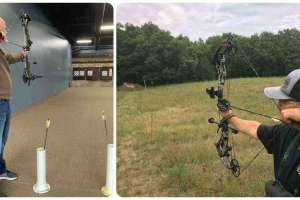

Smacking foam with arrows flung from a new bow excites you for fall hunts ahead, but why waste spring? Many of you follow the release of new bows from late fall into the new year and have a budget ready to pair up with a new bow-friend. Six months or more may pass from these early marketing launches to fall hunting seasons. Instead of endlessly perforating your 3-D buck target, consider breaking up the monotonous bonding with a spring hunt.
DIY and affordable options abound for a test run with your new bow. Nothing tops the true connection you have with a bow than trials in the real world. From treestand tryouts to squished conditions in a ground blind and then add in weather, plus some backwoods’ bumps, the testing excels beyond what a standard archery range can deliver. If your view includes only a foam target at the end of your shooting distance, consider one or more of these hunts to buddy up beyond the norm with your new bow.
Turkey for the Adrenaline Rush
New or veteran hunters alike should never take for granted the adrenaline rush delivered by a strutting, gobbling gobbler. For years I’ve advocated that wild turkeys deliver one of the best introductory hunts for young hunters, plus furnish ongoing buck fever hunts for seasoned bowhunters.
You cannot go wrong with wild turkeys simply due to their success of populating nearly every niche of the nation. Currently 49 states — all but Alaska — offer turkey hunting seasons. Many of those licenses are available over the counter. That adds up to a hunt you can DIY or even seek out an affordable outfitted hunt. Turkey hunting outfitters abound with some of the best deals for a guided hunt of any game species.
With turkeys oftentimes found in your backyard, a spring hunt doesn’t have to be laboriously planned. Sight in your new bow, purchase a license and begin watching the weather during hunting season. When you see a forecast with agreeable weather, launch your hunt.
Although the term “bird brain” may be tossed around to someone lacking intelligence, you will not say that to a pressured tom. Turkeys survive due to suspiciously questioning everything and changing behavior when things don’t look right. They sport vision that is five times better than your own and obviously see colors due to the vividness of a tom’s tail, plus changing head color during breeding sessions.
Sharp eyed, wild turkeys rarely miss any movement in their surroundings to test your stealthiness. Their hearing nearly matches their eyesight and research estimates it is four times better than your own. They’ll hear calls from a long distance, plus catch you accidentally snapping a branch.
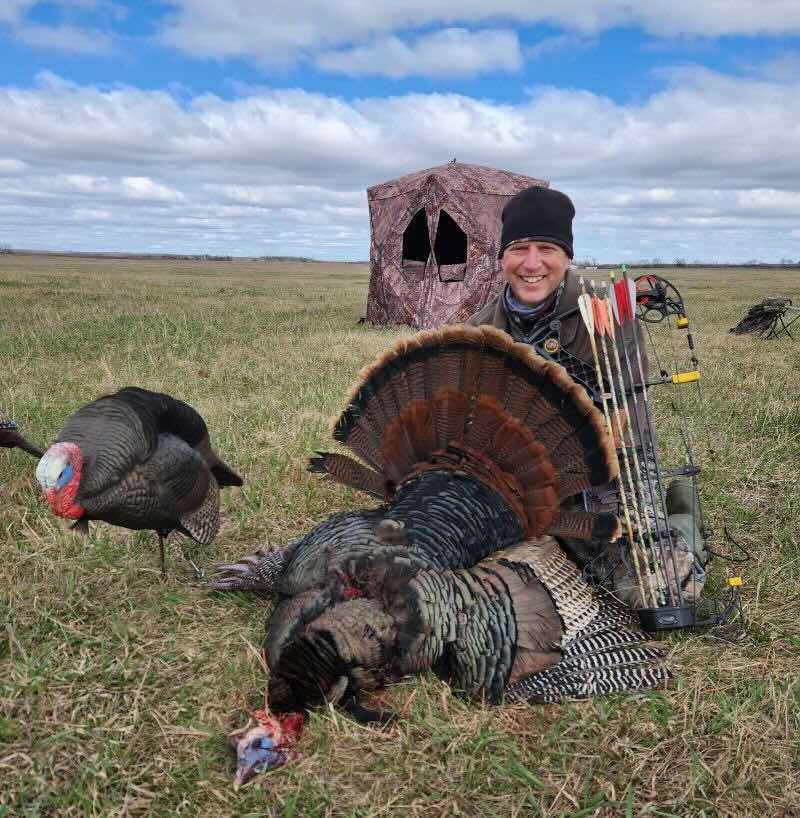
Hunting near home on a whim when the weather cooperates is possible due to long spring seasons. Many states offer seasons that extend nearly two months, and a handful have archery seasons that open before the general shotgun season, such as the popular turkey state of Kansas. And you may not be limited to just one turkey — consider Alabama with its one gobbler per day and four gobblers during the season. South Dakota offers an archery turkey license, plus you can research tribal hunting scattered across the state for additional hunting opportunities.
What makes turkey hunting stand out as a true test of your new bow is the ability to hunt in a controlled or freelance setting. Scouting roost or loafing areas gives you the ability to stake a pop-up ground blind beforehand. Hunting from a blind offers comfort in inclement weather and a cloaked setting to draw. Add in the use of decoys and calls to create a studio production of a turkey soap opera, and the stage is set for a close shot. You need those close shots as turkey vitals are small. Close shots also boost confidence and that’s the goal of getting in step with your new bow.
Maybe you live on the wild side and would rather stalk a wild turkey? Moving through the turkey woods, calling to locate a bird and then hastily setting up a decoy while you melt into the backdrop also spikes internal adrenaline. Regardless of how you wish to close the distance to your arrow comfort zone, add wild turkeys into your spring calendar. They provide an easy option to get to know a new bow.
Black Bear for the Scare
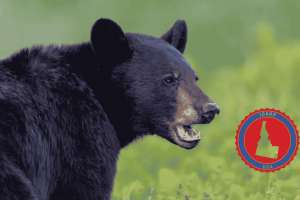
Have you completed your bucket list hunt for bears? It’s an ideal hunt to knock off your list as you connect with your new bow. Although not as unpredictable as a grizzly bear, black bears are an apex predator and have been known to attack on odd occasions. Set those worries aside and plan a spring black bear hunt. The reasons abound why a spring black bear hunt makes sense.
First, black bear populations have been expanding from coast to coast in the United States with stable populations throughout Canada. Not only have hunting opportunities expanded due to expanding black bear populations, but the nuisance factor of too many bears grows with the population in many areas. Peruse the news and you will see many black bear stories about urban encounters, spring and fall, of bears leaving the woods to consider new homelands.
Black bear hunting strategies vary from state to state and province to province so do your research. My home state of Wyoming allows baiting while next door in Idaho you can bait, plus use hounds in some areas. Just to the north sits Montana, which prohibits bait and hounds, leaving you strictly with the challenge of a spot-and-stalk hunt. And states with burgeoning black bear populations may not even hold a spring season. I recently hunted whitetails with a landowner from Vermont overwhelmed with black bear depredation with bears targeting their cornfields. Laws allowed them to kill the destructive bears but yet no spring season to add more control over an obviously thriving population.
I’ve been on baited plus spot-and-stalk hunts enjoying all. That said, I must give a slight nod to baited hunts. Areas such as Alberta or Saskatchewan, with high bear numbers, offer a circus of bear activity around a bait. You can often shop for the bear of your choosing, weed out sows with cubs, and are almost guaranteed a good broadside shot as a bear investigates the bait. Ground blind or treestand hunts give you the familiarity of a whitetail hunt with 20-yard shots being the norm.
Regardless of the hunting method you choose, do your research. Some areas may have unlimited licenses, but quotas, primarily with the taking of female bears, can quickly close a season. Talk with conservation officers in your top choices to see how quickly a quota may fill to help plan your spring hunt.

If you already have an uneasiness about black bear hunting, I’d suggest looking into an outfitted hunt. Like turkey hunts, black bear hunts don’t have the high price tag of a species such as elk. You can easily book a black bear hunt for under $4,000 and sometimes less than $3,000. Many Canadian hunts include fishing with black bear hunting packages, and some areas in Alberta still offer two bears per hunter … been there and done that!
The reasons are many to consider black bear hunting as a spring adventure with your new bow. You get a rush on a game animal that equals the size of many of the species you will hunt later in the fall. And oh yeah, it could eat you, but doubtful!
Varmints Galore
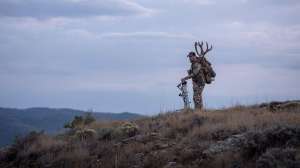
It’s easy to overlook simple spring hunts that could challenge you in ways that do not break your budget, especially after doling out a considerable amount for a new bow. An outfitted hunt may not be in your future, but think small. Varmints inhabit every nook and cranny of North America. Some irritate you to the point of pest control while others offer a big enough target to launch an arrow from your new bow. You can target varmints close to home or plan a distant DIY trip to test your bow, test your camping gear and possibly even scout for a future big game hunt.
Are you having trouble conjuring up which varmints to target? Think “Little Critters on the Prairie.” The irritating, yet comical antics of the black-tailed prairie dog immediately offers an archery challenge. These plentiful varmints irritate ranchers by gobbling grass for livestock and with their barking yip, provide entertainment while you stalk in close for a shot. Prairie dog colonies are found across the Great Plains and throughout Western basins. They thrive on many public lands including National Grasslands and Bureau of Land Management tracts. Do a bit of hiking from roads and you can easily find unpressured prairie dogs that may be joined by young of the year later in the spring. It’s an ideal way to practice long shots, too. And to avoid losing arrows, consider a judo-style point that catches, not burrows, into brush and soft ground.
You don’t live near a prairie dog, nor have time to travel to their ZIP code? No worries. In the East you can pursue Punxsutawney Phil’s brethren in farm fields north and south. Farmers appreciate the removal of these diggers. Varmint hunters of the northern tier of America can seek out the Richardson’s ground squirrel. Midwestern varmint hunters visit pastures to place crosshairs on the small thirteen-lined ground squirrel. Even California has a varmint problem with its abundant California ground squirrel.

All of these, including prairie dogs, offer vital zones measured in millimeters, but the whop of a judo or old broadhead stuns them with a hit almost anywhere. These critters will positively test your shooting ability.
Some of you may skip the rodents altogether and keep summer busy with hog hunts in states where the problem allows hunting year-round. Those varmints even offer a chance to feed your grill with choice cuts. (I can’t say the same for a plump prairie dog.) Finally, even if you cannot plan a spring varmint hunt, remember that there are no seasons. Put your varmint hunt on hold until summer or the month of your choosing.
A varmint-sized species may not seem like much of a challenge, but when you combine long shots with their eagle eyesight, yes evolved from dodging winged raptors, you may find yourself in the stalk of a lifetime. I admit, some gophers may not require a ghillie suit, total camouflage and a crawling approach, but Punxsutawney Phil and his cousins have been known to run for the hills when they see a vertical shape approaching. My experience with pressured prairie dogs is the same. Put yourself in stealth mode and practice the stalk to get your mind in the hunting season mode.
Final Thoughts
Firearm and crossbow bonding has merit, but a vertical bow requires a tad more intimacy. Your familiarization with a new bow’s feel, recoil and melding your own shooting form into the new platform takes hours of arrow flinging at the range. Break up those hours with a spring hunting break for you and your bow.
Sidebar: Prime Archery Divide Bows
My newest date for the woods with a year full of hunting ahead is the Prime Divide compound. Like its brethren, the Divide incorporates Prime’s Center Grip riser. With the grip in the center of the bow, more mass is moved below the grip, improving stability and aiming accuracy.
Prime’s Divide also utilizes Advanced Structures Technology (AST) that brings lightweight carbon rods into the riser structure for a lighter, stiffer bow. Stiffness is increased by 47.5 percent while decreasing overall weight of the bow series by a half-pound. The Divide 33 I’m shooting weighs only 4.1 pounds (bare bow) making it ideal for whitetails and Western hunts alike.
Like its predecessors, the Divide also includes the NANO Technology grip. It’s ergonomic and ultra warm due to Aerogel technology created by NASA to protect our astronauts from the extreme cold of space.
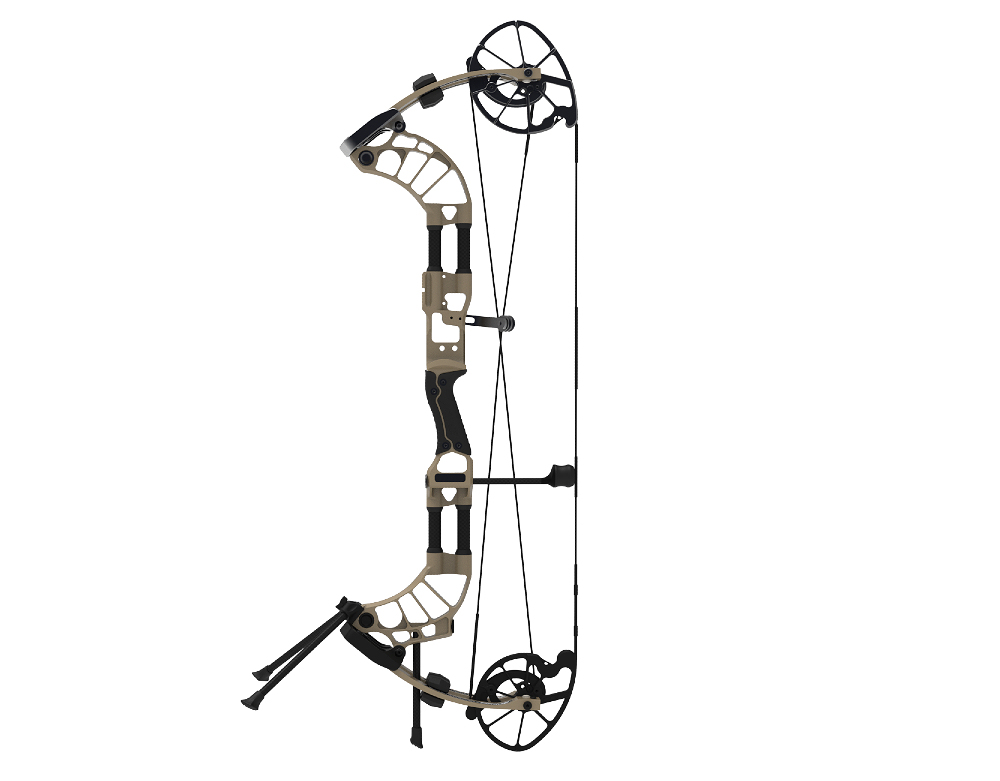
Prime’s Core Cam System is all about adjustability and allows for draw length specific mods for efficiency at every length. That also adds up to a smooth draw every time and let-off adjustability from 83 to 65 percent.
The Divide offers no hassle accessory mounting with its popularly accepted picatinny sight mount system. New for 2026 is the Trilite TM Bow Stand Mount. It’s available in either a two or three leg option making bow readiness a breeze in ground blinds or while still-hunting.
Finally, for those of you into a tailored fit and fashion, read this: The Divide is available in 31, 33, 35 and 37 axle-to-axle models with your choice of 6- or 7-inch brace heights at each length. Plus, it’s offered with nine different limb color options and nine different riser color options.
Check out these reasons and more at Prime Archery: g5prime.com . The Divide 33 will be my partner from this spring through fall.