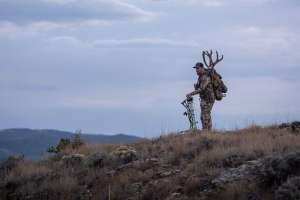

“Over the past decade, hunters have increasingly publicized pictures and videos of their kills to large audiences on social media. This monumental change in hunting norms occurred gradually and with little thought for its consequences. These consequences are overwhelmingly negative. Don’t get me wrong, I’m all for sharing photos of harvested game with friends and family. I strongly support individuals and organizations that use social media to cover issues of importance to the hunting community. But it is time to unfollow hunters who post pictures of dead animals to hundreds, thousands, or even millions of, mostly, strangers.”
So wrote Matt Rinella in Free Range American (Opinion: Unfollowing Hunting Social Media Will Make Hunting Better) back on Dec. 20, 2021. Rinella, brother of Meateater Steve Rinella, thus sparked a discussion about the effects of social media on hunting that continues to this day. And so, the question remains: Are social media influencers bad for hunting?
Rinella makes many interesting and valid points in this article, and even challenges the premise that hunter recruitment is critical to the future of the sport. He goes on to say that public land hunting areas have become so overcrowded that it almost isn’t worth going there anymore. There’s much more, and I encourage you to read the article for yourself.
My thoughts on the subject are mixed. I personally do not have any social media accounts, so you’ll never find me sharing anything about my personal or professional life online. That being said, for most of my adult life my business revolved around the outdoors in general, and hunting and fishing, in particular. I’ve been the editor of numerous hunting and fishing magazines, and as a freelancer published many thousands of articles, with pictures, on the topics. At one point during the 1990s and 2000s, the total readership of my various regular columns and features in numerous publications numbered between one and two million every month. I was the host of an outdoor television show for a spell, too. So I guess I was part of that early pre-social media “influencer” group, without really giving it any thought other than I was trying to make a living doing what I love.
I started all this before there was an internet, and have watched the growth of its power, as well as the rise of the social media phenomenon, with great interest. And in truth, before these communication advancements, there were “influencers” in the hunting world who used the media of the time as their platform.
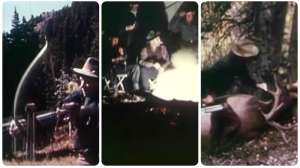
I remember watching black and white movies of Fred Bear and Howard Hill that helped grow archery, and bowhunting, exponentially. Baby Boomers recall the old “American Sportsman” television series that ran from 1965-1986, the first to feature celebrity hosts and guests. Then there were the “Big Three” magazines – Outdoor Life, Field & Stream, Sports Afield. Soon a few folks started filming hunts, which were sold in VCR form. Then outdoor television began to gain traction.
With all of this, “stars” of the hunting world were born, and the masses followed their exploits, with many hoping to one day be able to emulate them. So it should be no real wonder that today’s generation of younger hunters use the tech tools of the modern world to communicate what they perceive as the important occurrences in their lives. After all, fewer and fewer of the younger generations read much these days, including hunting magazines. Overwhelmingly they prefer quick visual hits rather than having to take the time required to read in-depth articles or books about anything.
So, when these generations think nothing about regularly creating social media posts from everything from what they had for breakfast to the many crazy things you see on social every hour of every day, it seems almost organic to them to post hunting trophy pics online without thinking about the consequences. I’m not talking about the inevitable backlash from the anti-hunting crowd; I’m talking about how it affects the overall hunting experience downstream.
As one post made in July 2024 on the Archery Talk forum said about Rinella’s article: “Hunting hasn't gotten better because of social media. It's gotten worse, opportunity has gotten worse, and overcrowding had gotten worse. The hunting industry is prospering, hunting ‘conservation’ groups are prospering. But tags are getting harder to get, draws are getting ridiculous, game populations have largely peaked and are going down, there's less land to access. And it will only continue on that trend.”
Another poster on Archery Talk said this: “The mention of new hunter recruitment in a previous post via social media is a reality ... even if we don't want it to be. Kids are growing up in front of screens, and YouTube is a very significant source of their information-entertainment. Our society is very much different from the humble hunting tribe previously noted, because our athletes, actors and politicians tend to be obnoxious showmen as well ... poor role models but that is simply where we are.” The power and breadth of social media is not going anywhere. I’m not saying it’s right or wrong — but I am saying that before blindly posting your hunting successes on social media for all the world to see, think about why you’re doing it, and what the unintended consequences might be. With apps such as HuntStand and onX, plus social media users bragging about where and how they’ve killed something, there really are not any “secret spots” anymore.