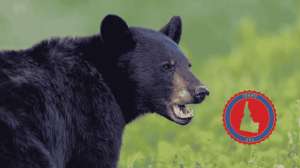

Every year, hunters, hikers and campers enjoying the magnificent wild lands that comprise what is termed the Greater Yellowstone Ecosystem (GYE) encounter grizzly bears — often with horrific results. Ranchers in the region lose livestock and infrastructure to the bears, with governments (that’s us, the taxpayer) then forced to pay mitigation monies for their losses. There is no question that grizzly populations in the region are thriving, and that their numbers today far exceed population goals originally established when grizzlies were first reintroduced into the region in 1975 and placed under the protection of the Endangered Species Act (ESA). The federal government also established individual recovery zones now known as the Greater Yellowstone and the Northern Continental Divide ecosystems. According to USFWS’s own data, grizzlies have far exceeded recovery goals in both of those ecosystems.
For decades, sportsmen have advocated for tightly controlled hunting seasons to help the states manage growing grizzly populations — just as hunting seasons are a cornerstone for managing other game populations. As these calls continue to go unheeded and grizzly/human conflicts continue to rise, sportsmen continue to ask, “Why, then, have hunting seasons not been opened?”
In a word, politics.
A Brief History
Animal rights and anti-hunting organizations have found the grizzly bear, like the wolf, to be cash cows for their fundraising efforts. And like the wolf, for decades the grizzly bear has been center stage when it comes to ESA litigation. Following ESA protections, grizzlies in the Lower 48 states were divided into several distinct population segments, with each segment given a recovery population goal. For GYE bears — which encompasses portions of Idaho, Montana and Wyoming, primarily in and near Yellowstone National Park — that number was 500. Current population estimates put their number at over 1,000 bears. In 2007, this population was delisted from the ESA, a move that was subsequently overturned by the courts. In 2017, they were delisted again, but in 2020 that delisting was again overturned by the courts. The Northern Continental Divide Ecosystem (NCDE) in northern Montana, which includes Glacier National Park and the Bob Marshall Wilderness Area, has a recovery goal for grizzlies of at least 800 bears. Current estimates place their number at more than 1,100.
Since these bears have greatly surpassed their recovery goals and expanded their range, the states have petitioned the United States Fish & Wildlife Service (USFWS) to delist them. On January 8, 2025 — just two weeks before the end of the Biden administration and beginning of the Trump administration — USFWS rejected petitions from Wyoming and Montana, effectively removing ESA protections, which would have allowed the states of Montana, Wyoming and Idaho to manage grizzly bear numbers, in part by opening hunting seasons.
“Instead, USFWS proposed combining Greater Yellowstone and Northern Continental Divide grizzlies into one ‘distinct population segment’ — and then they added in the proposed North Cascades population — making them all one big distinct population (though very distinct …),” said Brian Lynn, vice president of communications and marketing for The Sportsman’s Alliance (www.sportsmensalliance.org), one the nation’s preeminent sportsman’s rights organizations. “To delist by DPS, all populations would have to meet recovery thresholds, but since Washington’s North Cascades population hasn’t even been reintroduced, then the other two couldn’t be delisted. We said this is what would happen when the Biden admin forced ‘reintroduction’ down our/citizens’ throats.
“The federal government estimates that it will take 60 to 100 years for the Washington state grizzly population to recover,” Lynn said. “Under the current proposal, that means the GYE and NCD grizzlies couldn’t be delisted until that time. So, with current FWS plans, in perhaps 2½ to 4 generations we should be able, theoretically, to hunt them. Not that much could happen between now and then, right?”
“This shows that the Endangered Species Act is broken,” said Michael Jean, litigation counsel for Sportsmen’s Alliance Foundation. He said, “We have multiple populations of different species that have surpassed their recovery goals — and are thriving — yet they cannot be delisted, according to the service, because they have not fully recovered in other areas.”
Denials of delisting species from the ESA could encourage Congress to act. “These actions show that the USFWS is unwilling to delist recovered populations because of the status of the so-called ‘remnant’ populations in other areas of the country that have not recovered,” Jean said. “This is likely to always be the case. For example, Congress acted in 2011 when it passed a bill ordering USFWS to delist gray wolves in the Northern Rocky Mountain region and will likely need to act in a similar vein for grizzlies and other thriving wolf populations.”
Problem Bears Being Killed
Just because there are no hunting seasons does not mean that Lower 48 grizzly bears are not being killed, as dangerous encounters between grizzlies and humans continue to grow. A simple internet search turns up dozens of incidents. Here’s five such examples just from 2024. The first, in April, occurred when a shed antler hunter shot and killed a bear with a handgun. In September, two bowhunters shot and killed a charging grizzly sow with cubs near West Yellowstone, Montana. Also in September, two bowhunters shot and killed an attacking boar grizzly near Henry’s Lake, west of Yellowstone National Park. And a Montana bowhunter had to be rescued from a tree by helicopter after he encountered a sow grizzly with two large cubs in the Gallatin Range backcountry after he shot the sow with a handgun. All hunters claimed self defense and were exonerated. And it’s not just hunters. An Idaho homeowner shot a charging grizzly in his driveway. In 2023, there were at least seven recorded incidents in Montana and Idaho involving hunters and anglers who killed grizzly bears in self defense.
Ranchers in grizzly country have their share of problems as well. Many are trying non-lethal methods of deterring bears from killing their livestock. They employ fladry — essentially red flags attached to wire strung out as fencing — along with other tools such as five-wire electric fencing, fox lights, drive-over electrified mats and participation in carcass removal programs to prevent dead livestock from attracting scavengers. But it’s costly. A mile of electric fencing can cost nearly $20,000, a mile of fladry $5,000 or more, a steel shipping container to keep bears out of grain stocks $4,000 or more. It’s not just ranchers. For example, a school near Great Falls, Montana, had to install a grizzly-proof fence to keep bears off the playground. The Wapiti Elementary School near Cody, Wyoming, also has a bear-proof fence.
When all else fails, government officials are called in to try and trap and move the bears — or shoot them — again at great cost to taxpayers.
Alberta Reverses Ban on Hunting Problem Grizzlies
The Canadian province of Alberta has had enough with problem grizzlies. In a reversal of a more than 20-year-old ban on grizzly hunting, in June 2024, provincial officials announced that regulations have been established to allow certain qualified, government-approved hunters to pursue problem bears. These hunters will be selected from those who apply for the position, and who meet the outlined criteria set by Alberta Forestry and Parks officials. These hunters will have “grizzly bear management authorization” to act, if called upon, to pursue a specific bear.
While not a hunting season per se, bears that have been involved in a bear-human conflict as designated by the government can be eliminated by approved hunters, who would have 24 hours to be at the scene and would have specific guidelines to follow including hunting times, methods, equipment and location.
Alberta officials say the grizzly bear population was between 856 and 973 during its latest count, in 2021, and human conflicts have increased during the 20-year hunting ban. Government officials have said that eight people have been killed and 62 others mauled by grizzly bears since 2005. Also, almost 900 reports of livestock depredation have occurred during the past eight years.
Here in the states, wouldn’t pursuing such problem bears using a similar program that charged hunters a fee — which many would gladly pay — make sense? The bear problem would be solved and revenue generated for wildlife programs, rather than costing states money to pay for government shooters. The argument isn’t really about saving bears, it’s about who is pulling the trigger.
New Administration Could Bring Change
The election of Donald Trump as president and his appointment of Doug Burgum — who openly favors removing grizzly bears from the endangered list — as Secretary of the Department of the Interior has supporters of delisting the big bears cautiously optimistic that it might finally happen. During Burgum’s confirmation hearing, Sen. Steve Daines (R-Montana) asked Burgum directly if he, as Interior Secretary, would support efforts to delist grizzlies. “I’m with you,” Burgum responded.
Of course, any move by the administration to delist the bears, as well as subsequent moves by the states to open controlled hunting seasons, will be met by a raft of lawsuits by the anti-hunting crowd. So we’ll see. But there is no doubt that, using the scientific data and the original goals set when grizzlies were first reintroduced into the Rocky Mountain West, grizzly populations have more than met population goals that would permit the opening hunting seasons.
Note: You can stay abreast with what’s happening here: www.fws.gov/grizzlyrulemaking and here: https://ibgconline.org.