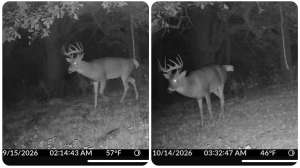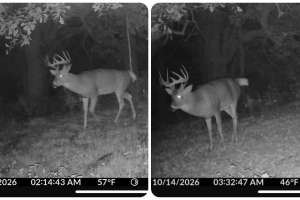

“He just showed up,” my friend grinned, showing me an image of a heavy-antlered buck caught on trail camera. Obviously, the buck wasn’t a local because my friend had months of images from an army of trail cameras surveying his food plot and various buck nooks on his property.
With its massive frame and obvious buck gut, the deer would have been easily identifiable. No, this buck just rut wandered in — and where it came from was easily obvious.
A wealthy landowner less than a mile away managed a kingdom of posted property that received minimal, at best, hunting pressure. This buck had to be a product of the landowner’s minimized hunting and maximized deer density. This buck likely had enough of being shoved around by other mature deer and was looking for action elsewhere.
More Deer . . . More Mature Deer
If you hunt adjacent to an educated, focused landowner with a goal to turn an ordinary property into a wildlife oasis, expect more whitetails in the neighborhood. This is especially true if the landowner in question doesn’t allow hunting. Posted land doesn’t always cause frowns.
You should expect more deer as well. Research confirms that young whitetails, particularly males, disperse to set up their own territories. Although not in the same number, the same is true of mature bucks. They don’t play well with others in their age class. Mature bucks may stray across a fence during the rut or simply anytime if they feel the pecking order needs to be reset. Some never return.
More deer also equals more mature deer. By nature, most age-class pyramids are youth heavy on the bottom and fewer numbers of mature deer at the pinnacle. Nevertheless, when you have more deer on a property it’s just common sense that you will have a higher density of mature deer. Expect a few to drift into your hunting area from posted land, particularly during the rut.
Less Spookiness
Landowners who manage a property with no economic boundaries treat their properties with kid gloves. In brief, they typically tread lightly with as few disturbances as possible. Intrusions into sanctuary areas are minimized. Hunting is reduced. Other activities, such as morel mushroom or shed antler hunting, are restricted, and recreational driving around is curbed, particularly during hunting season. Deer receive white glove treatment, understand the intentions of land managers and overall, grow accustomed to the daily routine established by the landowner.
While visiting the posted property of a landowner who manages a farm exclusively for hunting, we pulled up to a feeder and deer literally ran to his side-by-side knowing treats were on the way. What that means to you is deer are less spooky. When they cross the posted fence, they may give you an additional second to get the shot off as they assess the situation in the world where they spend most of their life.
More Habitat
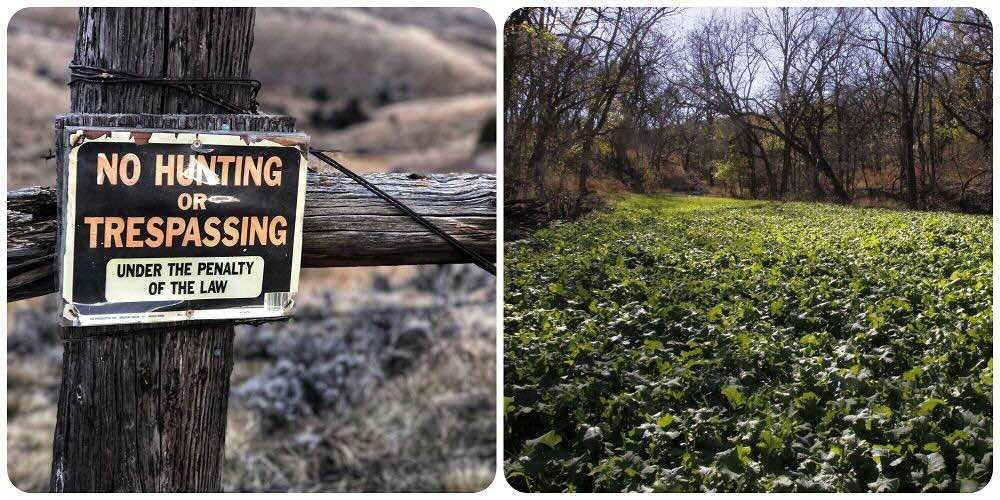
Whether through an invite or inspecting properties via a drive-by, one similarity between highly motivated wildlife property landowners is habitat improvement. This bodes well for a healthy neighborhood deer herd and has a hidden benefit. A landowner that is obsessed with habitat improvements likely will attract deer to their property from surrounding areas.
This is common in northern latitudes where poor winter habitat causes deer to migrate to areas of better winter cover and food. It also is common anywhere when deer discover a Garden of Eden. Why scrape by when they can live with room service?
I’ve studied properties in South Dakota, Wyoming, Kansas and Nebraska that were managed for wildlife with habitat improvements as a key strategy. All attracted additional deer, and over a decade of time, most doubled their whitetail numbers as food and sanctuary kept up with herd demand. Hunt next to a posted property like this and expect some of that whitetail audience to stray across the fence, notably during the breeding season.
Possible Culling Opportunities?
Another phenomenon I’ve seen over the years as herds grew on managed, posted properties, is the leniency of landowners to allow hunting for culling operations. Most invites to hunt were for doe and fawn opportunities. In some instances, invites included the chance to shoot a mature “cull” buck. Don’t ask me to explain the definition of a cull buck as it varies with the land manager. Some favor the removal of mature 4x4 bucks to thwart them from breeding, while others handpick bucks with small racks or characteristics they do not want to see in their herd.
Does this work? Research indicates it works moderately at best unless deer live behind a high fence. But who am I to argue with someone about to let me cull a deer?
When I draw a tag in one Midwestern hotspot, I rarely get the green light to shoot a handful of giants wandering the property. And every time I hunt the property, like clockwork, I routinely have a giant or two walk by and can take only pictures. Despite that restriction, I’ve shot more mature bucks than most because they simply didn’t meet the standards the landowner held for their criteria. As a result, we all end the hunt happily.
Added Security
In closing, most landowners who work hard to grow big deer add an extra layer of security to their posted properties. This includes personnel living on the property, camera surveillance, law enforcement relationships for the occasional passing assessment and lots of locked gates.
Hunting next door to one of these Fort Knox properties means some of that security extends to your property. Anyone thinking about poaching on the neighbors might get the idea you have a similar security setup. Fool them into thinking that. Post your land, stage signs indicating video surveillance and absolutely embrace the locked gate lifestyle.
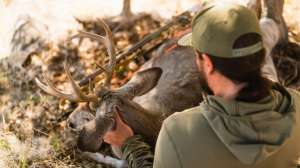
As for the heavyweight contender that showed up without an invite (that’s OK by me), it took another three days of focused hunting before he finally waltzed right past my blind while scent checking a doe and fawn. At 18 yards I sent a G5 Montec on its way and watched him stumble out of sight beneath a cedar tree 110 yards away.
To this day he stands as my best whitetail bowkill, and we later discovered the truth. The landowner in question had a bevy of images of this buck on his posted property. I no longer complain if a neighboring property gets a new owner with a fanatical hunting mindset and posts away. Instead, I say, “Thanks for all your hard work” — to myself anyway!
Photos by Mark Kayser