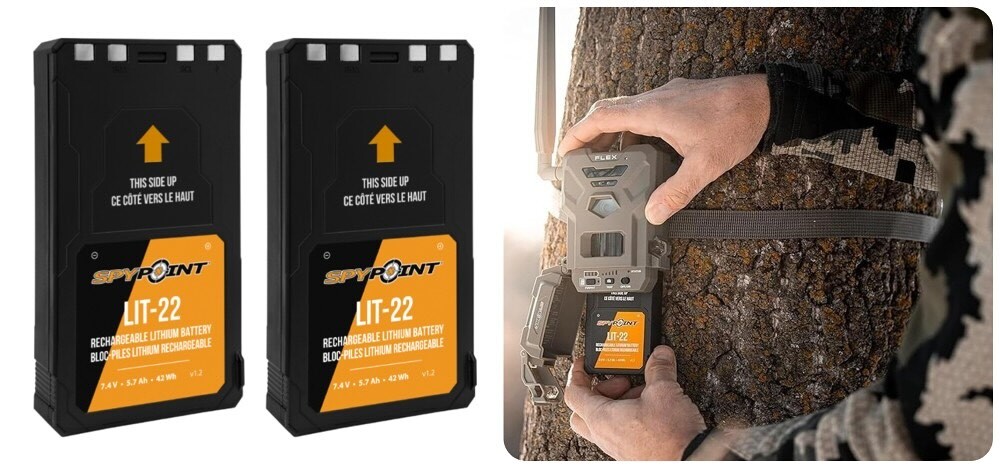

As I sit down to write this review, I can hardly believe it’s been six years that I’ve been running Spypoint trail cams. It started in 2020, and that summer and fall I used cell cams from Moultrie Mobile and Spypoint, both of which worked very well. Click here to read “Field Testing Cellular Trail Cams: Teaching an Old Dog New Tricks.”
In the subhead for that story, I wrote, “The author is a reluctant user of new technology, so if he can learn to use cellular trail cams, anyone can.” That statement is still true.
Learning how to use cell cams, and more specifically the apps associated with them, was daunting for me. (I’m one of those people you see in the airport with a printout of my boarding pass.) But with the help of a hunting buddy, as well as one call to a very helpful customer service staffer at Spypoint, I can navigate my way around the cell cams and the app in a decent manner.
That Was Then, This Is Now
During 2020 I used a Spypoint Link-Micro-LTE cell cam, and in 2021 I added a second one to my scouting arsenal. In 2022 I ran the company’s Flex cell cam; in 2023 I added the LM2, Flex G-36 and Flex S (solar) cell cams; and in 2024 I added the Flex-M and Flex-Plus cell cams. (Click here to read my field test from 2024; my son and I shot two big bucks in South Dakota and captured some great trail cam pics of both deer!)


I’m diving into this history to demonstrate these various Spypoints are not “one and done” cams. This past summer and fall, I added the new Flex-Dark and Flex-S-Dark (solar) cell cams to the mix. As I write this in early December, I have nine Spypoint cell cams in the field. The oldest model I ran this year is the 2022 Flex and it works like new!
2025 Test Models: Flex-Dark and Flex-S-Dark (Solar) Cell Cams
The “Dark” part of the name in both of these cell cams refers to the flash settings with low glow or no glow LEDs (your choice) that make no noticeable light or sound. The idea is these cams won’t alert game when a photo is triggered.
To be honest, I’m not convinced that a light appearing on a trail cam during a detection alerts a deer. In fact, I don’t think my old-school, white-flash, non-cell trail cams spook deer. Many times I’ve watched from a nearby treestand while white-flash trail cams took low-light pics, and the deer didn’t react to the burst of light. They sometimes looked toward the camera but they didn’t stop feeding, change direction, or react in any negative way. They reacted as if it were distant lightning.
On both of these new Spypoint Dark models, you can choose between low glow or no glow flash settings in the Spypoint app — under “Settings/Image Capture.” The default setting for each Dark cam was low glow, and I kept it that way for the majority of my test time (several months).
When I walked in front of either Dark cam on my way to treestands in the predawn darkness, I looked at the cam. In the low glow flash setting, the cams briefly emitted soft red lights. Again, this is just one hunter’s opinion, but I don’t think those low glow LEDs are spooking deer. I captured thousands of images on these two Dark cams during summer and fall 2025, and not once did a deer react negatively.

The Flex-Dark (MSRP: $119.99) and Flex-S-Dark (MSRP: $169.99/$149.99 on sale) share these features: 40 megapixels, photo and video, .3-second trigger speed, 1080p video with sound, and 100-foot flash and detection range.
The biggest difference between the two models is the Flex-S-Dark has a built-in solar panel, which provides unlimited battery life. I cannot express in words how well this feature works.
Consider this: During August 2023 I placed a Flex-S cell cam in a South Dakota river-bottom (this cam was the predecessor to the Flex-S-Dark) and when I pulled it from the woods in late January 2024 the battery reading was still 100%. Remember — it gets cold in South Dakota during November, December and January! I placed the cam back on the same tree in August 2024, it captured thousands of images that fall, and instead of removing it from the woods that winter, I just left it there. And it’s still hanging on the same tree, the battery is still at 100%, and it’s working like new. Crazy! I fully expect the battery level on the Flex-S-Dark to stay at 100% due to the solar panel for as long as I want to leave it in the woods.
Biggest Takeaways
As I think back on my 2025 whitetail deer season in South Dakota and Wisconsin, and specifically the performance of my Flex-Dark and Flex-S-Dark cams, these are my four biggest takeaways:
1: Using cell cams eliminates the need to change/check SD cards, which is necessary with non-cell cams. This is convenient and saves time and money (I live a few hours away from my hunting properties in both South Dakota and Wisconsin), and I don’t have to risk spooking deer by checking cams in person.


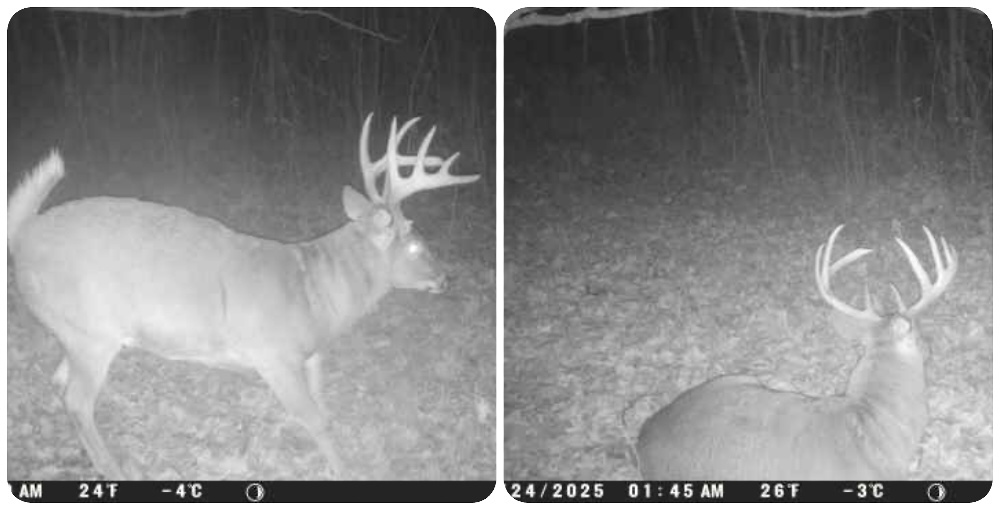
2: The detection/flash range on the Flex-Dark and Flex-S-Dark cams, and for that matter all of my Spypoint cams, is impressive. This range is advertised as 100 feet for both of these cams, and it’s true. Even though I have both cams set up to capture images of deer passing within 50 feet of the cams, I regularly received pics of deer, raccoons, skunks, coyotes and turkeys at twice that distance.
3: When it comes to recommending trail cams to buddies and other hunters I meet, the No. 1 feature desired by them is dependability/durability. I’ve been running Spypoints for six years, and in my experience they excel in this area. Important note: Spypoint trail cams have a two-year warranty, which certainly provides some peace of mind regarding your investment.
4: The Spypoint transmission plans are a good value. You can get 100 free photos a month per camera, and I use this on any of my cell cams that I leave in the field during the non-peak deer months of January through July (non-peak in terms of gathering deer hunting intel). I pay an affordable monthly fee to get many more pics from August through December.
For example, you can purchase a plan for $5 per month (per camera) for 250 pics; $10 per month for 1,000 pics; or $15 per month for unlimited images. You don’t have to sign up for an annual plan. My buddies and I generally choose the $10 plan per cam; the 250 pics included in the $5 plan has proven to be too few for most of our cams, especially during the whitetail rut.


Final Thoughts
Like my smartphone, the Spypoint Flex-Dark and Flex-Dark-S have a ton of features I don’t use, and that’s okay. All I’m interested in is seeing how many deer are using a particular trail, food plot or scrape on a daily basis. I’m sure other users will appreciate the other high-tech features available on these cams (example: Buck Tracker AI to automatically filter photos and videos, in-app maps, scheduling, etc.).


Cell cams provide a way to enjoy your hunting properties every day of the week, and my son and hunting buddies enjoy checking our Spypoint app and texting/discussing deer pics. We don’t have so many cell cams that we blanket our properties, and we don’t make daily decisions on which treestands and ground blinds to choose based on camera activity. For us, it’s simply fun to see how many deer (bucks, does and fawns) are running around, if we have any older/bigger bucks calling our property home, and whether stranger bucks suddenly show up during the rut. It’s a way to stay connected to the land, the deer and all the wildlife.
Check out more Spypoint pics from 2025 below. The captions explain more about what the cell cams are capable of and why I enjoy using them.