
I pulled my Chevy pickup onto the field road, parked, and readied my gear while listening for pre-dawn gobbles. It was my first time stepping onto the property, so I had a few hunches based on my HuntStand app scouting, but no concrete plans. Then, a gobble shattered the silence. The bird was roosting about 300 yards away in the timber off the back of the field. I grabbed my bow and decoys and hustled.
As I closed in, the forest erupted; several gobblers were roosting together. I crept within 80-100 yards of the roost, plugged my Avian-X HDR Jake and Laydown Hen decoys into the dirt field, then scuttled 12 yards to the field edge and settled in amongst some dense saplings with a narrow shooting window framing the decoys.
The gobbling action was intense. I issued a few tree yelps, then shut up. In minutes, the gobbling changed pitch. I couldn’t see them, but the gobblers had landed on a logging road that leads out to the field corner where I was set up. Another soft call, and they were coming in hard!
Suddenly, two strutting toms ran into the field, and I instinctively drew my bow before they hit my shooting window. At 12 yards, one strutter paused head-on beside the jake decoy, and I released, striking him perfectly beneath the neck. He ran straight away and disappeared over a hill. He was well-hit and wouldn’t go far.
Meanwhile, chaos unfolded around my decoys. Now, four other toms were gobbling like freaks and darting at my jake decoy. With those four toms in my lap plus another three or four gobbling a few hundred yards away, I decided to fill my second tag.
With the toms hooked on the decoy, I slowly nocked another arrow, drew back and picked out a second tom. As before, my Victory arrow connected, and the bird fluttered and crashed in a heap a few yards from my decoys. All of this happened at 12 yards without a ground blind.
I’ve arrowed a pile of toms this way, and it’s not only a hoot but effective, too. If you’d like to try it, here are some pointers that consistently help me produce when I leave my blind at home or in the pickup.

Get Close
Undeniably, the top benefit of ditching a pop-up ground blind is you can be mobile and stay with gobbling birds rather than sit in one spot and wait for them. The second main advantage is you can set up so much closer to birds in many cases because you don’t have the commotion and movement of popping up a blind. And you can set up much more quickly.
If the terrain and cover or darkness allow, I like to get within 80-100 yards of a bird, set my decoys, tuck into cover, then begin calling. Sometimes, turkeys respond and come in from hundreds of yards away, but when you’ve breached their comfort bubble (80-100 yards), I find that they can rarely resist the calling and decoys.
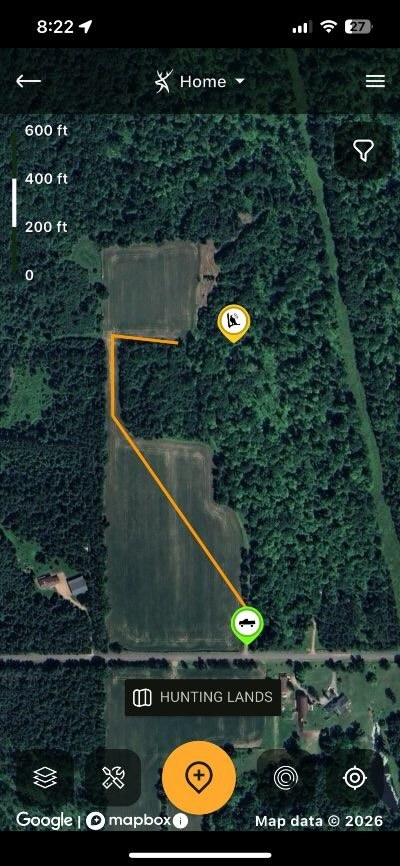
One tip as you plan your approach: If you’re hunting an unfamiliar property on the fly, quickly referencing HuntStand’s Terrain base map will unveil terrain features that can and should inform your route. In varied terrain, the 3D Mapbox Satellite base map is money.
Hiding Tips
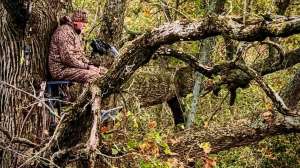
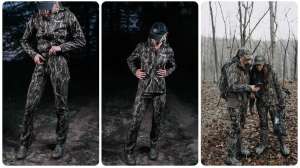
Wearing camo or dull solids that melt into your surroundings is non-negotiable. Next, never make the cardinal sin of setting up with the sun beaming down on you and/or into your face. Your movements will be highlighted when you draw your bow, plus shooting towards a sunrise or sunset can make it extremely difficult to see through your peep and aim well. Always consider the sun before choosing an ambush, especially when setting up before dawn during early morning hunts.
On a similar note, always be aware of any shadows you can leverage to enhance concealment. When setting up against a large tree trunk on sunny days, always try to hide on the side of the trunk that is shadowed. You’ll blend in a hundred times better in most instances than if the sun is on you.
It’s up for debate whether some front cover or backdrop cover is better. If I can have only one, I’ll choose a backdrop. Anything that effectively disrupts the human outline is ideal. I emphasize the backdrop, but if there is an opportunity to enhance my hide with some front cover, I do it using decoy bags and natural vegetation and brush. What I find, though, is that moving at the right times is more important than how well you’re hidden.
I’ve occasionally bowhunted in areas without any decent cover for hiding. When I do, I like to put my Ultimate Predator bow-mounted turkey decoy on my bow and the Avian-X decoys out as usual. It works really well. Important safety note: Should you try this, you do so at your own risk and assume all outcomes. Be sure to read the disclaimers outlined on the decoy.
To really boost your concealment, consider purchasing and wearing HECS apparel. It blocks electromagnetic frequencies, which birds, including turkeys, are highly sensitive to. My friend Mike Slinkard owns the company, and he runs hunting videos of the apparel in use on the HECS Stealthscreen YouTube channel. Slinkard has killed a heap of gobblers while sitting in the wide open and wearing HECS, and he doesn’t get busted when drawing his bow. Watch the turkey hunts on his channel and see.

Tips for Getting Drawn
Consistently bow-killing gobblers at less than 15 yards without a blind means you have to draw undetected, which is easier said than done. That’s why I rarely ever hunt without a jake decoy. A tom approaching a lone hen decoy might be hooked, but he’s often much more aware of his surroundings. That can make it difficult to draw back, whereas a tom infuriated by a jake decoy is very distracted. Usually, I draw when he lunges at the jake decoy.
Besides using a jake decoy, I make full use of my surroundings. If possible, I want an approaching gobbler to walk behind a tree trunk, hay bale, farm equipment, or another obstruction before reaching the decoys so I can draw my bow unseen. And if the area has no such obstructions, I’ll draw back when he hits the decoy or struts with his fan covering his head. When it’s time to draw, you might have a split second or two, so commit fully and draw quickly and fluidly.
It’s also a smart idea to practice drawing. If there are no birds within view when you are set up, draw your bow and make sure you have arrow clearance over obstacles and that your bottom bow cam isn’t in the dirt. Doing this can help you identify potential problems and fix them before a tom shows up.
Two More Tips
We’ve covered some of the most important details of blind-less hunting, but I’ll present a couple more to wrap up. First, I believe mastering the mouth call can make you a better bowhunter. When turkeys are within view, you’ll rarely be able to work box or pot-and-peg calls, then set them down and get your bow ready. With a mouth call, I can be ready with my bow in hand and release attached, yet coax a gobbler if needed. It’s a huge advantage.
Second, hunting with your bow on your lap or on the ground beside you isn’t ideal. You’ll have to orient it upright to prepare for a shot, and your broadhead might get into the dirt and even open up if you’re using a mechanical head. Thus, limb sticks are must-haves. I usually shoot a Mathews bow, and the Engage Series Limb Legs keep my bow ready, reducing the movement required to take a shot, and keep my cam and broadheads out of the dirt.
Well, those are the basics. Over the last 18 years, I’ve bow-killed a pile of gobblers without using a blind, but I continue to learn each year. Try the tips we’ve discussed here, pay attention to any mistakes that cost you opportunities, and be a student of the game.
Photos by Becca and Darron McDougal