
Editor’s note: It is with great sadness to pass along the news that Scott Bestul, author of this article, passed away on April 19, 2025, after a 2.5-year battle with cancer. Scott would have turned 65 this November 5 — no doubt he would've been sitting in a treestand waiting on a rutting whitetail buck. This fall, his dad, Marvin, who is featured in this article, will head into the whitetail woods of southeast Minnesota without his favorite hunting partner. Scott was an outstanding whitetail hunter, a talented outdoor writer, and an even better person. He will be greatly missed.
If you need a record book set of antlers to get excited, it wasn’t much of a buck. Oh the whitetail was well-muscled and stocky for his age, but he was wearing his first set of antlers — a tight, slim, 4x4 most of us would call a “basket rack.”
But when the hunter who shot the deer is not only a few weeks shy of his 93rd birthday, but also your father, well it’s a pretty special whitetail indeed. Dad had crawled up an 18-foot ladder stand on the afternoon of Halloween, a stand we’d erected together a few years back on his 5 acres outside of Rushford, Minnesota. And when I got a call from him with a half-hour of shooting light left, I knew he’d have an exciting report. While we always call each other before any hunt to check in, and again afterwards to announce a safe return home, a call before the end of legal light means only one thing: a shot to follow up on, and hopefully a deer to track.
In this case the trail was a short one. The pretty 8-point was lying 60 yards from the stand and, after our ritual hug and requisite back slapping, I knelt by Dad’s buck and started the field dressing process. And shortly after, with the just-emerging stars shining above us, I realized this was the perfect ritual to observe in my 50th year of deer hunting with my dad.
Where It All Began
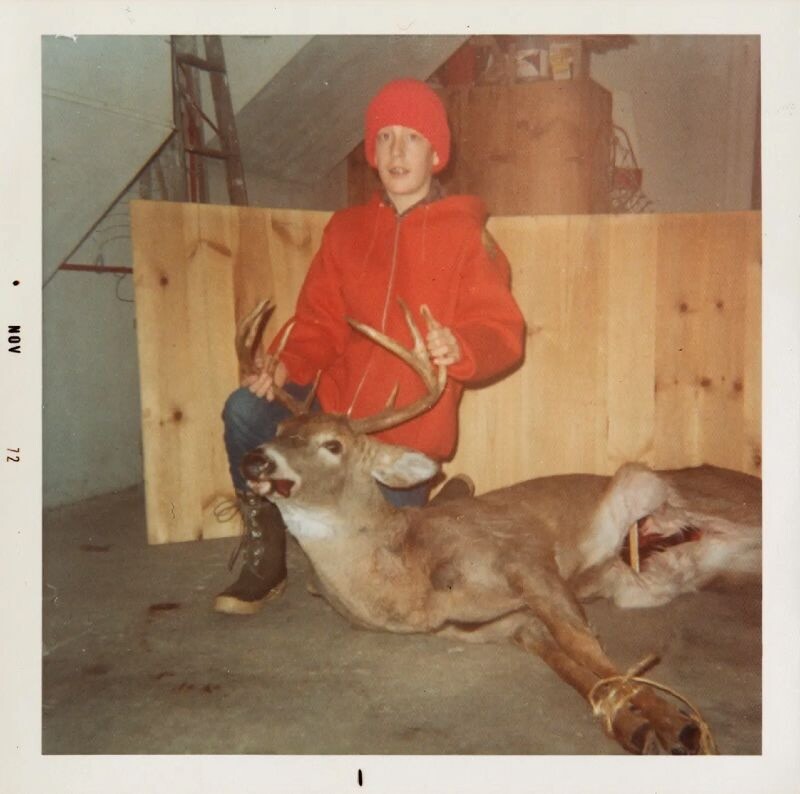
Our 5-decade journey together started in 1972, on a cold November morning in central Wisconsin. Dad led me to a reasonably flat rock on a pine- and popple-studded flat, brushed the snow off the rock, squeezed my shoulder and whispered, “Sit here until you get too cold. I’ll be just through those trees there if you need to get me.”
Of course, when he disappeared I was convinced I’d have a buck before the sun hit the tree tops, and when that didn’t happen, I quickly realized how cold my fingers and toes were. And though I fought off the fidgets as long as possible, before long I was rising and following his boot tracks in the snow until I found Dad, staring intently down a timbered ravine. He wrapped an arm around me, led me to our car, and poured cups of hot cocoa from a thermos; the best-tasting drink I’d experienced in my 12 years. When feeling returned to my digits, Dad led me to another rock and made a looping one-man drive around me. I shot a beautiful 8-point buck only minutes after he’d left, and while my pre-teen brain knew almost nothing about life, I realized then that I’d be a deer hunter the rest of my days. And I have.
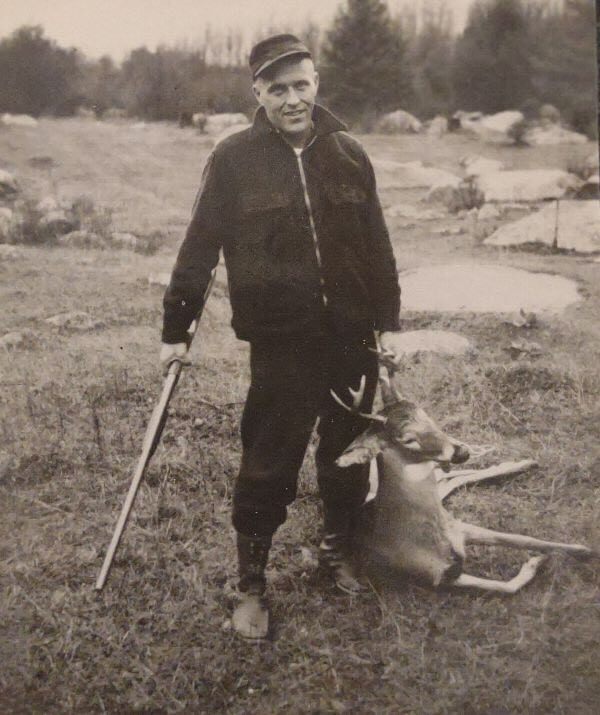
Dad had started many years before that, of course. He and his high school buddies had participated in some of the first modern bowhunting seasons in the United States in the 1940s, toting stick bows and leather quivers packed with cedar arrows into Wisconsin’s Necedah Wildlife Refuge, where they camped out and chased bucks on the weekends. Later, he would take up gun hunting on family land in Waupaca County, then one of the most whitetail-dense counties in the Badger State. One of my favorite pictures of dad is him dragging his first buck off that property, his Ithaca Model 37 in hand. The pic is dated 1957, making him 27 years old and me not even a thought in his mind yet.
Changing Roles
I don’t know how many bucks Dad had tagged when I started, but his hunting seemed to take a backseat to mine as he nurtured my desire. He had me shooting recurves before I could pull a legal bow, and celebrated when I killed my first archery buck as a high school senior. We continued to enjoy gun hunts together, though they became shorter (and sometimes spaced apart) as I went off to college and started my adult, working life. Dad was busy finishing his own career, but I was thrilled when he moved to southeast Minnesota after retiring. We fell in love with turkey hunting together, and Dad decided to take up the bow again.
And suddenly our roles were reversed. Bowhunting had pretty much taken over my life by then, and I was determined to get him on a buck. It happened on a warm day in the first week of archery deer season, when I hung a stand in a hickory tree that shaded a field adored by a bachelor group of bucks. Never one to trophy hunt, Dad took the first buck in bow range, a sleek 3x3 that we blood-trailed with a storm brewing above us. Rain was pelting our hats and shoulders when we found the buck, hugged and then hustled him to the truck.
Other bucks followed, another beautiful early season 5x5 that would have made Pope and Young, and “Crab Claw”, a mature, tall-racked buck we’d watched on camera for weeks before Pops arrowed him on a late-October evening. Even then my hunting buddies were marveling at Dad’s fitness and gung-ho attitude, as he helped hang stands and plant food plots and hunt — even in brutal cold — with a vigor most men half his age couldn’t muster.
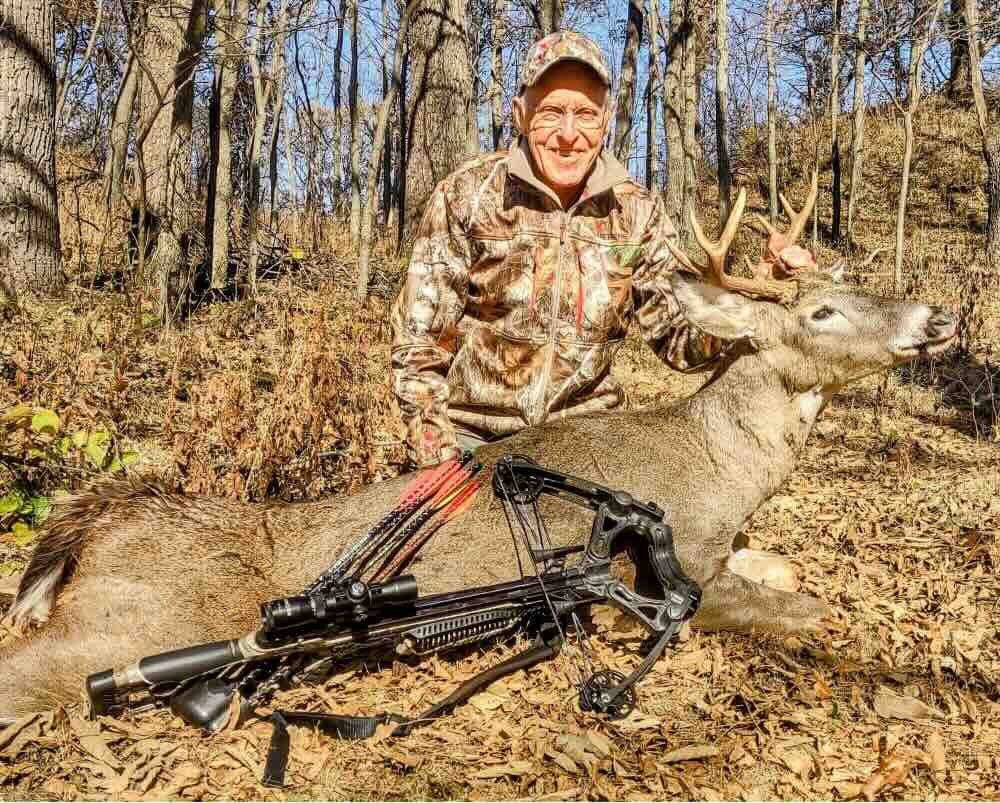
By the time Dad had reached his late-80s, he was having shoulder problems that made drawing a compound bow difficult, and he considered quitting the archery hunt. “Nonsense,” I said. “We’re getting you a crossbow.” And while he balked at first, he soon embraced the change and the extra seasons it would give him in the fall woods. In his first five seasons with the crossbow, he tagged four bucks of varying size, but all equal in our eyes as trophies.
But it would be a mistake to think that it took a dead deer to make my father happy. Of the handful of guys I hunt with regularly, Dad is the most cognizant and appreciative of the pleasant sideshows of the whitetail woods. He’s the first to chuckle at the antics of a pine squirrel, marvel at the goofy grace of a pileated woodpecker in flight, or tell — sometimes over and over — about a chickadee that landed on his bow, or the hen turkey that chased a fawn off a food plot. I’ve long maintained that if you can’t appreciate such treasures, then you likely won’t last long as a deer hunter, but I can trace that opinion directly to the man who demonstrated it to me many years ago.
Lessons Learned
I was sweating by the time I’d gutted and dressed Dad’s buck; for a Halloween night, it was going to be a warm and pleasant one for trick or treaters. Then I drove the truck to the field edge, and I hopped in the bed, grabbed the buck’s antlers and pulled him up as Dad provided help from the hindquarters. Tomorrow we would spend the day skinning and butchering together, but with the buck loaded and ready for transport, I was content to sit on the tailgate and admire the stars. It’s not often, after all, that you can celebrate a 50th year of any activity shared with the same person, and I was happy to let this day last as long as possible.
As I soaked in the moment, I started reflecting on the hunting journey Dad and I had enjoyed and, sometime later, some of the takeaway lessons we’d learned. In no particular order, here they are.
Stand Safety Is No. 1: When I first started hunting with my dad, almost no one hunted from treestands or elevated blinds. This led me to the happy belief that the primary goal of any deer hunt was to come home with a buck. Silly boy. Now that I hunt frequently from stands and elevated platforms, I know the top achievement of any outing in the woods is to come home safely, so you can go out and hunt again. If you doubt this, talk to any of the hundreds of people who have been injured in treestand falls or other accidents, some suffering injuries that prevent them from ever hunting again.
Unfortunately, I was not always this way. I went for many years climbing trees recklessly and without any fall restraint device, and Dad frequently jokes about tying a rope around his waist in a feeble attempt to stop a fall. At least he did that much; I continued to hunt without a safety harness for years, despite falling three different times and avoiding serious injury (or death) through nothing but sheer luck.
Finally, with some maturity, I realized I was simply being foolish. These days, I rig a safety line for every elevated platform I hunt from, and I’m connected to that line from the second my feet leave the ground until they return again. Sure, it adds a little cost and time to every set, but two falls ago, on a cold and snowy afternoon, the support cables on my ladder stand snapped in unison, turning the stand platform into a trap door. My safety line saved me from a speedy plunge to earth, and that time and expense was erased in an instant.
Buddies Make It Better: When Dad first took me deer hunting during gun season with our family members back in the 1970s, at least 50% of our group’s effort was devoted to driving deer. We were pretty good at it, but even at its best, driving was semi-chaotic and at least slightly dangerous. By the mid ‘80s, we’d largely dropped the practice and devoted ourselves to stand and blind hunting. I’m convinced this made us better, more effective (and definitely safer) deer hunters, but that came at a price, and the price was camaraderie.
For all the chaos and craziness of a deer drive, there was an awful lot of fun and more than once — sitting in a cold and lonely deer stand — I realized how much I missed the hunting partners I’d basically grown up with. Dad has noticed it, too, and though he admits the hunting is mostly better, it’s simply not as much fun as it was when we gathered with the gang at noon every day.
While we haven’t gone back to driving deer, I make it a point to hunt with my dad as often as possible. I’ve also learned to nurture and cherish relationships with other deer nuts. I make it a point to share trail cam pics, deer sightings, hunt reports and of course any success, with a hunting “party” that includes family members, friends and neighbors.
I know there are guys who’d share lottery winnings before they’d forward a trail cam pic, especially to someone who might have a chance to kill “their” deer. Granted, I’m blessed with some excellent friends of high moral character, but I find this a sad and lonely approach to a sport that’s a heckuva lot more fun when you can send a pic to a buddy with a “check this buck out” message, or even tip a neighbor off to a buck that might be flying under his radar.
One thing I miss about driving deer was the collective success shared by everyone in the party when a buck was bagged . . . and being open and honest with information, as well as being the first to congratulate a friend (or of course my dad) who’s tagged a dandy — yes, even one I’ve been chasing, too — is the best way I know to celebrate the brotherhood of fellow whitetail geeks.
Pay It Forward: As noted above, I was a scrawny, snot-nosed 12-year-old when my dad took me to the Wisconsin deer woods. While Dad had a fairly easy babysitting job that first morning (I was tagged out by 10 a.m. with a 4x4 that would be my biggest buck for many years), he earned his stripes over the course of that season, and several to come.
I needed constant direction (and re-direction) when I was asked to help make drives. I got cold and hungry… a lot. And after my opening day success, I made the logical jump that if I sat somewhere — even a randomly chosen stone or stump — a buck was sure to appear to entertain me. Obviously, Dad had some coaching to do when it came to perseverance. That I wanted nothing more than to be a good deer hunter as I grew older is testament to his kind tutelage and endless patience.
Fast-forward some 20 years and it was my turn. I was teaching high school back then, and renting a farmhouse from a wonderful family who had a son not old enough to hunt, but fascinated by the sport. Alan was long on energy and enthusiasm, and I did my best to channel it by taking him hunting with me even before he was of legal age. One hunt we still laugh about occurred when he was 10, and I had him up in a treestand with me for an October bowhunt. It’s always a bitter pill to miss a point blank shot on a buck, but when you have a pre-teen — laughing gleefully I might add — as a witness, it’s even tougher. Still, I loved having the kid along and we continued sharing the woods until he was old enough to hunt. Then, I had the pleasure of calling up his first turkeys and driving his first deer to him. Now an accomplished hunter on his own, Alan is also a very busy farmer, and I’ve had the pleasure of taking his two boys hunting with me as well. And I can honestly say that helping those youngsters tag game is more satisfying to me than tagging a buck myself.
I guess my dad was a good role model when it came to mentoring young deer hunters.

Don’t Wait for the Rut: The whitetail rut gets all the hype, and much of it is deserved. Who can resist the excitement and chaos of November, when most every buck is on its feet, and there are days when the action is frenetic enough you don’t want to turn your head the wrong way for fear of missing something? Trust me, I get it, and I’ve had my share of November madness.
But when it comes to arranging a close encounter with a specific mature buck I know, I’d take any 5 days in September over 3 weeks in November. My three largest whitetails, which includes two gross B&C bucks and all taken with a bow, have been tagged during the Midwest’s early archery season. And my father? Well, he’s tough enough to sit in the worst weather December can offer (and has) but he’d simply rather hunt when the weather is kinder, and he’s shot a couple fine bucks when the season was less than 3 weeks old.
Why is September so good? For starters, bucks are typically on a bed-to-feed pattern that’s at least reasonably predictable. Hunters often hear “pattern” and visualize a buck on a train track with an airtight ETA. Not true, for the most part. Bucks typically have one or two favored food sources in early season, which they visit regularly, depending on the conditions. It’s up to us to determine which conditions those are, which can be done by observation or trail camera, then capitalize when the time is right. The good news is bucks are at their most relaxed of the year, having experienced little to no human contact in many months. With some solid intel and the right weather conditions (pay attention to early season cold fronts), September is far and away the best time to put a tag on a mature homebody.
Put in the Work: When Dad started hunting, and for the first years of my life as a whitetail geek, deer season meant a week or two spent in the woods each November with a gun. Then you get into bowhunting, and your fall gets a whole lot busier. And when I learned about spring scouting, and shed hunting, and food plots and timber management . . . suddenly I was doing something related to whitetail hunting virtually every month of the year.
I have to admit I was a little surprised when Dad not only volunteered to help with all this stuff, but loved it. The concept of the year-round whitetail manager is largely tied to killing bigger bucks, something my dad is only mildly interested in. Turns out, doing woods work is simply fun, and a reason to spend more time together with your hunting buds. When you’re related to those buds, it’s even better.
While Dad has never been much of a shed hunter, that may have changed after this spring, when he helped me find several on a couple-hours walk. When it comes to anything remotely resembling work, I am never surprised when he’s all in; food plotting, hinge-cutting timber, or creating a small clearcut with a chainsaw, and of course hanging and brushing out treestands during the off-season. Hunters who talk about their sport being about “more than the kill” don’t always participate in these off-season activities, but I’m never surprised when I find out that they do.

Sidebar: Act Your Age
My father will be 94 heading into this fall’s hunting season, and I get asked a lot about the adaptations we’ve made as he’s aged. Well, to be honest — and I’ll admit my dad is a bit of a freak of nature — there really haven’t been many. Dad’s longevity seems to come from the perfect storm of genetics, self-care, and good old fashioned luck.
My grandpa (Dad’s dad) lived to 101, which explains the gene-thing. My pops has taken immaculate care of himself for many years, exercising regularly (he lifts weights three times a week and walks every day) and eating well. Finally, he’s managed to dodge any serious illness. While that can be partially attributed to his lifestyle, we all know people who’ve taken great care of themselves and still succumb to any number of serious diseases. So yeah, being lucky helps.
That said, age takes a toll on all of us, and Dad is no exception. As noted, Dad started to struggle to draw his vertical bow when he hit his late 80s. When he could manage only a shot or two, he knew he wouldn’t be able to practice enough to be accurate and was tempted to call it quits for the archery season. I was having none of that and got him a crossbow, which he initially hated. But after an adjustment period (which included killing a nice buck), he realized that the hunting tool could keep him in the deer woods. Since then I view him as a poster child for the crossbow; an otherwise able-bodied hunter who enjoyed some extended hunting life when they could no longer pull a vertical bow.

There have been a few other minor adjustments. Though he’d happily crawl up to any hang-on stand well into his 80s, Dad now much prefers ladder stands for their safety and stability. And while I don’t do a lot of blind hunting over food plots and farm fields, Dad enjoys the comfort and protection offered by a blind or shooting house.
Of course, we rig every ladder and hang-on with a safety line; I simply won’t hunt a setup without one these days, and I won’t let Dad hunt any spot where I’m even remotely concerned about safety.
Finally, while Dad is no huge fan of cell phones (you won’t catch him texting or playing games on his old flip-style phone) we have a simple agreement that we’ll check in with each other before and after every hunt. This is particularly comforting to me, since Dad will go ahead and hunt even if I can’t accompany him . . . a nice situation when your hunting buddy is approaching his mid-90s!
Basically, we’ve adopted the mindset that hunting should, above all other considerations, be a) safe and b) fun. And whatever adaptations one has to make to achieve those goals is perfectly fine.