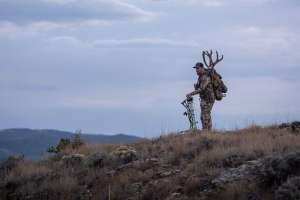

It’s inevitable — people almost certainly begin conversations based on what the weather is doing. Not only does the weather drive conversation, but it also affects your outlook for the day. When the sun shines, it’s much easier to get motivated for an outdoor chore as opposed to undertaking it in a rain shower. Sunny days aside, the weather also influences your archery hunts, particularly the wicked variety, as I recall on a past bowhunt.
The wind was blowing. Passing fronts brought stinging snow squalls through with consistency. The temperature barely hovered at freezing, with subfreezing wind chills. Despite the uncooperative cold front blanketing the area, the weather had not turned horrible enough to stop deer movement. Late in the rut, bucks still prowled for that last hookup before Mother Nature placed breeding testosterone on the shelf again.
For the morning, I chose a treestand overlooking the edge of a willow thicket I felt deer would retire to for shelter from the elements. My bundling of layers kept the cold at bay as several does and fawns of the year entered the thicket. They continued browsing, knowing the storm would likely linger through the morning.
The sound of a gratified feral hog rooting in a backyard garden brought me back from thoughts of a warm fireplace. My peripheral vision soon found the vocalizing, rutting buck, now entering the far corner of the thicket. Would he follow through and end up below my treestand where the female deer passed earlier, or would the foul weather provoke him into bedding for the day? I was hoping he’d stay with his main objective — finding a hot doe — because I knew from experience that the wicked weather tilted the odds in my favor.
Why would wicked weather add bonus points to my game strategy? When you dissect the positives of wicked weather, it’s obvious you shouldn’t pray too hard for bluebird days during your rut hunt.
Weeding Out the Whitetail Crowd
Research posted on the Sentient Decision Science website regarding the study “Misattribution, and Judgments of Well-Being: Informative and Directive Functions of Affective States,” shows that there is a direct weather correlation to your mood.
“In this study, the researchers found that participants’ self-reported happiness and overall life satisfaction changed based on the climate. Of course, the day’s weather is not normally a rational basis for evaluating our overall satisfaction with our lives, but it is an understandable phenomenon. At some point, we’ve all experienced an uplifting mood on a warm spring day, and consequently breathed over tired laments on a grey, rainy afternoon.”
Think back to how many times, whether bowhunting whitetails, turkey hunting or even predator hunting, you decided to pass due to inclement weather. I readily admit, the older I get, the more I pass on hunting cruddy days over those with moderate weather. But should you or I take a pass? Think of the positives. Public lands see a break in the number of users on days with bad weather, and when you share hunting land with others they may not venture out in wicked conditions. This gives you more freedom to choose better hunting sites, hunt a shared stand that a buddy might usually call dibs on and overall, have a property all to yourself. That “lonely hunt” experience has decreased significantly in recent years, but weather could help, at least for a day.
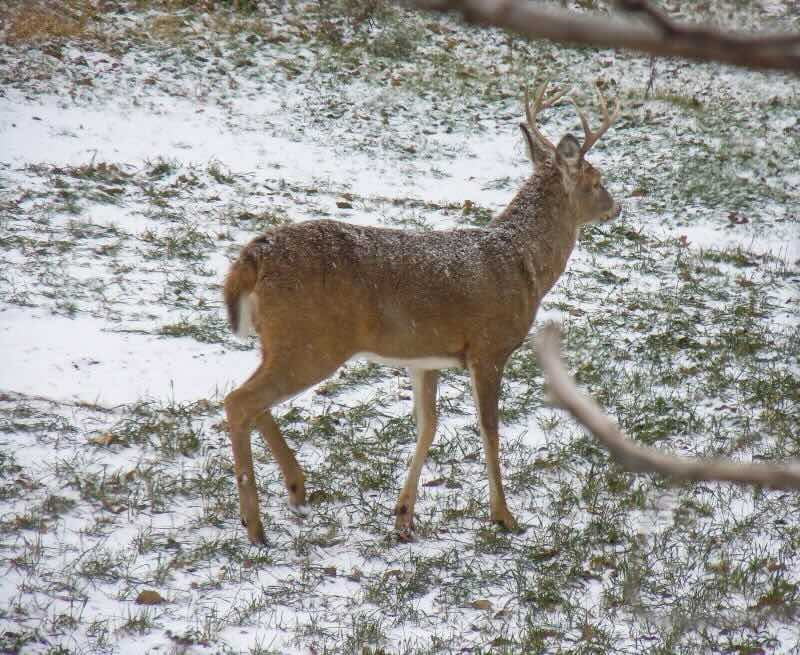
Add to the fact that new GPS studies indicate that deer still move despite bad weather anomalies. They move approximately the same amount of time, but may alter patterns due to particularly horrible conditions and feed in sheltered areas as opposed to a wide-open food plot. Instead of waiting at a field-edge setup, you should have several ambush sites in areas not affected by the weather. Consider favorite browsing sites, the leaves and twigs of woody plants, preferred by deer in your region. Local biologists can point you in the right direction, or scout deer from afar as they nibble across your property. Also pay special attention to the acorn crop if available in an area. These protected areas from weather could be the hotspot when cold and dampness invade your hunt.
Bad weather creates a gloomy atmosphere and conditions that many hunters pass on waiting for a better day. Consider not waiting and donning appropriate gear to capitalize on this opportunity.
An Abundance of Cover
Many of you have experienced the marvel of a whitetail jumping the string on a calm day. Fingers crossed it resulted in a miss, but the amazing speed of a whitetail ducking an arrow is astonishing. Maybe your clothes made noise during the draw or your stand creaked, or whatever, but subtle sounds can set off a whitetail like a July Fourth firecracker. Nasty weather brings along a variety of ingredients to provide cover for those mistakes.
The wind could be your best friend. Of course, it could also be your worst adversary. Screaming winds do you little good. The jostling environment keeps whitetails on edge and in a constant state of paranoia. Not only that, but have you tried to settle your bowsight pin on a target while strapped to a swaying tree from a 40-mph wind? And then you must consider arrow drift if a long shot presents itself. Yes, wind can be a nasty element.
A moderate to breezy wind, though? I love it. Winds from 10 to 20 mph offer a great benefit to your hunt, especially if you hunt a sturdy permanent blind or a stout tree with a solid trunk to prevent any swaying. In a situation such as this, the wind becomes your best friend. It masks not only any unintentional noise you might create, drawing or bumping gear in a stand, but it also provides movement to the backdrop. Swaying limbs and falling leaves mix with the background noise to conceal slight movements along with slight noise. Yet, the insignificance of a breezy day, something most whitetails are accustomed to, does not put them at DEFCON 1 status, thus diminishing the string-jumping phenomena.
A steady breeze also aids scent control. I go overboard with my Wildlife Research Center regimen, but a stiff breeze helps keep any human scent particles moving above the nose level of deer. On calm days, scent descends, especially when hitchhiking on the downward path of cool thermals sinking back to earth. Common sense tells you that a consistent breeze keeps your scent hoisted high and moving away well before it has a chance to dip back to earth.
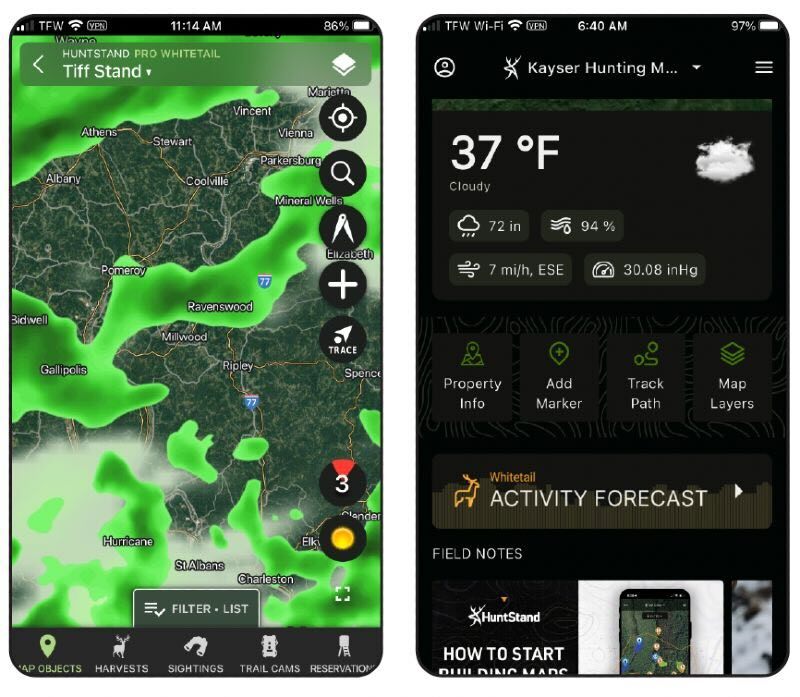
Background movement, plus decreased visibility also occurs when mist, flurries or other moisture, such as fog, envelops your hunting area. Major storms aside, weathering a trivial moisture event offers you concealment while sneaking into an afternoon stand, and while adjusting for a shot. Monitor all weather changes on your hunting app. My HuntStand app gives me precise hour to hour updates, plus an accurate 10-day forecast for the long-haul hunt.
Move It or Lose It
Depending on the length of a weather event or the severity, it can spark deer to feed more. A rain shower or several hours of snow may not be a major factor in the basic existence of a whitetail, but extended hours or even days of dreary weather prods deer to feed. It’s a simple fact of metabolism. When your body needs more fuel, you need to feed it. That need for calories could be from increased activity or a body working harder to stay warm in adverse conditions.
A simple example can be seen in the number of calories included in military MREs (meals ready to eat). A regular MRE, made up of a variety of food options, tallies an impressive 1,250 calories. A couple of these per day for the average fighting soldier keeps them energized to continue warfare. When the weather turns colder, military gear also changes to address issues such as preventing hypothermia. The same is true of MREs. Instead of the approximate calorie inclusion of 1,250, cold-weather MREs jump up to 1,560 or more calories per package. Plus, depending on the weather extremes, soldiers may need to eat two or even three per day to maintain energy, plus heat in these environments.
Deer have their own MREs. Although they may not perish in a single weather event, several days, weeks or months of extended bad weather can have a detrimental effect. Even with a day or two of decreased temperatures and ongoing moisture, deer feel the need to fuel up with the best, albeit in a protected restaurant setting.
Some of the highest energy foods that deer have access to include corn, soybeans and turnips. Local agricultural offerings and food plot options you plant all could become more of a focus. And even if bucks shirk exposure, during the rut a group of does hitting a corn feeder during an Oklahoma freezing rain event could tempt a buck into showing itself.
Worried About Weather, Not You
Toss in some breezy weather, the whitetail worry of staying warm and behavioral diversions like the rut, whitetails have much to worry about besides you. Yes, they still stay focused on surveying the backdrop for predators, two- or four-legged, but a moderate weather event just adds more on to their to-do list. Whitetails have a focus more on survival or at least staying comfortable when The Weather Channel dishes out unpleasantness. That small distraction may not seem like much, but everything helps when hunting a walking ADT security system.
The National Deer Association publishes many insightful articles on whitetail behavior including a 2024 article from author Brian Grossman, an NDA staffer, also a trained biologist. His article, “Does Weather Impact Deer Movement?” showcases many weather variables, some extreme, that produce movement and many that stifle it, but overall, deer continue to move, especially in modest fluctuations of weather’s worst. He sums it up like this in his article:
“So, in my mind, the take home message here is to not let weather factors — temperature, wind, or rain — keep you from hunting on an otherwise good day. This is especially true as the rut approaches. The desire to survive — and especially to breed — will trump those outside forces, and provide you with the possibility to finally put a tag on that buck you’ve been chasing all season.”
Bad-Weather Buck
The buck I spied out of my peripheral vision definitely was more worried about the weather with his move to dive into the thicket. The hayfield he moved away from at dawn held no reprieve from the battering breeze, not to mention the snow that was added. He was also browsing along, and even though the rut was still active, he knew that the hookup days were dwindling. Survival would become a priority very soon and browsing helped maintain heat, plus not lose any more weight with winter coming on.
That may have been going through his mind, but my mind was bursting with thoughts on his perceived travel route. Would he pass within bow range? Awash in anxiety, it suddenly hit me: Send a couple of grunts his way. Even in the close quarters, the wind and snow would hide exactly where the sound emanated, yet let him know another buck was in my direction.
The second he heard the sound, he stopped. Then, as if scripted, he plodded and weaved through the willows, jumping an old, barbed-wire fence and finally passing right below my treestand. I didn’t hesitate because now he had eyeballs on a nearby doe. In one smooth motion, I drew my bow, nudged the sight pin onto his shoulder and depressed the release.
He exploded like a mule smacked with a hot branding iron and surprisingly, bolted to the open hayfield. There, he paused, wobbled and piled into a heap. A bit of bad weather helped direct a successful hunt and best of all, as I made my way over to the mature buck, peeks of sun started breaking through the clouds. My spirits were already high, but the sunshine was a welcome addition to the moment.
Sidebar: Muddy TRX for the Win
Ask anyone who hunts with me — I tend to overdo it, especially in the clothing department. My body fluctuates wildly in temperature based on whether I’m idle or active. To win in a wicked-weather situation, I layer to the max, and I take it seriously, even in above-freezing temperatures. Why?
It doesn’t take the human body long to go from a hint of sweat to hypothermia in temperatures near 50 degrees and under. The key is to always maintain balance in body temperature. First, layer with polyester base layers. This wonder material wicks away moisture from the body and dries quickly if wet. Second, hike into your stand with the minimum of clothing on to minimize sweating. Pack all extra layers in your backpack. Third, eat healthily and keep snacks on hand. Think fat, protein and carbohydrates, but eat reasonably.
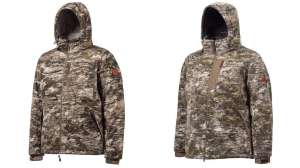
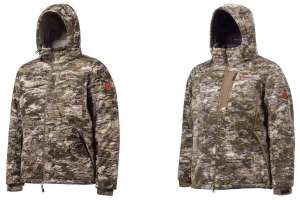
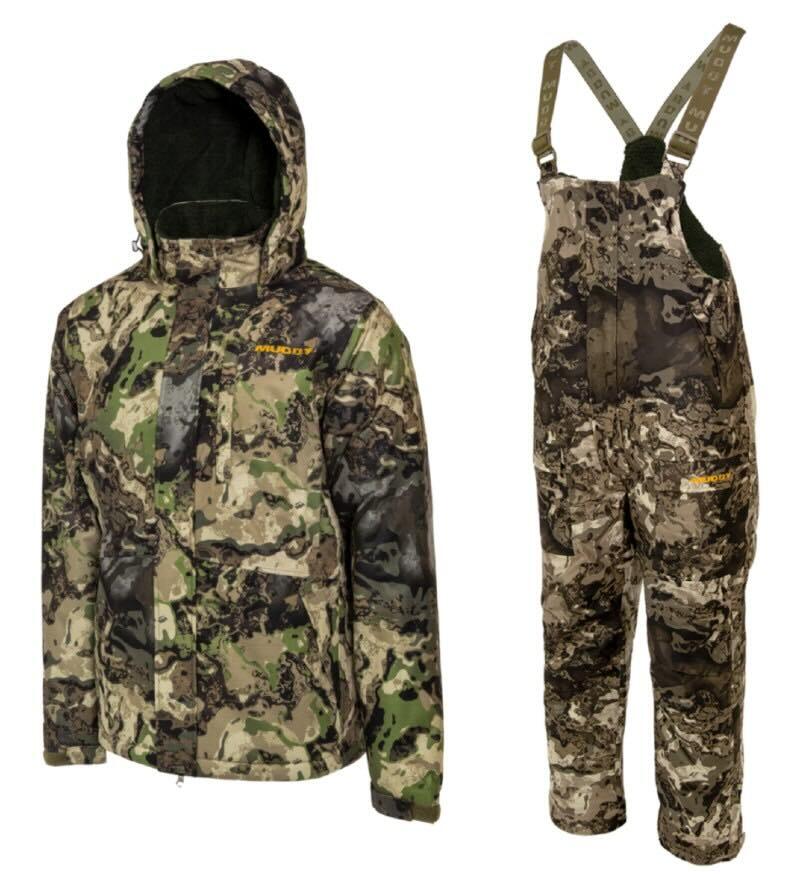
Finally, choose the best layers for the day. I often dress moderately in polyester and fleece as a base. My outer layer is insulated and waterproof. Lately, I have been field testing the new Muddy TRX line of clothes. Their waterproof Sherpa Fleece Bib adds an extra layer to the vital organs to preserve heat, and the TRX Waterproof Sherpa Fleece Jacket guards all the working parts needed to perform an accurate shot in wicked conditions. I’ve been impressed with its performance. Check it out at www.gomuddy.com.
Hunting images by Mark Kayser