
One of the neat things about bowhunting for whitetails? The challenge to outwit our most popular big game animal never seems to grow old. Conversely, you can’t say the same about some of our hunting areas. Sudden land sales, leases, logging operations, tree-damaging winds and tornadoes, or maybe a sudden influx of pressure on lands we’ve hunted for years can leave us frustrated and reeling — and looking for greener pastures.
Then, too, maybe you are lucky enough to tag out early in your home state and find yourself with vacation days left to burn. Or maybe you simply have a taste for adventure. If you could fit it in, who would argue against another week of whitetail hunting in their fall? Whatever your situation, here are four fun whitetail bowhunts you might want to consider.
Boundary Waters Canoe Area Wilderness (BWCAW) — Minnesota
Experiencing a top-notch bowhunt in Minnesota’s BWCAW is all about timing. A severe winter can really wreak havoc on the deer population in this far-northern area that borders Canada, but the news for 2026 is promising indeed. The area’s mild winters of ’23-24 and ’24-25 got the deer-recovery ball rolling, and the early word on this past winter is that things weren’t too severe. Color me excited.
Like its name suggests, access into this expansive 1.1-million acre wilderness within the Superior National Forest is by foot or paddle-powered boat only, virtually guaranteeing solitude and a true wilderness experience for those up for the challenge. And likely, it will be just that. This hunt can really test both you and your gear choices. You might see more wolves, moose and martens than deer, but very likely, no other bowhunters.

Gear-wise you must be ready to hunt in most every weather condition including rain and snow, while also packing a good tent, and your choice of a lightweight portable treestand or saddle system. I’d also pack some netting for a makeshift ground blind. Don’t forget food (freeze-dried wins for convenience), a stove, water filter, and zero-degree-rated (or lower) sleeping bag. A compact cot also helps ensure a good night’s rest.

Two of my best BWCAW hunts occurred in late October/early November. During the first, I found a promising rub-marked deer trail across the lake from where I was camped, and one foggy pin-drop morning I rattled in a beauty northwoods 5x5 to point-blank range. After a brief standoff, it appeared the buck had busted me up in my portable stand; I pulled my recurve to full draw as the buck walked slowly away, behind a good-sized pine. As the buck emerged, I released; the shot felt true, but a deflection helped that rutty monarch live on.
Two years later, I paddled back to the same area with a like-minded buddy with the goal of bowhunting just before and during the first weekend of the Minnesota firearms season, which hits the first weekend in November. During the first day, while setting a treestand along the wooded edge of a large low-grass swamp, I froze. A large, mature 5x4 had suddenly appeared in the swamp in front of me, and I tried to look small. No dice. In the next instant we locked eyes; the jig was up. Awestruck, I watched as that brute of a buck, out cruising for does, bolted directly away from me — his heavy, tall rack bobbing and swaying with every long bound.
Later that same day, I listened as my longbow-shooting camp mate detailed how he’d narrowly missed a young buck from a natural ground blind he’d built from downed branches. That buck was also out cruising for does on that crisp northcountry morn. To my mind there isn’t a better place to be when the local bucks are on the prowl.
Another cool thing about the BWCAW is that its permit system sets up nicely for hunters. I feel the most prepared for this unique deer hunt during the years when I also take time in April for boots-on-the-ground scouting of a promising area. In the past, I’ve been clued-in to spots via e-scouting with my HuntStand app, as well as advice from a friend.
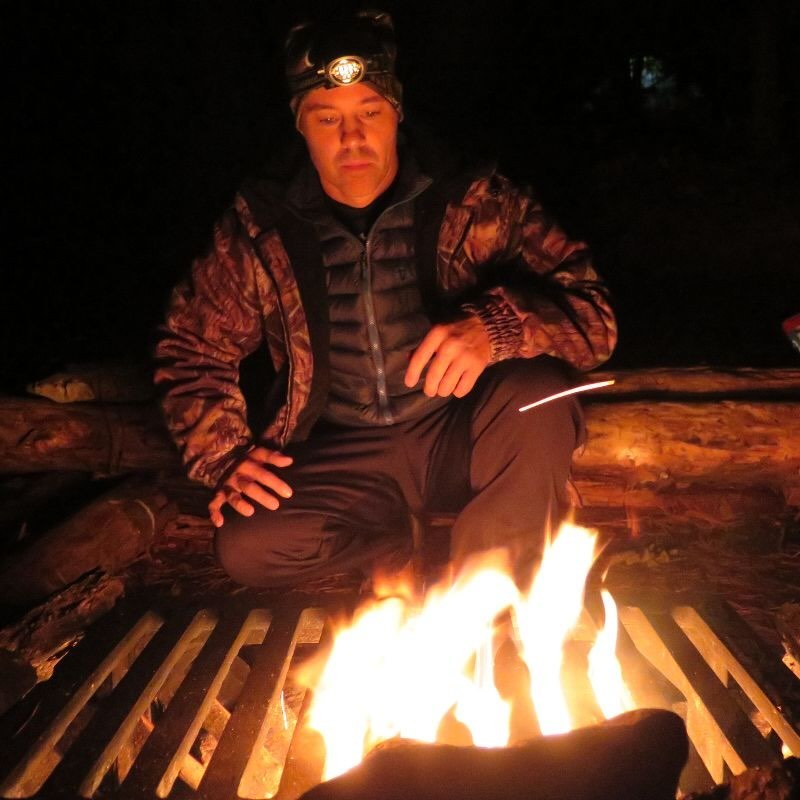
From October 1 to April 30, BWCAW permits are free, self-issued, and do not require advance reservations. During this time period, visitors are merely required to fill out a self-issued permit (available at entry point kiosks or Forest Service offices) for all overnight trips. That’s in stark contrast to the heavily sought-after quota permits required for entry from May 1 to Sept. 30, which must be purchased online beginning in late January.
Trip tip: If you don’t own a state-of-the-art ultralight Kevlar or carbon-fiber canoe designed for easy portaging, know that you can rent one (and any other specialized camping gear) at very reasonable week-long rates from one of the many local outfitters in nearby Ely, Minnesota. (Click here for more information on the BWCAW.)
Reform Conservation Area — Missouri
Fans of public access bowhunting lands know one of the constants in that game is change, and central Missouri’s Reform Conservation Area is a prime example. A good part of this unique chunk of land in Callaway County that holds the Callaway Nuclear Power Plant, has been leased and managed as a bowhunting-only area by the Missouri Department of Conservation since way back in 1978. Yes, we’re talking a managed bowhunting-only property for 48 consecutive years!
Historically, and maybe as you might guess, the 7,200-acre public bowhunting-only tract was extremely popular for its reputation for churning out trophy bucks — one of the best hunting areas in one of the heaviest deer harvest counties in the state. Now the unfortunate news: As of July 2025, the area is now more than 4,000 acres smaller, due to the Power Plant owner deciding to reclaim the northern portion of the state’s lease. The silver lining for adventurous bowhunters moving forward? There are still 2,900 acres of public bowhunting-only land still left to roam (see map below).

“The biggest thing is, this area still has the potential to grow big bucks,” said Jeff Demand, wildlife biologist for the Missouri Department of Conservation. An avid bowhunter himself, Demand in February told me he has managed the area for the last 20 years and has also hunted it, taking a fine 135-inch buck there in 2011.
Demand says the recent land reduction has greatly changed the area, removing virtually all of the more-open habitat to the north that included some MDC-managed crop fields and edges, and larger overgrown fields.
“The portion we have now is all forested, it’s a typical oak/hickory forest. We’ve got rolling hills, and deep hollers; it’s close to the Missouri river bluff hills. There are now just a few open fields, we probably have just 150 total acres of smaller fields scattered throughout the property.”
Demand said the area was inundated with hunters last fall but guessed that was likely because many — despite the circulation of several press releases — had not heard about the new boundaries. Currently there are five different marked parking lots surrounding the perimeter of the property, allowing good access. Maybe the best news for bowhunters in 2026 is nothing has yet been done with the adjacent, recently closed areas.
“Right now [the owners] have not begun any construction there, it’s idle, so it’s almost like a refuge right now,” Demand said in February. “But the current 2,900 acres certainly offers quality hunting. The size class of whitetail is certainly there, and if timber hunting is your style, you’ll be fine.”
Demand said that most bowhunters hunting the property, which does not allow any camping, typically stay in the neighboring communities of Fulton and Kingdom City. (Click here for more info.
Land Between the Lakes National Recreation Area — Tennessee/Kentucky
Few things get traveling bowhunters as excited as the promise of hunting mature whitetails. A prime example? The huge chunk of public land sandwiched between Kentucky and Tennessee known as the Land Between the Lakes National Recreation Area (LBL).
This vast area encompasses 170,000 acres of rich soil and prime whitetail habitat; the tract is actually a long narrow peninsula of land surrounded by Kentucky Lake to the west, and Lake Barkley to the east. Two entry points allow access from Tennessee to the south, while three roads allow access from Kentucky to the north.
In addition to local hunters, the area annually attracts bowhunters from all over, according to longtime U.S. Forest Service staff officer Jamey Thweat, who has worked in various capacities at LBL for the past 24 years, and in July 2025 was appointed to head up its land and game management duties.
“We see a lot of hunters from Georgia, Florida and Alabama, as well as North and South Carolina. The attraction is the quality of deer; the antler size, good age classes. We take some pretty nice bucks here; a Boone and Crockett-class deer or two comes off here every year.”
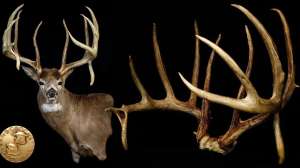
As testament to that, federal officials in February 2026 posted on the LBL website that after an investigation, they’d arrested the poacher of an LBL buck scoring a whopping 187 inches (photo below).

“I would say if you put in your time, it’s possible to see a buck scoring in that 130- to 150-inch range, and they’re spread out throughout the property,” Thweat said.
The area is not without its challenges. Thweat said an exploding feral hog population a few years ago began deterring local farmers from participating in a special-use permit within LBL, thereby reducing the amount of ag fields within its boundaries. Historically, Thweat said, about 2,600 acres have been planted in beans and corn, a total that had dwindled greatly in recent years. And maybe because of that, recent hunter feedback has not been positive. But some changes that began in 2025 should turn things around quickly.
“My goal is to make this a destination again,” Thweat said. “Hunter feedback has not been great the last few years, we’re aware of that, and we’re doing lots of habitat improvement to help change that.”
Thweat said recent trapping and aerial gunnery efforts to reduce the hog population have been “quite successful.” In addition, Thweat said LBL ag lands in 2025 grew to 1,000 acres, with 1,500 acres planned in 2026. More ag expansion is planned.
Also, the LBL has partnered with the National Deer Association and National Wild Turkey Federation to help improve the local habitat. Some ongoing projects include reclaiming overgrown fields and removing stands of non-native, invasive Loblolly pine.
“The Loblally pines outcompete the local oaks and hickory that are beneficial to wildlife,” Thweat said, explaining that the area offers plenty of food for its deer herd. “Last fall, our mast crop was ridiculous. We’ve got lots of good white oaks, lots of acorns, which could be why people are not seeing a lot of deer; they don’t really have to move a lot.”
As far as where the best hunting is, Thweat said the LBL deer population is generally heavier on the southern end near Tennessee, while the larger-bodied deer are found in the northern section near Kentucky.
The area sets up nicely for nonresident hunters with its 450 miles of interior roads, with numerous campgrounds offering a whopping 4,000 campsites. In addition, a backcountry permit ($25) allows you to simply camp off the side of the road; vehicles cannot travel more than a car length off the road.
Nonresident bowhunters must buy and use their archery license from either Kentucky or Tennessee, with an additional $25 LBL Hunter Use permit required. Thweat said the LBL hunt season structures generally follow the two neighboring states, but all hunters are urged to check the LBL website in June, for the official upcoming dates. (Click here for more info.)
Apostle Islands National Lakeshore — Wisconsin
This hunt leapt onto my radar several years ago, while bowhunting with a few buddies in far northern Wisconsin. I’d just tagged out with a nice bigwoods 8-point during the peak of the Badger State rut, and a few of us were in the yard of our remote rental cabin when a guy rolled up with a beauty buck in his truck bed. Turns out the lucky bowhunter knew the owner of our rental who lived next door; he’d stopped to share his own recent success. We learned that the buck — a heavy mature non-typical — was arrowed on one of the nearby Apostle Islands. During our discussion, I was instantly hooked by the possibilities for a unique adventure there.
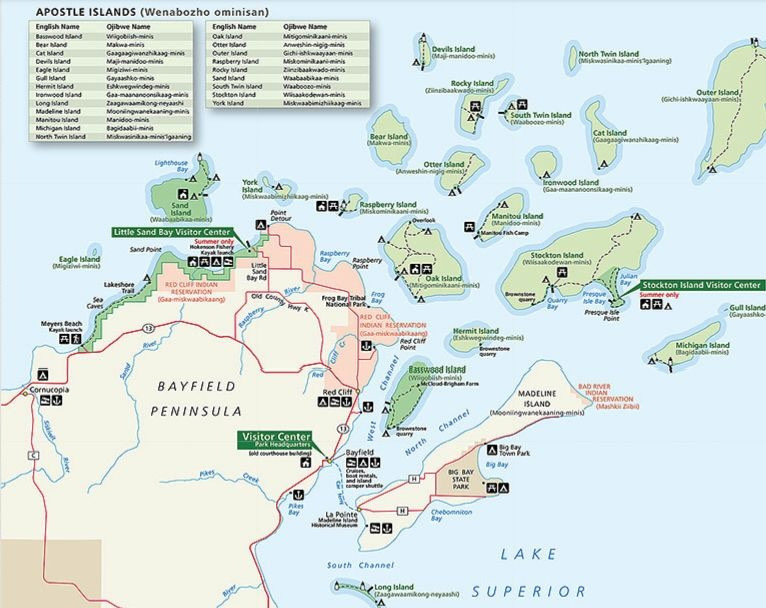
And a unique hunt it is. A total of 21 Islands comprise the scenic Apostle Islands National Lakeshore just off the northern tip of Wisconsin in Lake Superior (map above). In addition, the park includes a strip of land along Wisconsin’s northernmost coastline, but the real draw here are the islands. Several hold deer and black bears, and a whole host of smaller mammals including pine marten, fisher, fox and occasionally wolves. Only a few of them are ideally suitable for deer hunting; according to the park’s website the three islands with the largest deer populations are Basswood, Oak and Stockton. So these are likely your best options. (Click here for a map of the Apostle Islands.)
A hunt on the islands starts with obtaining a current Wisconsin deer archery license; you’ll need that number to apply for a free park access permit and two harvest authorization tags — one buck and one doe. Campsite reservations are also required ($15/night, 1-7 people). For management purposes, the Apostle Islands prefers bowhunters to shoot a doe before a buck, so if the first deer you see is a buck you can shoot it — but you are required to use your regular statewide deer tag. Then, if you continue hunting, your next deer must be a doe on your Apostle Islands doe tag, which would then authorize you to fill your remaining Apostle Islands buck tag. And if you bag a doe first, you can still fill your two buck tags.
Now for a reality check: Before you get too excited about returning from your Apostle Islands adventure packing two bucks and a doe, there is a friendly hunter warning on the Apostle Islands website. It states that the deer densities on the islands are “much lower than the mainland deer population” and that the likelihood of a single hunter bagging two bucks and a doe is “extremely low.” My own thoughts? Bowhunting success like that over a week-long hunt would be a long shot most anywhere, and the right bowhunters for this hunt are those who value a truly unique experience over filling a freezer. But hey, things just might tip your way.
Maybe one of the biggest challenges for bowhunters is the unique Apostle Islands hunt season structure. Archery deer season runs mid-September to September 30, then reopens from November 1 to the first weekend in January. The entire month of October is relegated to muzzleloader hunting only — no bowhunting is allowed.
One more challenge is accessing the islands. One option is using your own Great Lakes-capable watercraft (Lake Superior in fall is no picnic). Another, easier and likely safer option is hiring one of several local shuttle services to haul you and your gear to and from your island of choice.
I’ve been a fan of bowhunting remote stretches of the northcountry from a very young age, and for me, an Apostle Islands hunt would take that experience to the next level. Much like Minnesota’s BWCAW, the Apostle Islands is a somewhat gear-centric adventure requiring most all of what you’d typically bring on that similar water-access hunt. Make a list, then check it often. Because once that drop-off boat leaves, it’ll be just you, your gear, and a remote, pristine island holding some high-quality northcountry whitetails. For some of us, that’s a little slice of bowhunting heaven.