
Whitetail hunters live for the rut. Why not? Bucks move more; they ignore obvious danger at times; they respond to deer calls, scents and decoys. What’s not to like about a hunting period ripe with opportunity?
Don’t get too hasty with your fall whitetail hunt plans. Late October and November rock for a wide swath of whitetail country, but September is no slouch. Warmer days beckon activities other than hunting, including kids’ sport schedules, pre-winter chores pending, and the never-ending demands of careers. Nevertheless, early fall hunting, especially in September, offers bonuses not found during any other time of year. Squirreling away for a few hours for hunting whenever possible could pay off in hunt dividends.
First In Line
Who doesn’t like to be first in line on a Saturday morning Costco opener? September bowhunters experience a similar feeling. You are first in line. Although you don’t get those tasty samples while grocery shopping, you get to hunt deer that haven’t been pursued for 7 to 8 months, or more. Sure, these deer felt some pressure from the occasional coyote encounter, farmer invasion or utility line inspection team. Yet, they haven’t sensed the consistent presence of hunters in the field, especially those who make the mistake of pushing deep into a whitetail’s home range.
Although whitetails have paranoia hardwired into their DNA, they do let their hair down from time to time. Summer is one of those periods, and as summer transitions to the colors of fall, whitetails do not necessarily go on the defense overnight. Use that to your advantage as you scout, plan ambushes and execute.
Another bonus about being enthusiastic about a September bowhunt is many others simply are not. The warmer temperatures don’t spark a hunting interest. Ongoing warm-weather activities keep many bustling, a multitude of hunting seasons kicking off disperse hunters, and yes, some of you just fall in a rut and only wish to hunt the rut. Use this unfocused time by others as your focused window to have a hunting location all to yourself, with the added benefit of unparanoid whitetails as a bonus.
9-to-5 Consistency
I go back and forth with a mind struggle in September, not unlike Godzilla versus Kong in an actual brawl: Should I be in a whitetail treestand or in the mountains pursuing rutting elk? My Kansas pal doesn’t help because he sends me trail camera images of bucks on a feeding pattern more reliable than an atomic clock. Once whitetails latch onto a food source, they stick to their schedule until something dramatic causes them to forsake it for a better option.
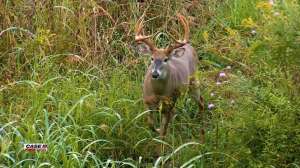
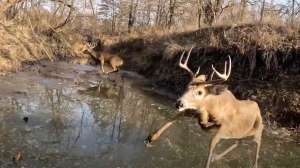
That deer dynamic in September can rival the craziness of the rut. Although some mature whitetails enter feeding areas with caution, younger deer often walk out seemingly without a care in the world, just as they’ve done all summer. Almost all whitetails will hit popular nutrition zones with dependability as they bulk up for the rut and winter ahead. That consistency is prone to change in October as crops are harvested, frosts change food plot forage palatability, and a new source of nutrition outshines the current foodie hotspot, but feeding patterns exist with reliability in September.
Your search for a whitetail bachelor group may end with trail camera images from your food plot; it could be that easy. If not, expand your search to neighboring soybean fields, hayfields and, of course, the ever-popular dropping of mast. A hunting property with an apple orchard or other fruit offerings has more appeal than the newest iPhone to a Gen Zer.
Be especially acorn-aware, as well as agriculture cognizant. Acorns may be the only game in town, and their crop doesn’t have the consistency of the largest corporate corn farm in the county. Each year, oak trees vary in their production, and even when the acorns drop. Even so, both red and white oak tree families have a high guarantee of dropping in September, some earlier and some later, but never overlook the acorn draw to a bachelor group of bucks.
No Puffy Jacket
A real issue arises as temperatures drop. You layer up, and that changes your shooting form. Think about it. All summer you practice in a t-shirt, cargo shorts and even Crocs. Temperatures in the 80s and above equal pleasant times at the range. And on days with drizzle, downpours or wind, how easy is it to skip range day and focus on your 80-inch big screen? Your entire practice regime revolves around an agreeable atmosphere.
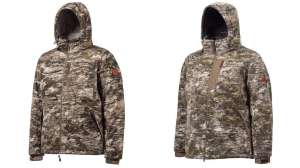
September provides you with a way to seasonally adjust your hunting clothing attire from a t-shirt to maybe a long-sleeved shirt or, at worst, a light jacket. This means your shooting form doesn’t have to battle the bulge of puffy jackets, vests, neck gaiters and face masks. That extra bulk can easily alter your form, and although you may not notice accuracy variations on slam-dunk shots at 15 yards or less, it could rear its ugly results at 30 yards and beyond.
To this day I use a chest guard, popular with women for obvious reasons, to compress my puffy layers. This compression allows my bowstring to follow a near-normal draw back to my anchor point without having to struggle against layers of Thinsulate. Of course, in September, the chest guard stays at home and my form stays the same as summer arrow launches weeks prior.

Time to Plan . . . Just in Case
Whitetail bowhunting success rates vary, but suffice to say, you have at least a 50 percent chance of flunking out in early fall. Will that hunting time be a waste? I argue, no. Any time spent in the field, regardless of the species pursued, adds to your playbook for a future matchup. While hunting, why not pre-set your scent drippers, scent stations and mock scrapes? And even an army of trail cameras sometimes misses the subtleties of a mature buck feeding in a field corner you never considered for surveillance. Time in a stand could reveal that mature buck’s peculiarity to show up in that far corner, or be last in line as the bachelors take the field.
Spotting a new target buck, zeroing in on a buck’s core territory, even witnessing the patterns of other hunters giving you intel to adjust your ambush ambitions all adds up to success. That success may be on your next hunt, the next week or next month.