
Do you have access to only a postage-stamp-sized hunting property? No worries. Whitetails spend much of their life living in a similar fish-bowl world. Wildlife biologists have long established that most whitetails live in an approximate 1-square-mile home range. Inside that home range lies their core home range. They spend 50 percent of their time there and that sliver of domicile bliss could be less than 100 acres.
Sure, the rut and even regional variances change that home territory, but unlike elk that abandon homes permanently without a second thought, whitetails return to eventually sleep in their own bed.
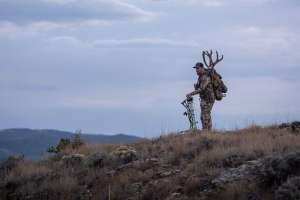
The home-body nature of a whitetail gives you hope that small property hunting could work in your favor. I’ve experienced it and know several bowhunters consistently anchoring big bucks on fewer than 100 acres. One bowhunter I know hunts a 10-acre property with success on bucks from 180 to 190 points. If you have access to only a small property, quit whining and analyze it to take advantage of every benefit it might offer.
The Right Stuff
Every small property doesn’t have the right stuff for you to launch an arrow. Properties with no cover or even too much cover curtail hunting opportunities. Those anomalies aside, scrutinize the property for details that deer appreciate. Keep it simple; focus on food, travel corridors, shelter and maybe water in arid zones.
First, consider food as it lures deer and keeps them nearby. An acre of food on 50 acres has big attraction, and the more the better. If you can plant a food plot, use seed mixtures or partition your plot, but plant several varieties to appease palates before and after the frost season. Early season deer are drawn to browse options high in protein. As winter’s grip increases, deer transition to carbohydrate-heavy and high-fat crops.
Even without a food plot, a handful of oak trees might scatter mast enough for several months of deer desirability. And regardless of what you feel about baiting, if legal, it alone could be the magnet for deer to bypass onto a small property.
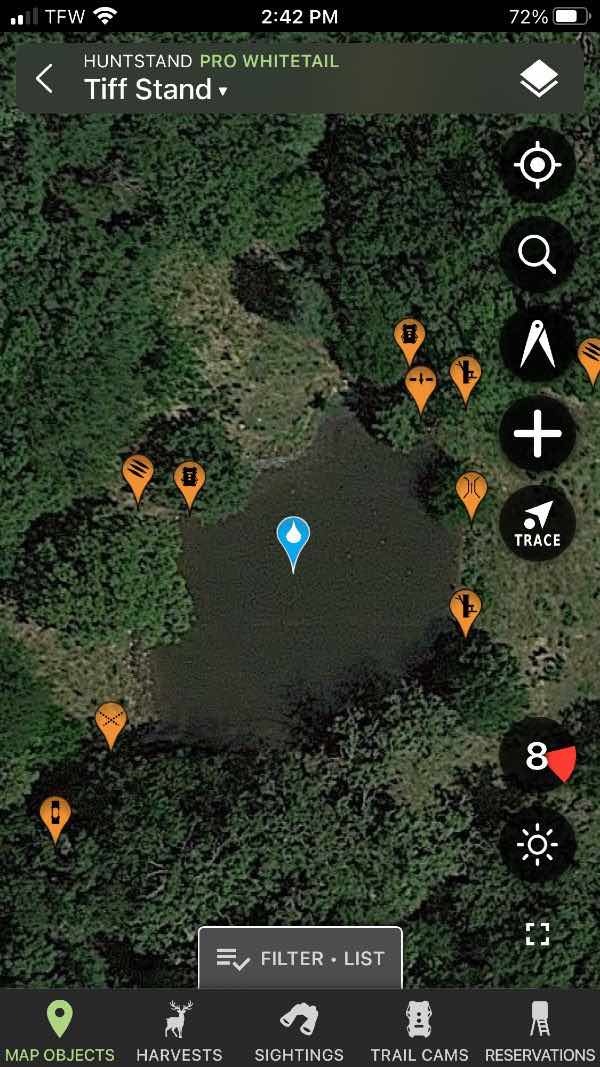
Travel corridors also have an impact on small properties. Your tiny piece of heaven could be the link between a cedar-choked ridge, bedding cover and a soybean field. Study all surrounding properties and put that hunting app to work looking for possible travel routes, funnels and pinch-points. It amazes me how often I see an obvious (but originally missed) passageway on a property while looking down on it with my HuntStand app.
It seems as if food plots and feeders exist on every 120 acres, but off-limit areas do not. Consider making most of your small property a refuge and, whenever possible, make noticeable improvements to that sanctuary setting. Start by establishing off-limit zones where you and your friends do not venture. These should be in the most secluded, densest and roughest country on the property. Think coulees, wetlands and overgrown forest areas. For properties lacking in any refuge criteria, add it.
Planting crops such as sorghum, Egyptian wheat, corn or even landscape reed grass can create a sense of security for deer. It also proves worthy in veiling your arrival and exit after the hunt (more on that in the next section). When Mother Nature fails and farming is a no-no, get handy with a chainsaw. Felling dead timber, gathering downed trees and pushing them into piles creates windbreaks, and blocks for wildlife including whitetails. It also provides another wall of cover for you to use as a cloak while hiking to your hunting ambush location.
The scent of other deer also boosts the confidence for more whitetail visitors. Establishing mock scrapes with drippers, misting scent in your shooting lanes and dispensing scent via wicks all add an atmosphere that a property is the happening place. Switching scents systematically from a dominant buck scent to Special Golden Estrus and other scents keeps deer curiosity levels piqued at the faux visitation.
Arrival and Departure Schedule
Do not follow the crowd. Avoid the path-of-least-resistance if it leaves you exposed on your way in and out of the small property. Instead, unearth hidden routes and plan more than one. This allows you to vary your entrance so as not be patternable.
Kick off your route selection by studying predominant winds and then search for every possible topographical advantage to duck out of sight. Ridges, steep hillsides, dry creek beds and a host of other geographical anomalies provide 6 feet of height or more to hide your upright form. Long ago I began using steep river and creek edges, and even walking on ice, to stay below banks while navigating to ambush locations.
If the topography doesn’t favor an invisible route, supplemental vegetation and tree piles could be the answer. For example, plant a row of dense, tall grass to disappear behind as you make your move.
Hunt Smarter
With all your planning in place to optimize a small parcel, hunt with patience. Skipping that attribute could ruin a small property promptly regardless of your overall plan. Small properties give you only small margins of error before you fail. So, utilize patience to determine the best time period of the day to hunt, when to skip a day of hunting, and how much pressure a particular property can take before it gets burned out.
You already know that deer often behave on a dawn-and-dusk schedule. You will want to hunt these periods whenever possible, but it might not fit the character of the hunting property. Deer hanging on your property all night could lead to you bumping into them as you enter in the darkness before dawn. Vice versa, deer locking onto a food source at dusk could trap you in a stand, forcing you to consider alarming deer during your exit. Plan carefully to avoid bumping deer.
A wind change could be all wrong for hunting a small property and cause you to push your patience up another level. And you may even be sharing a property with other hunters, possibly weekend warriors. Instead of battling their miscalculations, you may have to be patient and hunt the property only during midweek when deer return to a normal pattern after the weekend blowout.
Finally, hunt smart along property boundaries. Even a picture-perfect, double-lung arrow does not anchor a deer, and it could easily flee 100 yards to jump a fence, and die on the neighboring land. That may not be an issue if you have a relationship with that deed holder, or it could create bad feelings for years ahead. Review every hunting scenario with solutions to keep the hunting on your side of the fence.