
Calling a strutting tom into spitting distance with a bow in hand is one of the most exhilarating experiences a bowhunter can have during the months of April and May. Those up-in-your-face encounters with red-faced strutters always makes you want to go back for more.
However, when the stars don’t line up with typical calling techniques, bowhunting spring turkeys can be downright discouraging. I’ve had spring mornings where I was so disgusted with the lack of response to my calling efforts that I all but gave up and went hunting for shed antlers instead. It is these types of mornings that contribute to turkey being at the bottom of my favorite species list.
Nonetheless, every spring I find myself under the guise of dawn — waiting, listening, for an opportunity to arrow a longbeard. Over the years, as calling action has ebbed and flowed, I’ve learned to adapt to various gobbler responses, or lack thereof. Bowhunting stubborn gobblers that don’t want to come to a call can be frustrating. The following are alternative tactics that I have proven to be effective on spring gobblers.
Mix It Up With Decoys
One major factor of bowhunting turkeys is decoys. When I have trouble getting toms to commit to my setup, one of the first things I consider are my decoys. Are the decoys where the birds can see them? Is the wind blowing a decoy?
Eyesight is one of the greatest assets a turkey possesses. If they can’t see the decoy as they come in, or if the decoy looks unnatural due to gusts of wind or poor placement, they aren’t going to come.
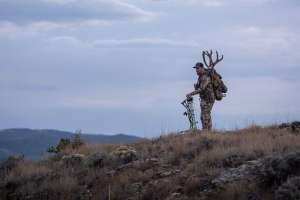
Much of my archery turkey hunting ventures have taken place out west where I put on miles in the mountains, trying to locate birds. In these instances, I often have only one hen decoy in my backpack because carrying more than that just isn’t realistic. I’ve found though that often one hen decoy isn’t enough to trick a tom; they want to see multiple birds.
When I am not trekking throughout the hills, I will place multiple decoys. This tactic has been most effective when I have put a strutting tom decoy in place. Doing so often gets a tom to come challenge the competition, and I have had toms charge in and beat the snot out of my strutter decoys.

On one bowhunt, I was getting incredible calling action. The timber was erupting with dozens of gobbles. The problem was, the toms were henned up, and as soon as the birds hit the dirt off the roost, they were promptly trailing hens. Though the toms would respond to my calling, they showed little interest in coming to look for hens when they were surrounded by them.
After a few days of unsuccessfully calling in a tom, I knew I needed to try something new. Having roosted the birds the evening prior, I crept in tight to the roost trees, less than 100 yards. To get away with this sneak attack, I got to the spot more than an hour before dawn. I planted my strutting tom decoy and a fake hen where I thought the toms would see them when they landed, tucked into the front side of a spindly ponderosa, and waited for the world to come to life.
I kept silent until the toms awoke and let out a couple gobbles. I then replied with a handful of clucks and yelps to let the toms know my location. When the first tom pitched to the ground, he immediately spotted my decoy setup. He puffed into strut mode, made a few circles, then marched right up to my tom decoy and started slapping it around. When the tom spun his head behind the decoys fan, I quickly drew my bow. When the tom walked out from behind the decoy just 9 yards away, I zipped a Rage two-blade Hypodermic through his center. Before I could celebrate the successful execution of my plan, another tom gobbled just yards behind me, then charged in and started beating the daylights out of the bird I had just arrowed.
Another method of switching things up with decoys is to simply discard their use altogether. Many of the public land areas that I bowhunt get a lot of pressure, and I have found in some instances that decoys can deter toms from coming in. If you are hiking in heavily hunted areas and the decoys seem to make the birds skittish, then consider leaving them in the truck.
I have called in numerous turkeys without the aide of a decoy. A turkey's astute sense of hearing allows them to pinpoint your location based on your calling. So, if I’m hunting without a decoy, I will stop calling once I can see or hear that they are close and coming.
Example: This past spring I set up on an open field along a creek side with no decoy in place. I could hear multiple toms gobbling a few hundred yards away. After about 30 minutes of calling, I could see three toms working their way to me. I shut up and prepared for a shot as I anticipated their incoming stroll. Minutes later, the three young toms were standing 11 yards from me. After making a decisive shot, I was standing over a beautiful bird.
Set an Ambush
One of the first turkeys I ever killed with a bow, I ambushed in a pinch point between his daily feeding area and his roost. Over several days of chasing this big tom, I learned his basic travel routes, which included flying down from the tree, chasing hens, and then heading to the river to feed for the day. Then he and his hens would reverse the travel route in the evening.
With no luck getting the old tom to come to call, I set up against a pine tree in his travel corridor where I believed he would follow his hens back to the evening roost. Having spotted the birds working their way up from the river, I had an arrow knocked and ready when the tom trailed his hens 20 yards to my left. When the tom stepped behind a tree, I drew my bow. As he stepped out on the other side and stopped, I held my top pin on his upper chest and touched off the release. The tom was dead before the arrow landed on his opposite side.
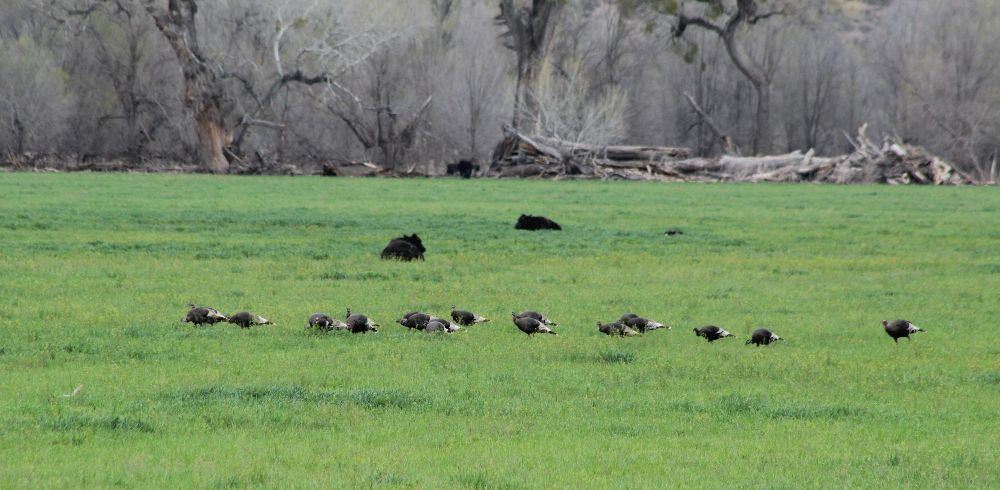
Turkeys typically form routines that can be patterned. Roost trees, travel routes, feeding and watering areas, as well as open areas where toms will strut their stuff for the ladies are all patternable aspects of a turkey’s day. Discovering these routines can inform you of places to sit and wait for birds to move through.
Also, look for tracks and wing tip marks in the dirt such as in ag fields, meadows, or down two-track roads. This sign indicates locations where toms have been strutting. Toms will often return to these places from day to day and can be good places to set an ambush. If you are having difficulty getting toms to come to a call or decoys, establishing a pattern of turkey movements and travel routes and then setting up a blind may be the perfect way to waylay a tom.
Spot-and-Stalk
A low-odd, near last-resort option I’ve used on turkeys is spot-and-stalk, or a combination of still hunting and stalking. This is extremely difficult to execute due to a turkey's keen eyesight and its nomadic nature. I have spent a decent amount of time trying to stalk in close to birds, having experienced failure the majority of the time. However, it has provided me with a few shot opportunities and plenty of appreciation for a turkey’s wariness.
Sneaking up on a turkey is a challenging endeavor that makes you feel incompetent when you fail but quite fulfilled when it all comes together. The best way to try to do this is to look for birds where there is cover available for stalking, either rolling terrain, trees and brush, or a combination of both. If a bird is in the wide open, such as a wheat field or open prairie, all bets are off.
Another factor that is ideal for trying this tactic is finding birds that are relatively stationary, such as when they’re feeding, or toms are focused on vying for a mate. If they are just cruising from one area to the next, it’s nearly impossible to catch up to them.
Arrowing a turkey by spot-and-stalk can be done though if you have the right situation. On one bowhunt, I could see a pile of toms strutting around some hens. They were several hundred yards from my blind, and it was obvious they weren’t coming in. With the birds staying in the same spot and nothing to lose, I barreled out of the blind and headed for cover. I watched and waited until all the birds walked over a small hill, then I made my move. With the birds out of sight, I ran to the base of the rise, knocked an arrow, and eased up to the top, eyeing for the first glimpse of a tom. Staying low to the hillside, I could see turkeys everywhere, including a tom walking straight at me. I drew my bow, and when the bird cleared the last blades of grass, I sent an Easton Axis through him.
Another memorable spot-and-stalk outing occurred on a last-day hunt. It was mid-May and most of the breeding action had died down. That afternoon, though, this one tom was fired up, courting a hot hen. He would gobble on his own and occasionally answer my calls, but it was clear he was moving away from me. That being the case, I moved off the ridgetop to the draw where I could hear him. As I eased closer, the gobbles started getting louder, so I dropped my pack and clipped an arrow to my bowstring. When I caught glimpses of the gobbler’s tail fan through the trees, I made a dash up the tree line, cutting the distance to where the tom would emerge. As the hens made their way into the opening, I grabbed a quick range then drew back to my anchor point as the tom followed. My arrow collected only a few feather tips, but the rush I got from getting so close while spotting and stalking had me smiling from ear to ear.
Bait and Wait
In states where it is legal, another option for finding success on turkeys with a bow is to set up over bait. If there are no law restrictions against it, and you have no personal reservations about ethically bowhunting turkeys over bait, then this may be a good alternative option when all else seems to fail.
I’ve bowhunted turkeys over bait a couple of times. Though this method does provide high odds of success, I would argue that it doesn’t necessarily guarantee success. Planning and preparation are required to place the bait site and subsequent blind location. This is typically any area where birds frequently travel and can access the cracked corn with plenty of open space to feel safe when coming and going. Additionally, you must get drawn back undetected and place a vital arrow. This isn’t my preferred option, but it has provided some exciting bowhunting action when the calling had essentially ended for the season and nothing else was working.

Final Thoughts
Getting a shot at a gobbler isn’t always as straight forward as getting one to come to your call. If your usual methods aren’t working, try mixing things up with these previously mentioned tactics.
Whether the pursuit is a longbeard or otherwise, bowhunting is a game of adapting to circumstances. If one method isn’t working, try something else. With patience and persistence, something will eventually lead to success.

Sidebar: Switch Up the Sounds
Even when toms aren’t responding well to calling, I try to always carry extra calls with me, particularly diaphragms. Some days certain sounds resonate better with toms than others. What is hot one day may not be the next. Just as with trying different hunting methods, don’t be afraid to try a multitude of calls until you find what the birds are responding to. Also, if the birds won’t commit to coming in, being able to locate them through calling still gives you the opportunity to implement other bowhunting tactics.
Photos by Kyle S. Lipke