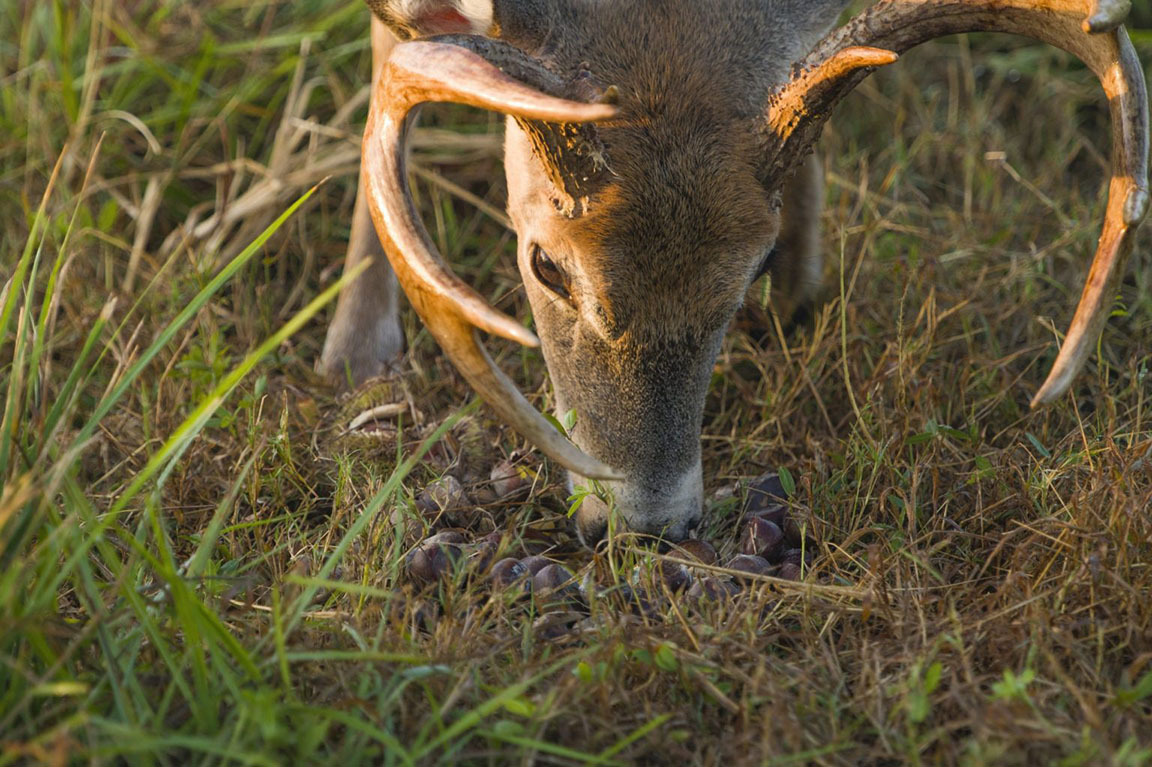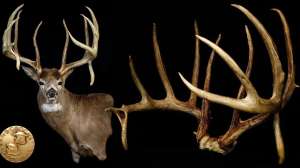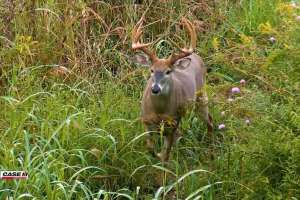

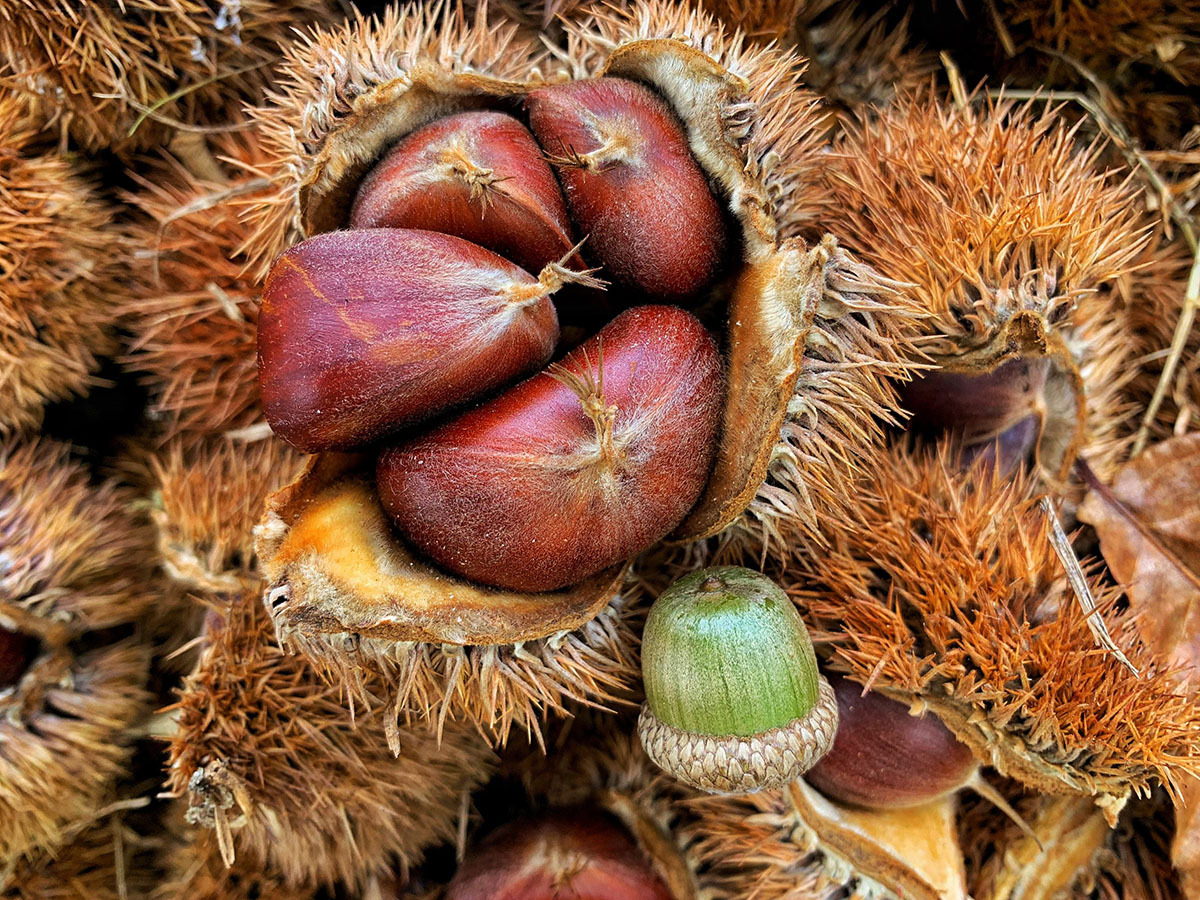
It’s no secret that deer love mast species — oaks, hickories, beechnuts and more. Chestnuts are toward the top of that list of a whitetail’s favorite foods due to their nutritional superiority — chestnuts contain approximately 40% carbohydrates and 10% protein, compared to only about 10% carbohydrates and 4% protein for white oak acorns. They also contain more vitamins C, E, and K and are higher in iron, potassium, and selenium than acorns. Unfortunately, today’s forests are full of less palatable, non-native Chinese chestnut trees. But it wasn’t always this way.
At one time, the American chestnut was among the most important tree species in the Eastern United States, used for timber, tannins and food — for people as well as wildlife. Unfortunately, in 1904, a bark fungus was accidentally introduced from Asia, and over the next 40 years, 30 million chestnut trees were killed. The American chestnut, which many considered a keystone species, was all but wiped out. It was an ecological disaster.
Fortunately, in the early 1950s, a single large, living American chestnut tree was discovered with no signs of blight. Through grafting and cross-pollination with Chinese chestnuts, Dr. Robert Dunstan created a cross-bred chestnut tree that now bears his name — the Dunstan chestnut. Now in its second and third generation, the Dunstan chestnut carries a combination of American and Chinese chestnut traits: The sweeter, tastier nuts of the American chestnut with the blight-resistance of the Chinese chestnuts. Grown correctly, they become a good timber tree capable of producing beautiful rot-resistant saw timber.
The Dunstan chestnut is a game-changer for hunters who want to plant mast orchards to feed and attract whitetails. In fact, they’re the ultimate deer attractant. Mature chestnut trees produce more carbohydrates per acre than oaks and even cornfields, so deer expend less energy to find food and gain more from consuming chestnuts. Of course, deer intuitively seek the most nutritious food available to them, and chestnuts are nutritionally superior to acorns as well as being more palatable due to a lack of tannins (the substance that makes acorns bitter). Studies of captive deer have found that deer preferred chestnuts to acorns at a rate of 100 to 1!
Of course, if you’re going to plant chestnut trees, blight is still a huge concern. Many of the chestnut trees sold in the U.S., including American varieties, are not blight-resistant, and these are not likely to produce mast in blighted areas, which unfortunately includes the entire Eastern United States. Even in non-blighted areas, the risk is high that an accidental outbreak could destroy your young trees. It’s simple: You don’t want to risk planting chestnuts that aren’t blight-resistant.
This makes the Dunstan chestnut an excellent choice. Its seedlings produce heavy yearly crops of very large and sweet-tasting nuts that peel easily and aren’t bland or bitter. They grow bigger and faster than oaks — depending on care and climate, the Dunstan chestnut can produce nuts in as little as three to five years. On top of that, they produce a good crop every year under favorable conditions, unlike oaks, which tend to have a bumper crop every few years on a cyclical basis. Chesnuts ripen in September-November, which is perfect timing for hunting season.
Dr. Dunsten’s second generation of Dunstan Chestnuts was moved to Alachua, Florida, where they’ve been bearing fruit annually for nearly 50 years. Today, that property is owned by Chestnut Hill Outdoors, which is dedicated to reforesting America with blight-resistant chestnut trees.
But they’re not just about selling trees. Through years of research, Chestnut Hill has developed a specialized program providing complete nutrition for deer and wildlife. The company’s mission is to provide the tools and knowledge for customers to enrich the land that sustains us all. They sell a variety of trees, bushes and vines, all with food plots in mind. Their plants are specifically bred to attract deer, and they also provide sound advice and instruction on proper planting and care. There’s a large selection, and you can order different-sized plants at different levels of growth to suit your needs.
We haven’t yet been able to completely bring back the American chestnuts we lost in the first half of the last century, but for hunters and all lovers of the outdoors who want to attract and feed wildlife, the Dunstan chestnut is an excellent alternative that supplies great mast and is relatively easy to grow. And no one knows more about it than the caretakers of Dr. Dunstan’s original second-generation orchard — Chestnut Hill Outdoors. Give them a call today at (855) 386-7826 or visit www.chestnuthilloutdoors.com to start planning the food plot of your dreams.