
This past week, while I tried to ferret a post-rut elk from Wyoming steeps, warm, bright days pushed bulls into forest hidey-holes. They might as well have been on the moon. Hope inspired by occasional piping was soon dashed by silence. My one chance came after a taxing start-and-stop sneak in a gorge laced by jumbles of bleached boles from the fires of ’88.
“You blasted a limb,” said my companion.
I hadn’t seen a limb. The bead hid much of the elk’s chest. A scope might have helped. We searched anyway, of course. My bullet had indeed strayed.
“I once had to wait over an hour for a shot,” mused my friend, as if mine might have been hurried. A predator hunter, he’d tracked a lion through snowy Dakota badlands to a cave. “I could see eyes. But all else was so dark I couldn’t tell how the body lay.” He telephoned a veteran cat hunter, who advised: “Just stand in front of the cave so the lion doesn’t slip by you. The sun will eventually move enough to give you light for a shot.” It did.
His tale brought to mind a cat cornered by Grancel Fitz, who in 1928 committed to taking a mature specimen of every North American big-game animal. “The hounds were barking at the mouth of a cave,” he wrote. The 4-foot opening fronted a deeper tunnel. Fitz handed his friend a failing flashlight. “We saw into that hole only by lying prone. …” Eyes adjusting to the dark, Fitz spied the cat’s “hind end and tail.” He tried a spine shot.
At the 12-bore’s deafening blast, the flashlight went dead and Fitz’s glasses flew off. The men scrambled for the cave’s mouth, only to be swarmed by the hounds. Fading daylight urged another try. Cautiously, the hunters crawled back. Through the gloom Fitz saw eyes at 10 feet. He “shot once, carefully but fast.”
Every Chance Has an Expiration
While patience is a virtue, delay also imposes costs. You can’t know how much time you have, only when the clock starts. I hadn’t rushed my shot at the elk. On the other hand, I once topped a rise in crusted snow so noisy I expected to find no game close. But elk on the off slope were crunching along as well. I fired too soon at a bull that paused in its step just as the trigger broke. My Nosler missed in front.
Pressure to kill grows as a hunt spools out, especially if no shot comes your way or if you miss a chance. Grancel Fitz felt that pressure in “the last hour of light on the last hunting day” of a two-week quest for Stone’s sheep in British Columbia’s Prophet River country. At dusk he and his guide closed to within 225 yards of a ram that had pulled them up a tall ridge. Fitz dropped prone, exhaled half a breath and pressed the trigger. Then “my oxygen-starved lungs [grabbed] fresh air in one convulsive gasp,” tipping the rifle. The shot went low. He got a second poke as the ram paused at 300 yards. “Again I just couldn’t hold my breath. …” Another miss. Charitably, the sheep then bounded toward Fitz and into his .30-06 soft nose.
A bullet that misses is one sent too soon. Still, speed can matter more than precision. One day in 1965, at a trail bend near his cabin, an Alaskan homesteader locked eyes with a grizzly at 13 steps. It came for him. He dropped his ax and reached his .30-30, on a cord on his back, just in time. His bullet met the bear’s face at 6 feet. At the time, that beast matched the world’s record.
A late friend working in Zimbabwe as a PH also faced big predators. He and a client with a blackpowder 10-bore trailed up a fine lion. Mortally hit, the beast ran off, but smoke obscured three lionesses upset by the violence. Two broke off the charge, but one pressed on, low and fast. Don’s bullet pulped the spine between the shoulders. Dead in mid-air, the beast cart-wheeled past him. Mused my pal: “Accurate may not be enough if you’re slow. But a miss is always bad!”
Annie — A Crowd Favorite
In times long gone, exhibition shooters brought speed and accuracy to entertain crowds. Born in an Ohio cabin in 1860, Phoebe Ann Moses hunted for the table and markets with her .22. In a match, she out-shot visiting ace Frank Butler — then, at 16, married him. The couple joined Buffalo Bill’s Wild West Show. She as Annie Oakley.
Petite and sweet, Annie was soon a crowd favorite. She shot coins from Frank’s fingers and shattered tossed glass balls while aiming in a mirror. Her .22 spat 25 bullets in 25 seconds to chew a ragged hole in the middle of a playing card. Germany’s Crown Prince, to become Kaiser Wilhelm II, asked her to shoot a cigarette from his lips. She did, observing after WWI that a miss might have changed history! Wild West Show marksman Johnny Baker tried for 17 years to out-shoot Annie. “She wouldn’t throw a match. You had to beat her, and she wasn’t beatable.”
That era also produced Adolph Topperwein, born in 1869. The tall, slim Texan honed his talents on aerial targets with Winchester’s 1890 .22 pump, then Model 1903 and 63 autoloaders. Shooting for a circus in 1894, he hit 955 of 1,000 tossed disks — then, shaking his head, broke 987 and 989. After Winchester hired him at 27, “Top” perforated postage stamps on tossed washers and hitting flying .22 hulls with bullets from the Model 63 that ejected them!
In 1907, at San Antonio’s fairgrounds, Topperwein shot for 120 hours with Model 1903s at tossed 2.25-inch wooden blocks. He missed only nine of 72,500, a record that would stand for 50 years. Remington’s Tom Frye finally broke it in ’59 with Nylon 66 autoloaders and a stunning 100,004 hits on 100,010 air-borne blocks!
Topperwein’s mantle at Winchester went to Herb Parsons, born in 1908 in Tennessee. He shot tossed walnuts and lumps of coal when not hunting. After WWII, he went public with shows he’d done for troops. Talking as fast as he fired, he hurled handfuls of oranges aloft, pulping them with a .30-30 lickety-split. He emptied a 10-shot .351 auto from the hip, dusting 10 clay targets on edge. “They’re not hard to hit, folks, just easy to miss!” During a show, crows flew by, far off. When one fell to the bark of his .30-06, Herb smiled: “Well, that bullet had to go somewhere!”
Passing at 51 after hernia surgery, Parsons was arguably the last “old school” exhibition shooter. Wielding production-line rifles with uncanny speed and accuracy, his kind set a high bar for can’t-miss marksmanship, wowing crowds that have also faded away.

Marksmanship Fundamentals
The eye-popping routines of exhibition shooters owe much to genetic gifts. But finishing school for these paragons was the same as for Olympic shooting champs since: regular practice of marksmanship fundamentals: position, sight picture, breath control, trigger press.
Few hunters now drill from unsupported positions. Through powerful optics on expensive rifles, over rests and bipods, they pepper steel plates far away. Good sport. But traditional skills can be more useful on hunts.
Larry Benoit grew up in the wake of the Depression, hunting with a single-shot Stevens rifle. It gave way to a Model 14 Remington pump, then to its progeny, the 760. A skilled tracker, Larry gained celebrity killing big whitetail bucks in the forests of Maine and his native Vermont. He used a Williams receiver sight minus its screw-in aperture. His .30-06’s 18-inch barrel swung fast but gave him the precision to topple a moose at 400 yards.
The open sights of exhibition shooters are ill-suited to studied aim. They require your eye to focus on the rear sight, front sight and target at once. Their short sight radius (distance between sights) is a liability, too. An aperture near your eye improves accuracy, reveals more of the target.
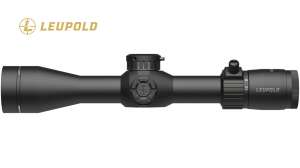
You get the clearest, brightest sight picture — and arguably fastest aim — with a low-power scope. Target and reticle appear unobstructed, in sharp focus and in the same apparent plane. The fly in this ointment is magnification. Many hunters miss because they dial up too much!
A powerful scope can delay your shot. Its small field of view can steal seconds while you find the beast — or the right one. As your eye adjusts to a larger-than-life image, it must deal with the reticle’s magnified jitters. The longer you aim, the harder these are to control. Elevated pulse and tiring muscles add movement. Aware the shot is unraveling, you yank the trigger. Nearly all shots I’ve taken at game could have been made handily with a 6X scope, most with a 4X.
Steady as She Goes
The value of a steady rifle is hard to overstate. When you’re gripping it, a rifle is never truly still. Even on sandbags, it shudders to your pulse. From hunting positions, you can minimize shake by getting closer to earth. The more the position relies on bone structure, not muscles, the less you’ll wobble. Aligning your body so the rifle points naturally at the target, you limit muscle quiver, and the rifle will spend more time pointing where you want the bullet to go.
You’re smart to keep both eyes open. To accurately gauge depth or estimate range, they work in tandem. Together they yield the widest view. And closing one eye strains both. Darkness imposed by the closed eye prompts that pupil to dilate as the other shrinks to throttle light.
Some hunters miss because they aren’t aiming where they think. I once watched a hunter shoot a brow tine off an elk. The bull was close and statue-still. But this fellow’s eye was on the antlers. Another fault is pointing the rifle at the animal instead of aiming at a point that will usher the bullet to the vitals. Predator hunters know a coyote is largely fur, the sphere of life between its shoulders quite small. Foxes and Africa’s black-backed jackal are even slimmer.
Many hunters miss high because game appears farther than it is. In rough or steep places, your eye sees a lot of terrain. But bullets don’t follow earth’s contours. “Keep the sight on hair,” the late Jack Atcheson told me. “If you think you must aim above an animal, you’re wrong or too far away to fire.” By that logic, prairie game can seem closer than it is. Your eye perceives little intervening surface. That’s why many pronghorns and coyotes are missed or crippled low.
Close shots can be more difficult than the range suggests. I’ve joined what must be a tiny group of hunters who’ve missed at 14 feet. The deer was bedded on the nose of a ridge, only its antlers visible. Reeling in yards on the climb, I passed up a 40-yard shot, bellying ever closer but failing to survey the earth. Then, in a dip, my torso bowed, belly sagging. That’s when the buck rose. My back had no arch left. The rifle’s muzzle quivered at the lip of a basalt bench. Straining to push it higher, I yanked the trigger. Rock shards stung us both. The deer left fast!

Maintain Your Zero
Bungled shots are often laid to equipment failure. But it’s your rifle! Yours to maintain, adjust, fix, replace. And zero.
Zeroing a rifle, you adjust the sight so bullets hit where you look at the range you specify. With most modern loads, I zero at 200 yards, for a point-blank range of 250. That is, bullets strike within 3 vertical inches of point of aim to 250. Whatever the zero, it’s for you and your load only, perhaps even specific to a shooting position. I check zero prone, with a tight sling, as that’s how I often shoot afield. Groups generally form at 7 o’clock from bench groups.
Not long ago, I hunted with a shooting industry veteran. One morning he missed a buck at modest range. He waved off my suggestion that he check his zero, reminding me “experts” on his staff had installed the scope. Then he missed another deer. Targeting his .30-06 at home after the hunt, he found it shot 13 inches high at 100 yards.
Zeros can change. Once, calling a good hit after an easy shot, I heard my bullet strike the paunch: “Whump!” Trailing the beast, I jumped it and killed it offhand. Confidence restored. But my next shot was also flawed. I checked the zero with a shot that hit dead center. Only after another bullet strayed, did I see that a rear windage screw on my Redfield scope mount had backed off the ring. Recoil was bouncing the ring between opposing screws. Every other shot was on target.
The best way to check screws is with a torque wrench. Those for firearms are inexpensive and can be set to trip at any level. I snug 6-48 scope base screws to 25 inch/pounds per Nightforce specs. Larger 8-40s can take 28 inch/pounds. Screws at ring/base unions vary in size, torque specs running from 14 to 65 inch/pounds. Weaver advises 30 inch/pounds for cross-bolts under 1-inch rings (same as for Talley base screws on vertically split rings). Talley’s 10-32 screws in QD rings can take 35 inch/pounds, half-inch nuts cinching rings to Picatinny rails up to 65 inch/pounds. The tops (caps) of horizontally split rings needn’t be tighter than 20 inch/pounds.
Having muffed all manner of shots, near and far, easy and difficult, with a range of rifles, I find hitting more fun. It’s straight forward: Repeat good shots in regular practice. Don’t send a bullet the sight tells you will miss. And watch out for limbs.