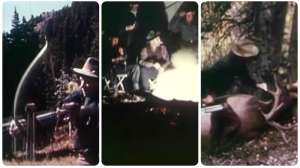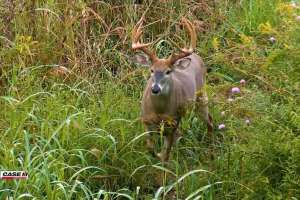

As someone who grew up in California, back in the late 1960s through the 1980s, I spent most of my big game hunting roaming most of the West on DIY hunts for elk, mule deer, pronghorn and black bears. It was a far different world then.
Licenses and tags were relatively inexpensive, and you could buy them over-the-counter. There was no internet, no smartphone hunting apps, and if you were willing to backpack a short ways off the beaten path, you encountered virtually nobody else, and hunting was excellent.
Today, with some exceptions, elk, deer and pronghorn tags are mostly issued via a lottery system, and serious hunters accrue preference points to help them draw a tag whenever they can as demand for tags has skyrocketed. Thanks to the internet, there are no “secret spots” any longer. Wolves and grizzly bears — few and far between back in the day — now seriously affect big game numbers in multiple states, and have forced many of those populations down out of the public land mountains onto private ranches, where hunting for the unattached dude is verboten.
If you’re a nonresident living east of the Rocky Mountain West dreaming of someday embarking on a low-cost DIY bowhunting adventure, or a western resident wanting to hunt another state, be forewarned. It can be done — but it’s not easy, and you’ll have to overcome some serious obstacles.

Obtaining Tags
There are still some units in multiple states that offer over-the-counter (OTC) tags for whitetails, mule deer, elk and pronghorn, but their numbers are shrinking, and in all cases, these units are hunted hard. Very hard. Serious hunters employ a strategy of hunting an OTC unit annually, or as often as they can, for the experience while accruing preference points in multiple states that will allow them to draw tags in trophy-type units every decade or so. That’s right, decade. It’s a complicated process that varies by state. Using a tag application service such as WTA Tags can help you plan, and execute, an application strategy that’s right for you.
Also, be advised that the cost of licenses and tags for nonresidents is steep, and it’s going to keep increasing. Western big game departments receive the bulk of their annual budget funding from these revenues. It’s a matter of supply and demand — and as long as there are millions of nonresidents looking to hunt the West, they’re going to soak you for the privilege.
Low Success Rates
If you are hunting public land for elk, deer or pronghorn, be advised that success rates are alarmingly low, often in the single digits, percentage-wise. Here’s an example. Colorado has more elk than any other state in the West, yet the 2022 statewide success on any elk with all methods of take, on both public and private land, was a paltry 20 percent. There were 40,425 total elk killed (23,125 bulls, 15,891 cows, and 1,407 calves) by 206,496 hunters who spent 1,050,993 days afield. I cannot tell you how many expensive nonresident tags employed on DIY hunts I have eaten over the decades, but it’s certainly more than I have filled.
Research is critical. When planning your adventure, remember that game populations can vary greatly by region, and even specific units within a specific region. These populations can also be affected by brutal winters, as was the case in parts of Wyoming in 2022, which killed a ton of mule deer and pronghorn, and where it will take a decade or more for their numbers to recover. Game department websites can give you data on herd numbers and hunter success rates.

Hunting Pressure
In units where nonresident tags are easy to obtain, expect to be dealing with pressure from other hunters — in some cases, lots of it. Not all of them will be as serious as you are. Some will be casual folks who like to party as much as hunt, some will bring family members who are there to rip around on ATVs and dirt bikes. During early seasons, there will be campers, hikers, dogwalkers, maybe some target shooters with firearms. One year in Arizona while hunting a hard-to-draw elk unit, I was sneaking into position on a huge bedded bull elk when some wood cutters roared through my stalk on ATVs on a road ostensibly closed to all vehicular traffic. Never saw that bull again.
The podcasters and YouTubers may have convinced you that to avoid these issues you simply have to hike deeper into the woods to get away from the crowds. While that can help, it’s not that simple. While many of the casual party-hearty hunters stick near the roads, there will be more than a few serious hunters in the boondocks. Using internet research and smartphone mapping apps such as onX, it’s easy for anybody to locate promising game-holding pockets and navigate even the toughest terrain.
The serious local hunters — and there are lots of them — might have side-by-sides, ATVs or horses to get them into areas in short order that will take a hiker a day of backbreaking work to access. It seems that every area I hunt these days has a handful of younger, fitter local hunters who have structured their lives around the quest, and who have years of experience in the area. It’s hard to compete with that. You have to learn how to hunt around the other guys and how their actions affect game movements.
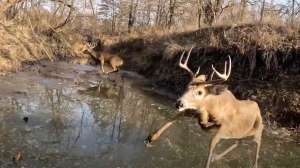
As mentioned earlier, hunting pressure will tend to drive big game animals in general, and elk in particular, out of the higher elevation public lands down onto private ranches that don’t allow the general public hunting access. This pressure can come from both people and apex predators, primarily wolves but also grizzly bears and cougars. I cannot tell you how many times I have hunted public land hard and found no sign of game, then glassed down onto a private ranch and watched huge elk herds, little groups of pronghorn, and hayfields inundated with deer during the evenings. It’s very frustrating — but part of the game today.

That’s the Glamour Part
When I was doing outdoor television, we showed viewers only the successful stuff. You never saw the days and weeks spent doing the research, prepping gear, practicing shooting, physical fitness training, long drives to and from another state, those days afield when the weather sucked, and those that produced nothing more than a fun day in the great outdoors — but no close encounters with critters. When these days strung themselves together, as they often did, I’d joke that “this is the glamour part of the business.”
The key to successful DIY western hunting is just like those glamour days. The truth is, it takes years of researching, scouting, and hunting the same unit to learn its intricacies, which will stack the odds in your favor. Know that the first year you choose to hunt a particular unit for deer or elk, you should not realistically expect to shoot one. Not saying it doesn’t happen, because it most certainly does. But if it does happen to you, immediately go buy a Power Ball ticket, because you’re on fire. I always use that first year as a time to primarily learn the unit and lay a base for future hunts, or to decide that this unit is not for me and I need to look elsewhere.
When you watch YouTube and Instagram videos of successful DIY public land western hunting, mostly the dudes there have either hunted the area a lot, or have received at least some assistance from locals or friends who have hunted the area for years and know it well. Also, these folks are professional or semi-professional hunters who spend the entire year making their living figuring this all out. I’ve received that kind of help myself, and treasure it, because it cuts the learning curve immeasurably. And this doesn’t take into account the skills you need when hunting a specific species, or the developed ability to make a shot under less-than-ideal conditions when the chips are down.
Another point to consider. When on a DIY public land western bow hunt, unless you have drawn a unit known for trophy-class critters and are willing to spend a ton of time and are ready to eat that expensive tag by passing up shot opportunities at smaller animals, never forget that on these hunts, any legal buck or bull is a trophy. This point cannot be stressed enough.
Don’t Be Discouraged
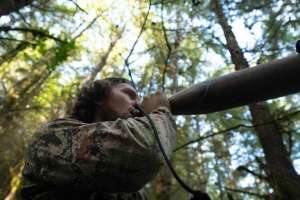
Don’t let low success rates and the difficulties discourage you. Win, lose or draw, bowhunting the West has been one of the great joys of my life. Hearing bull elk bugle, watching a beautiful herd of pronghorn come to a water hole to drink, glassing up a stately mule deer or Coues deer buck, seeing the sun rise and set in some of the world’s most magnificent country, feeling my body at work hiking and climbing up, down and all around – there’s nothing like it. To me, it’s been worth every penny.
It can be the same for you, too.

Sidebar: Elk Hunting Guided vs DIY
For too long, DIY elk bowhunting by nonresidents has been romanticized by writers, bloggers and YouTubers who leave you with the impression that if you kill an elk on a guided hunt it’s somehow not as worthy an accomplishment as one taken on a do-it-yourself public land hunt. To that I say, simply, hogwash.
The truth is, it’s a matter of time vs money.
Success rates in all western states for elk archery hunting rarely exceeds 15 percent — and many of those elk are killed on private land unavailable to the unattached nonresident. Many of those 15 percenters are locals who know the country and are able to spend a lot of time afield during the course of the season. Because most elk tags are now issued via a drawing, it’s the rare nonresident who has spent enough seasons in a particular unit to learn it well enough to up their odds during a one- to two-week hunt. (Colorado, for decades the go-to state for DIY bowhunters because tags were available over-the-counter, ended that program in 2024.) Also, public lands are inundated with hunters during the elk archery season. The older bulls are highly educated and call shy. You can spend many a season in the elk woods without getting an opportunity at any bull.
On the other hand, a private land outfitted hunt allows you access to excellent elk country where hunting pressure is tightly controlled. Elk concentrations are generally much higher than on surrounding public land, and the guides know the land and how the elk use it. Shot opportunities are much greater on these hunts.
Let’s talk cost. I have done a DIY buddy elk hunt in a popular unit in Montana the past three seasons. The license/tag sets me back a tick over a $1,000, with the rest of the expense fuel and food, which I figure is about $100/day. My first season, I shot a nice 5x5 bull on day No. 6. The second year, I hunted a total of 18 straight days without a shot, though I was in the elk daily. The third year, wildfires closed most of my favorite spots; I hunted 6 days with no shot. So that’s 30 days over 3 years, with one shot and one bull in the bag. That’s $3,000+ for licenses, and about $3,000 more in expenses, plus travel costs to and from Montana. And one shot in 3 years in very rough country.
Last season I took an excellent outfitted elk hunt in Idaho run by Table Mountain Outfitters, a Wyoming-based outfit with whom I have successfully hunted with for decades. The hunt lasted 5 days, and the three bowhunters in camp killed one big 6x6 bull, another client missed a 10-yard shot, and, sad to say, I totally screwed up an excellent opportunity at a 6x6 bull I figured would have scored 330-plus Pope and Young points. We were all in multiple bulls every morning and evening, stayed in a beautiful Airbnb, ate like kings, and hunted country that was physically easy. The guides were hardcore elk hunters. It was outstanding. The cost? About $2,000/day. And that price is going up.
I’m all about DIY hunting — but one has to be realistic about their chances at success. And if you finally draw a coveted tag after a decade or more of applying, or if you want to increase your odds at getting a high-quality shot at a bull, it just makes sense to me to seriously consider the outfitted option.
Photos by Bob Robb