
In bowhunting, a thousand things can go wrong, any of which can lead to a poor shot or a miss. Of course, many variables are beyond our control — things like a twig between us and the animal, the animal ducking beneath our arrow as it begins to run, or equipment malfunctioning. But, there is a lot that we can control.
In particular, we can control shot execution and all of the steps we perform (or overlook) leading up to that magical moment. I’m sure all of us have rushed shots, some of which yielded lethal hits, while others left us with a perplexing blood trail, or an arrow in the dirt that cleanly missed the animal. The urge to rush is a natural feeling that most bowhunters experience when they first get the pin on the general kill zone, but no one is making you rush. You’re in control.
This fall will mark my 24th bowhunting season, and I still feel that urge to rush. I find that the best way to slow down is to focus on executing a proper shot just like I do when I’m practicing. Perhaps you’ve been slinging arrows in the backyard without separating the process of firing each arrow into individual tasks. If that’s you, then you could benefit from using the seven-step process described below with intentionality on proper shot execution. This should slow you down so you execute a proper shot.
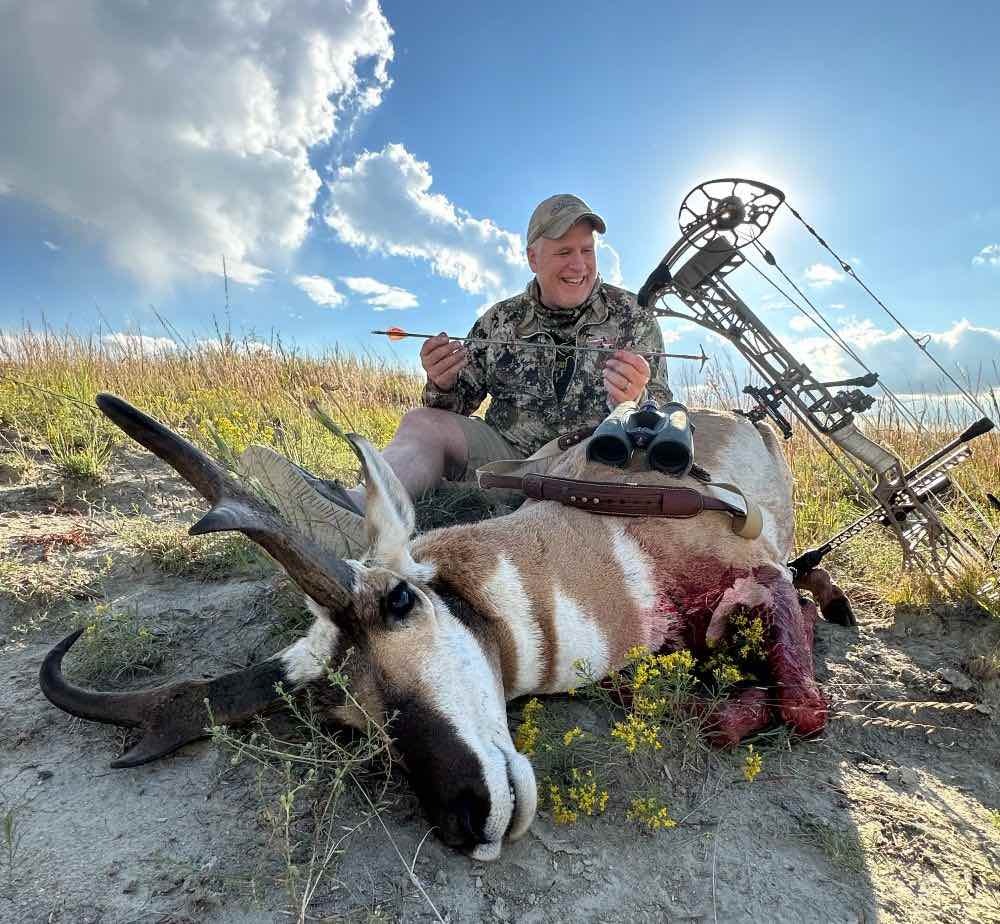
7 Steps to Proper Shot Execution
1. Assume the Correct Stance: This is easy to do on flat ground while shooting at targets. Simply place your feet virtually parallel with one another about the width of your shoulders apart. In bowhunting, it can be challenging, and that’s if you remember to do it. It’s easy to overlook and then mess up some or all of the next steps that we’ll review in a minute.
While discussing shot execution with Super Slam bowhunter and longtime target archer Joel Maxfield of Mathews Archery, he agreed that stance (or positioning when you’re shooting from seated or kneeling positions) is a top priority.
“It’s different if you’re in a treestand, a ground blind or shooting from your knees following a stalk,” he said. “Each scenario has its own unique challenges on your shooting form. For me, the worst situation is shooting from a pop-up blind. I tend to have very few windows open in my blind to keep light from coming in, so I have to maneuver to make one specific window work. Many times I’m scrunched up or twisted, and I’ve done enough ground blind hunting to know not to shoot unless I can get my body squared up and my shoulders positioned properly. I can’t be 100 percent confident in where my arrow will hit unless I have all of that right.
“Spotting and stalking an animal and then raising up to shoot is also challenging. You work so dang hard to get that opportunity that you want to make it work. But, in order for it to work consistently, you have to get positioned right, whether that entails pivoting your hips or whatever. Yes, being that low to the ground is a very solid base, but you still have to be positioned in a way that you can square up your shoulders and everything, otherwise your form will be a mess and your shot will likely be off the mark. With a compound bow, a sight and a peep, you’ve got to do it right in order to get a favorable result.”
2. Draw Using the Correct Muscles: Just like Step No. 1, it’s fairly simple to engage your back muscles to properly draw your bow using a push-and-pull technique when practicing. In contrast, it becomes extremely difficult to do after crawling several hundred yards after a pronghorn or sitting in a frigid treestand for 4 hours before a buck walks into your shooting lane. But, drawing with the wrong muscles engaged can make things feel a bit awkward and also complicate the next steps. Even given a fast opportunity, make sure to engage the correct muscles so muscle memory kicks in once you hit full draw and you can find your form, which we’ll discuss next.
3. Find Your Anchor, Settle In and Keep Good Shooting Form: Once I hit full draw, my focus is on anchoring in the same, consistent way I always do, then I allow my muscles to relax slightly and settle in now that let-off is in effect. Everything should feel comfortable and natural. Next, I transition into focusing on getting my form right, although muscle memory obtained through diligent practice is a big part of this.
Maxfield said, “Muscle memory is huge. It’s how we achieve repeatability in our form and shot placement. Muscle memory develops when we practice extensively, and that’s why practice makes a massive difference in how we perform while bowhunting.”

4. Level Your Sight: Most bowsights are outfitted with a level. Leveling your compound prior to shooting is critical, especially on uneven ground. Don’t overlook this step, or you could easily miss to the left or right. Keep that level in your subconscious after initially leveling your bow, especially in steeper terrain where it takes a bit more effort to level the bow.
5. Settle Your Pin and Accept the Float: Once my bow is level, I begin aiming. I want my pin fixed on a small spot within the kill zone.
“You have to focus on a tiny area on the ribcage,” Maxfield coached. “I try to aim really small. Many bowhunters just put their pin on the deer and shoot without aiming at a specific spot, but that is a fast track toward making less than ideal arrow placement.”
It seems to take a couple more seconds to do this at longer yardages, but I want my pin there for at least a split-second before I begin to execute the release. Now, anxiety can creep in when your pin is floating around the spot you want to hit. You might be thinking, It’s there! Now it’s not. Now it is!
Forget that and accept the float. We’re humans, and movement is very natural, even for the most accomplished archers. Holding perfectly still is impossible, especially when we’re in a difficult position and adrenaline is pumping through us. Do the best you can given the circumstances, and then begin executing the release unless your pin is literally all over the animal.
6. Pull Through the Shot: It’s time to take the shot. Even with careful attention to all of the previous steps, you could ruin the shot by rushing and punching your trigger. Slow down. Focus. In most situations, have the mindset that nothing exists but you and the spot you want to hit, except when other animals you don’t want to harvest are present and could inadvertently walk in front of or directly behind your target animal.
With index-finger releases and thumb buttons, simply feel the trigger when you’re ready to execute the shot. While maintaining a laser focus on your aim and what the animal is doing, begin to build tension in your back with your shoulder blades squeezing together. This will multiply the tension that you already gently set on the trigger by applying your finger or thumb, and at some point, as you push and pull, the bow will fire, creating a surprise release.
7. Follow-Through: A surprise release is startling for new archers. I’ve taught a lot of people to shoot a bow, and most blink forcibly and flinch during a surprise shot, but it’s something most archers become accustomed to, and then natural follow-through becomes possible. I’ve watched countless great archers and bowhunters shoot their bows, and follow-through can look different from archer to archer. For me, it works best to let my muscles go limp and allow the bow to fall naturally.
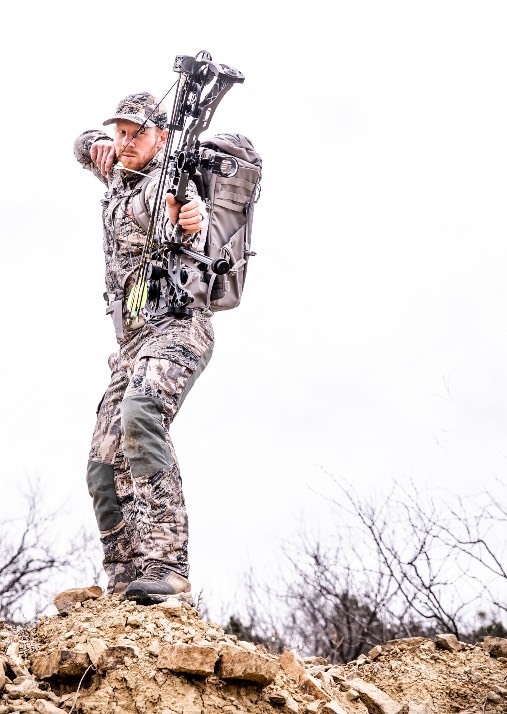
Final Thoughts
Now that the process is broken down into seven individual steps, I’d be complacent if I ignored the huge difference between shooting at a backyard target and shooting at an animal. As I mentioned earlier, most bowhunters, even those who are highly experienced, feel a subconscious urge to rush the shot. Even with hundreds and hundreds of bow-kills under his belt, Maxfield still feels it.
“When I’ve done the work to get a shot opportunity, I want the animal dead right now,” he said. “I’m like anybody; I get pretty anxious about the shot and getting it done. When I have a buck at 20 yards and my 20-yard pin hits the ribcage, I think, NOW! But, I wait until the bow fires. I tend to hesitate between the time when I want to shoot and when I actually shoot. I know that I can be confident in my shot only if I execute it properly.”
To wrap up, bowhunting is full of uncontrollable factors and variables. But, we can control our shot execution, which slows down the shot process and allows us to produce more consistent shot placement.