
The cost of everything is escalating though the proverbial roof these days, and hunting is certainly no exception. That’s just one reason why the allure of DIY public land hunting has taken off like a SpaceX rocket. This has been my bread and butter since I first laced up my boots back in the 1960s, when I began backpacking into wilderness areas to fish and hunt.
Back then, there was no such thing as a GPS, and the closest thing there was to a cell phone was the creative “shoe phone” used by Agent Maxwell Smart in the popular TV series “Get Smart,” which premiered in 1965. Both the worldwide web and cable television were decades away, so we didn’t have several hundred mediocre hunting shows or YouTube videos to watch, just the “Big Three” outdoor magazines — Outdoor Life, Field & Stream, and Sports Afield — whose pages were filled with tales of adventure and equipment information, along with a few tips. To learn the lay of the land, we didn’t have OnX or HuntStand, only topographic maps, a compass, and a working knowledge of navigation by the stars.
If you were lucky enough, you learned how to hunt from family and friends. If not, you did as I did — stumble around the mountains, blind as a baby, learning from the bazillion mistakes made every trip. If you wanted to figure out where the best public land hunting spots were, you had to find them yourself, something that often took years, or even decades. Or, if you were lucky, somebody honored you by showing you one of their secret spots.
Which brings me to the question of, “Whose spot is it?” After all, you’re on public land. Just because somebody found the spot and then showed it to you doesn’t make it theirs for all time, does it?
Respect and Trust
For some this might be a gray area. Not to me. To be blunt, I would never, ever go back to a public land spot someone else showed me, with the following two exceptions: they asked me to go back with them, or I asked them if it would be OK and they concurred. Even then, I would think long and hard before asking for their blessing. To some people, this line of thinking makes no sense. To me, it’s as black and white as a skunk’s back.
Think about it for a second. Despite the fact that America is blessed with millions of public land acres open to hunting, within that vast acreage there really are very few places that consistently produce high-quality hunting. That’s all about habitat, private land boundaries, hunting pressure, and seasonal effects such as fire, weather and predation, among others. Locating those sweet spots is never easy, nor does it happen overnight. Hunters who have “secret spots” usually have paid their sweat equity dues many times over. Not only have they spent countless years in the woods, but they have also spent a lifetime learning how to read the lay of the land, decipher sign, and know why it all comes together through the school of hard knocks.
Back when I first started my DIY public land hunting throughout the Rocky Mountain West, backpack hunting was not yet “hip,” with just a handful of hunters figuring out that if you hiked just a mile or three away from the road, hunting quickly improved. For those willing to hump it, it wasn’t all that difficult to pack in and find some really good big game hunting with little, if any, competition. Today, though, that’s about done. The evolution of backcountry gear plus the internet age plus smartphone hunting apps have made locating top-notch hunting areas, then getting back and staying there for several days, much more commonplace. There are more roads today, too. Secret spots are vanishing.
Here's an example. My good friend Rick Wemple (www.montana-hunting-outfitter.com) is one of the toughest, most highly skilled and ethical public land outfitters and guides I’ve ever had the privilege to stomp around God’s country with. He’s lived in, guided and hunted the same public land area of southwestern Montana for six decades.
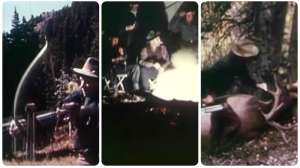
A few years ago he invited me to come over and buddy-hunt with him for elk in an area I hadn’t hunted in decades. Long story short, after 6 days of pounding it, Rick cow-called a big 5x5 bull into less than 20 steps, and I hammered him (below). It was unbelievable! I’ve been back and buddy-hunted with Rick in the same area two other times, and though we haven’t killed another bull, we’ve been close a bunch of times, and had an absolute blast doing what we both love to do as much as anything on earth.
The area is hunted hard by others, but he knows where the sweet spots are, and how to hunt them. And now, so do I. I could easily go back and hunt this area by myself. But I never will, without Rick.

It’s all about respect. This might be hard to understand for people who don’t live and breathe hunting. They really don’t understand that these little sweet spots are as rare as the proverbial four-leaf clover. Once found, they have to be carefully nurtured. They don’t understand that it’s not just the great hunting they offer, but the chance to enjoy something you discovered without worrying about some other yahoo spoiling the solitude.
By holding my hand and showing me country he’s hunted all his life, Rick did me a great honor. He trusted me not to expose his secret spots through my media work or coming back without him. I would never violate that trust.