
The whitetail rut resembles something of a white elephant gift game during the holidays. At the end of the game, you might be holding the best gift of all or walking away with a dud if you gambled during the swaps. The reason the rut becomes a white elephant gamble relates to the fact you just never know what could show up on your hunting property when breeding launches.
During summer, early fall and pre-rut, you get a solid review of the whitetail buck gifts on your property. Bachelor groups often mingle in daylight, and once the pre-rut testosterone boost begins, your trail cameras beg for batteries to keep up with the action. The gamble begins as estrus nears if you have not filled your tag. Do you hold out for one of several garden variety bucks on your property, wager on that one mature buck is lurking in the shadows, or really venture a chance that a once-in-a-lifetime buck appears out of nowhere to become a grand white elephant prize?
Are You Bowhunting in Reality?
A few seasons back, racing into my third decade of serious whitetail bowhunting, I was setting my whitetail goals higher and higher. Each season I strived to shoot a bigger buck than the previous year. Admittedly, I kicked off my whitetail hunting by living in a good Midwestern region and traveled to hunt, but looking back, I was not particularly savvy about realistic goals.
I could run into a whopper anywhere I hunted in the Midwest and Great Plains regions I tromped, but not every property was whopper worthy. And not every county could produce a top-notch, mature animal. In some farmland areas, the hunting pressure was just too intense for bucks to get old, and other areas simply didn’t have the genetics to push a buck into trophy territory. Regardless, I held dreams of giants and often passed on good-sized bucks to keep up the search for the best white elephant gift out there. Many times, I returned home with no rack and an empty cooler.
Experience has taught me to evaluate areas with more scrutiny, and my addiction to shed antler hunting boosted the notion I might be setting my sights too high for some hunts. I simply did not find giant sheds while scouring hunting properties. Over the years, my accumulating pile of shed antlers told a real story, if only I would have listened. I eventually began to set my sights for a good hunt, not a crusade for the Holy Grail unless I had solid evidence of its existence.
This all sounds logical until you consider the previously noted rut. The white elephant gift could show up unexpectedly. Depending on your whitetail hunting region of choice, new data suggests that whitetails begin a wider search for estrus does during the brief window of breeding. Whereas most bucks adhere to a 1-square-mile home before the rut, GPS data illustrates some bucks traveling 3 miles or more away from that area to search for an estrus doe. Most bucks return, typically after a 3-day hiatus, but they could leave again before returning to their digs for good.
In addition to a solid preseason assessment of your property, you need to be aware of the possibilities awaiting you on surrounding property. In brief, set your goals for unachievable results. There is nothing wrong with having goals and objectives, but do it with purpose that is driven by reality.
Here are some ways to ensure you aren’t setting your goals too high for the coming season and keeping the door open for a rut surprise.
Research Like a Think Tank Employee
Before you decide on your trophy aspirations, you need to take an honest look at your current hunting area. Begin with looking back at the bucks you have shot, what your friends have taken, and what some of the better hunting properties in the area have produced, especially neighboring lands.
Do not overlook what others have been taking in a hunting area. Hunting contacts in the area, social media forums and even big buck social media accounts can splash some light on the trophy quality of an area. Some areas may even hold trophy buck contests with results posted online from the previous year along with winning scores. Of course, many of those contests are statewide and probably won’t provide specific locations of where a trophy was taken.
Two trophy-scoring organizations can help you with precise trophy determination, Boone and Crockett, and Pope and Young. Both use the same scoring system, but P&Y accepts only archery records whereas B&C accepts all legally shot animals and even trophies found dead in the field. Who cares — it still shows you what is possible in an area.
Trophies are scored through a combination of measurements including length of points, length of main beams, circumferences and the inside spread. Scoring calculation is based on inches, but recorded as points. B&C minimums for inclusion are higher than those of P&Y. As an example, B&C accepts typical whitetails of 170 points or higher for its all-time records, and P&Y accepts typical whitetails scoring 125 inches or higher.
You can review scores online, and both organizations have different programs to allow access to their records. Accessing the records is a worthwhile investment to track down accurate information on a future hunting location or a way to confirm outfitter claims if pay-to-play is in your future.
As you scour pages of data, you should focus on two components: county and date. The county of the recorded kill is an obvious no brainer to give you insight on whether a region can consistently produce high-end bucks. A plethora of listings, like you see in Buffalo County, Wisconsin, says it all. This is the nation’s top whitetail producing county and the records show it. Just as important, be sure to check dates of kills. This is important because deer populations, management and other factors may significantly alter trophy quality over time.
Common sense will tell you that if you uncover lots of entries over 140 points for P&Y, you will probably want to set your sights on that goal. If you find only a handful of scores barely hitting P&Y’s minimum of 125, then you might be better served setting your goals a bit lower.
A hunt I pulled off a few seasons back offers a prime example of holding out for a good buck due to my thorough research. I had drawn Iowa and Kansas archery tags, both equally good for giants. I started in Kansas, but the rut had not kicked off with gusto and buck sightings were few, so I drove to Iowa. There, I started seeing the beginning of the rut, but not the buck quality I hoped for.
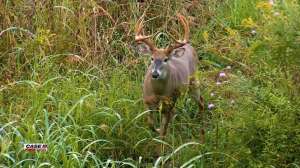
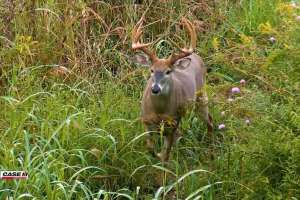
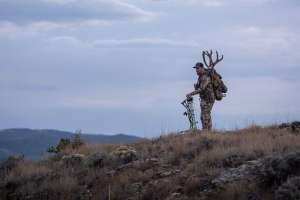
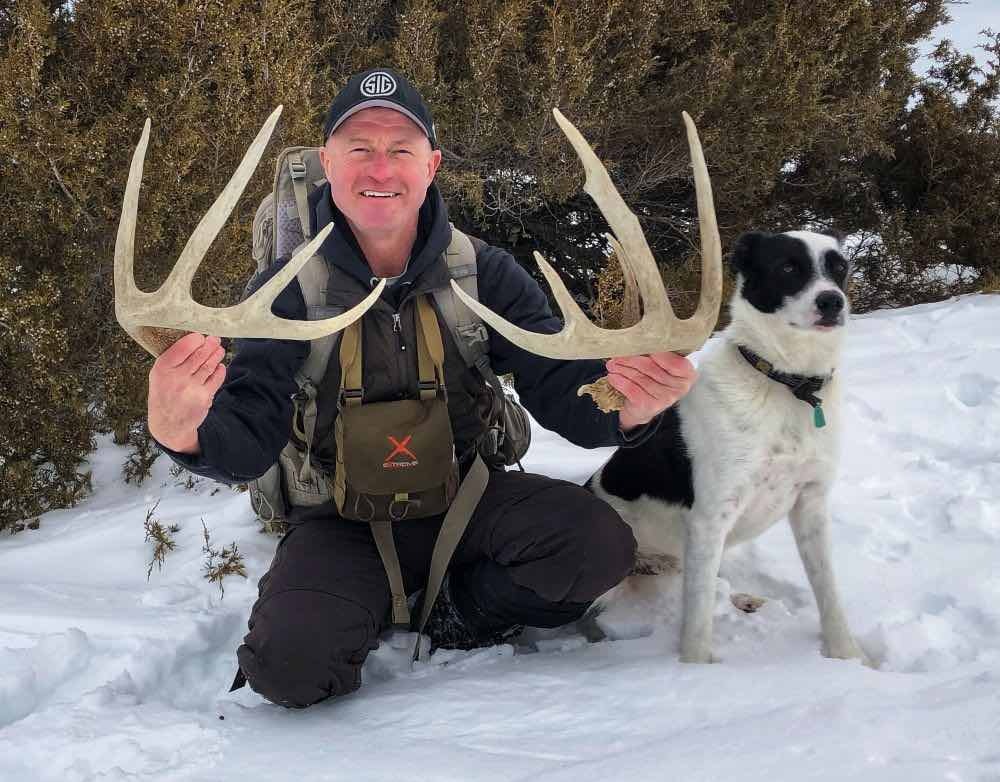
That’s when my Kansas buddy texted me that a bruiser had appeared on trail camera with some consistency. I packed my duffel and drove back to Kansas. The hunt was not a slam dunk, but after another 4 days of hunting, the heavy-duty buck appeared again, and this time I was waiting. Passing other bucks and putting on the miles between the two states paid off with my best buck to date, a bruiser gross scoring 180 points (top photo).
Fast-forward two seasons and trail cameras were not confirming any giant bucks on the same Kansas property. Even so, several 150-class bucks called the oak hills home, and after a week of bowhunting I had a chance encounter with a mature buck in that category. I cut loose an arrow and was more than pleased scoring on an older buck that fit my definition of a satisfactory hunt.

Field Judge Like a Pro
Whether you decide to jump into the trophy ring or not, you will have to brush up on your field judging abilities. Field judging is the ability to gauge a buck quickly and accurately, either through antler score/frame or body size. For antler aficionados, let’s look at field judging antlers first.
It takes years of experience, knowledge of antler scoring systems, and getting your hands on a lot of racks to field judge accurately. Even with years of practice, some people just cannot field judge effectively due to buck fever, hasty calculations and poor optics.
My hunting experience over several decades has helped me acquire fair field judging skills. At home, I know the scores of the whitetails on my wall. I look at them on and off all day, so their dimensions burn into my mind. In the field, I can mentally place a rack of mine up against a buck I am field judging to get a solid idea of the buck’s true score. This usually puts me within 10 inches.
For those who often hunt like me during the rut, searching for a mature buck instead of a score-worthy dude, use this method of field judging. Bucks make huge jumps in antler growth between 2.5 and 3.5 years of age, and from 3.5 years to 4.5. They reach most of their potential by the time they are 4.5 years old. Being able to differentiate a 2.5-year-old from a 4.5-year-old can boost the possibility for bruiser bucks on your property, plus targeting older bucks that may never jump into the trophy league.
Years back, Dr. Grant Woods, a wildlife biologist and host of the popular GrowingDeer.tv deer management program, shared with me an easy technique to age bucks without years of experience. You simply must visualize a buck in front of you balancing on a wooden 2x4 board. Mentally place the board crossways behind its front legs as it’s supported on each side.
For 1.5-year-olds, skip the board and do a quick body inspection. If the deer looks like it is all legs and has the features of an average-sized doe, it’s a 1.5-year-old buck. The buck might sport spikes or a small rack, but it will look like an antlered doe with a slim neck. Pass on it unless you simply want to fill the freezer.
If you suspect an older buck, deploy the 2x4 board trick. Imagine the wooden board behind the front legs of a buck as it’s wedged up against the chest. Now envision a friend on the other side helping you lift the board as the buck stands on all fours. If the buck tips backward it’s a 2.5-year-old; his chest and neck is light compared to his hind quarters.
Aging bucks gets trickier as they grow older. Muscles bulge, chests and necks enlarge, and racks can be very, very tempting. Keep your eye off the rack and mentally put the board trick back to work. Using the 2x4 test, a 3.5-year-old will balance evenly when the beam is lifted; his chest and neck are large enough to balance with his hind quarters. If this buck has an average rack or has potential, you still might want to give him a free pass depending on the trophy potential in your area.
Aging bucks gets trickier as they grow older. Muscles bulge, chests and necks enlarge, and racks can be very, very tempting. Keep your eye off the rack and mentally put the board trick back to work. Using the 2x4 test, a 3.5-year-old will balance evenly when the beam is lifted; his chest and neck are large enough to balance with his hind quarters. If this buck has an average rack or has potential, you still might want to give him a free pass depending on the trophy potential in your area.
At 4.5 and 5.5 years of age, put the 2x4 aside and begin to look for a huge front end and these other characteristics. Look for a large muscular structure, a sagging gut and drooping back line. Bucks beyond 5.5 years old are at 100 percent, and hoping for them to grow larger by passing on them could cost you the experience of a lifetime.
Final Thoughts
There is nothing wrong with having trophy aspirations and trying to best your best. Just do it with a smart plan to ensure you are hunting with purpose, especially during the rut. Anything can happen, but with research and a plan, you stand a much higher chance of scoring a memorable hunt this rutting season.
Sidebar: My Favorite Midwest Rut Stand
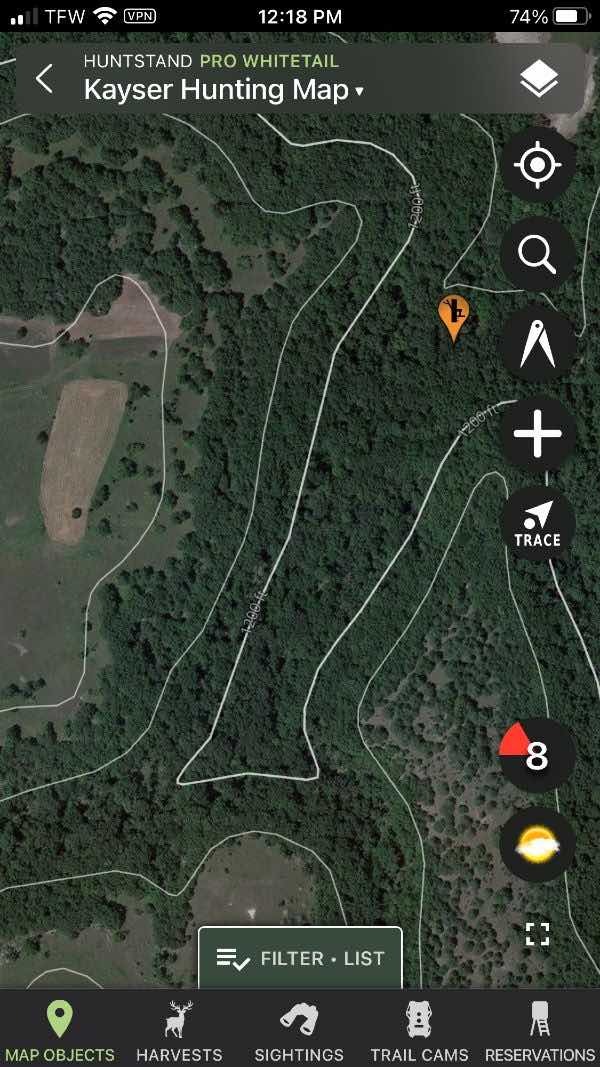
When the rut explodes and you see deer everywhere one day, but nowhere the next, you need to make drastic choices on your stand selection. For me, I prefer the periphery. Unless food plots continue to be active, I retreat from edges and slink back into the shadows. Timbered corridors that sit adjacent to either major food sources or significant bedding cover stand out as my rutting whitetail favorite stand locations.
A hunting app such as HuntStand helps to pinpoint the best of periphery pathways. The junction of coulees, creek bottoms, draws and hidden benches all show up using various mapping aids. Use topographical layers, 3D flyovers and hybrid mapping to uncover these travel corridors hidden under a canopy of trees.
One of my preferred rut stands sits at the bottom of a heavily timbered draw, below an upland food plot and at the junction of a seasonal creek. Bucks habitually visit the food plot under cover of darkness, but cruise the draw and dry creek bed all day during the rut as they seek females. Pack a sandwich and sit in the periphery of traditional hotspots for rut action.
Sidebar: Field-Judging Excellence With the Sig Sauer KILO6K
Sig Sauer Electro-Optics’ latest addition for a lightweight optic is the KILO6K HD Compact binocular rangefinder. It is available in both 8x32 and 10x32 versions depending on your magnification needs.
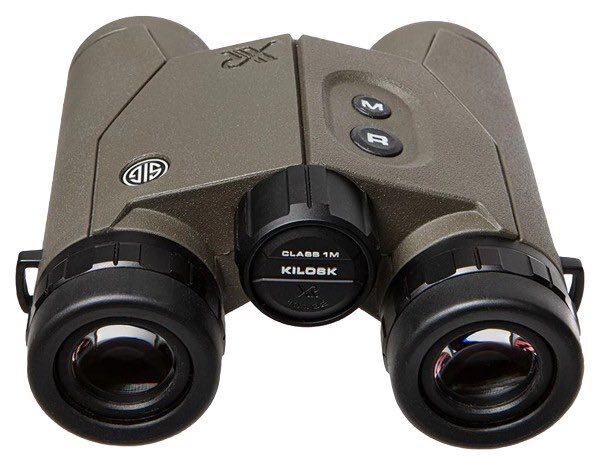
It truly is compact. The overall length of the Compact is just 5.7 inches with a height of a mere 2.2 inches for both powers. The overall width is 5 inches. The weight is 1.625 pounds. It works as advertised with a device that ranges in single-digit yards, plus you can range reflective surfaces to 6,000 yards, big game to 2,500 yards and trees, and bushes to 3,000 yards. You can use it for both close-range bowhunting and put it to use if you are a two-season hunter. I tested it from the Wyoming backcountry to the Midwest whitetail woods for a thumbs up.
Sidebar: HuntStand Pro Whitetail to Help Your Rut Woes
The rut can be an incredibly trying time with bucks beginning to stray and drop all patterns overnight. To help you with craziness and inconsistencies, consider hunting app help such as HuntStand. If you are new to HuntStand, you will stumble onto it with the opportunity for the free version, but to get more out of it, especially for whitetail information, consider HuntStand Pro Whitetail. Currently it is a subscription for $69.99, a deal when compared to many hunting apps and what you receive for your dollar.
What is the difference between free and the subscription option? With Pro Whitetail you receive a wealth of whitetail information including detailed rut activity models for your exact area. You receive all HuntStand enhanced maps and tools, plus a 15-day peak whitetail activity forecast and detailed movement times. Add to that the United States rut and whitetail map for detailed hunt planning. Property boundary layers, topographical layers, 3D maps and specific weather forecasts also help you with making sense of the whitetail rut.