Loading...

Predator Xtreme - Predator Hunting, Gear, Guides & More

Predator Xtreme Logo small banner
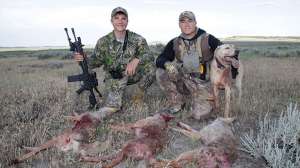
CH213 Successful coyote hunters at the end of the day copyright Mark Kayser 181004 111042

Emotion, baby, is one big key when calling coyotes

If you're not wound up like a watch spring and putting some emotion into your routines with a hand-held coyte call, you may have an unsuccessful hunt.
CCI ammo logo

CCI adds to Mini-Mag product line with Segmented Hollow Point

CCI Ammunition expands its popular Mini-Mag rimfire product line with the new Segmented Hollow Point, which separates into three equal-size pieces.
TB38 Wolf eating dead calf copyright Mark Kayser

When it comes to coyotes, where's the beef?

Coyotes, wolves and other predators are attracted to the afterbirth from newborn livestock, which makes spring a great time to hit the farm for hunting.
Coyote Alex in Ozarks 5

Coyote hunt decoy double caught on video

Diehard predator hunter Alex Wiggs of Missouri dropped us a note about his cool hunt in the gorgeous Ozarks where he dropped two curious songdogs.
Arkansas Hog Removal 1 Photo by AGFC

Wait, how many feral hogs did this state agency eliminate?

Arkansas wildlife officials used helocopters and extensive field reports of sightings to combat invasive feral hogs as part of a control project.
DSC 0459

Getting Rid Of Your Scent When Coyote Hunting

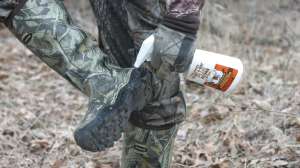
Of all the things needed when hunting coyotes, scent control is one of the most important.
IMG 0299 copy 2

Squirrel hunting takes center stage

Big game might get all the glory, but only squirrel hunting can take the author back to a time when the future was unchartered, and dreams weren’t yet bridled by life’s choices.
VH112 Hunter shooting varmints copyright Mark Kayser 181004 084650

How hunting varmints can keep your skills sharp

Varmints are the ultimate targets; so get out in the field this summer.
CH495 Mark Kayser and his decoy dog Sage after a successful coyote stalk copyright Mark Kayser

How To Stalk Coyotes

Coyotes may be reluctant to come to a hunter’s calls. When this happens, don’t be afraid to stalk coyotes to gain your next fur.
Georgia Coyote Challenge

Georgia's popular coyote challenge gets underway again

Coming back for the second year, the Georgia Coyote Challenge highlights how citizens can effectively handle nuisance coyote issues.This year entering will be even easier. Participants can earn up to 10 entries in three separate drawings (between March and August), according to the Georgia Department of Natural Resources’ Wildlife Resources Division. March to August is the best time to hunt and trap coyotes to have a positive impact on whitetail deer, turkey and other wild game populations. (Photo: Georgia DNR) “Negative interactions with coyotes are an ongoing issue for many citizens, from rural land managers to suburban homeowners,” says John Bowers, Chief of Game Management for WRD. “While many hunters, trappers and landowners already make use of the fact that coyotes can be taken year round, the Coyote Challenge emphasizes the utility of removing these non-native predators during the critical spring-summer period for landowners concerned about native wildlife.” The best available science shows that lethal removal of coyotes during spring-summer is most effective for reducing negative impacts from coyote predation on native wildlife, which is why this program is focused on March–August. To address concerns about coyotes, the agency is raising awareness that coyotes can be hunted and trapped year-round. The Coyote Challenge is part of this educational effort. Georgia Coyote Challenge The program will run from March 1–Aug. 31, 2018. Three drawings will be held for a lifetime license (or the equivalent of $750 of credit for hunting and fishing licenses or a prize of similar value). Participants may submit up to 10 coyotes (creating 10 contest entries) during each drawing period. Coyotes must be taken in Georgia to be eligible. How do you enter? Take a photo of the coyote with your phone. Email that photo to coyote.challenge@dnr.ga.gov. Photos should include the entire, intact carcass. You will receive an autoreply that will provide a link to the entry form. Be sure to fill out the form and include your email address. What is not accepted? Road-kills, spoiled carcasses, coyotes that have been ear-notched, and live coyotes are not eligible. Metadata on all submissions will be analyzed to determine the date and location of the provided image(s). The sponsor of the prize for the first drawing is Ace Hardware of Social Circle (www.socialcircleace.com). For more information, visit www.georgiawildlife.com/hunting/resources/CoyoteChallenge. Source: Georgia DNR
5073129391 181003 160024

Use fox calling research to take more fur this year

A fox-calling study conducted in the 1950s can help you call in more fox today.
X Large 9 T 23 134

10 proven tips to help you kill more coyotes this season

If you want to increase your coyote count this season you might have to alter your hunting style. Add these strategies to your techniques and your coyote count will rise.
CH557 Mark Kaysers coyote dog Sage after a successful snowshoe hunt copyright Mark Kayser

Proven snow tactics for bagging more late-season coyotes

Late winter comes with numerous coyote-getting complications. Hunting educated coyotes tops the list, but one you may not have thought about with focus is snow depth. For those of you living in a snow-free zone please read along for entertainment purposes only. Yes, snow can be an issue even as days grow longer and spring begins hinting at its arrival. Why? In the majority of snowbound states the heaviest snowfalls occur in this period, ushered in by spring storms laden with precipitation yet blasted by Arctic air that excels at snowmaking. In my area of Wyoming, March and April always reign as top snow-producing months. It started early though and in late February there’s more snow on the ground than the previous winter months combined. If late-season coyote pursuits beckon you then consider defensive planning to set yourself up for success. Tire chains cut through the snow and ice. Be sure to outfit your traveling rig with all necessary possibilities for late winter travel. Remember, you can't use it if you don't have it with you. (Photo: Mark Kayser) SNOW TRAVEL Snow does one thing and it does it well. It stops access cold. Whether it’s a snowbank blocking your trail or deep snow that requires post-hole hiking, snow isn’t helpful at getting to the coyotes. At minimum make sure your vehicle has enough equipment stowed along for an easy extraction if it gets stuck. This includes a shovel, snow chains, tow rope, jumper cables, tool kit and sand to add traction to any icy spots. Your ATV should include a similar list of recovery items, plus you may want to consider swapping tires for tracks if your budget allows. I’m constantly amazed at the places a tracked ATV can go that a standard tire-equipped ATV would falter. Lastly, in the mechanized department, access to a snowmobile almost guarantees access to all snow-covered country. Some resort destinations even rent Jeeps, ATVs and snowmobiles. Check ahead as a day rental is cheaper than a fuel-eating investment. If hiking is your game then be sure to include snowshoes in your gear stash. Even in snow conditions that may only be a foot in depth snowshoes will save you thousands of calories a day. Instead of having to break your own trail you’ll be supported on top of the snow by the wider footprint of the snowshoe. Slogging through snow without snowshoes is laborious at best, but you can reduce the sweating with snowshoes. Mine just got pulled down out of the rafters again after the latest dump. Snow Tactics for Coyotes The message you send at this time of the season has a lot to do on whether the coyotes have seen more bullet testing that the shooting tunnel at the Hornady ammunition plant. One message you can’t go wrong with is coyote vocalizations. You don’t have to get fancy with your coyote vocalization calls. Simple howls work to lure coyotes into range during mating season. Start out your setup with a lone howl, repeat it several times and then sit back and wait. If nothing respond after about 30-45 minutes, move on and try again. That isn’t to say coyotes haven’t been duped by earlier hunters using howls. If your gut gives you that feeling then you may want to spice up your coyote talk. Take a look at coyote vocalizations that have a more seductive approach. Coyotes have a large library of vocalizations. If you listen to your own dog (or the neighbor’s that keeps you up all night) you can hear these various message. And although howls are heard the most, breeding-season females incorporate high-pitched yips and whines into their vocabulary. This tells neighboring males their willingness to mate. A short cadence of these whines could spike the lust in a coyote within earshot. Although coyotes fare better on snow than you and I, they still look for the path of least resistance when inches transform into feet. They also combine those travels to food-rich locations. Look for coyotes to follow any paths broken by livestock, wildlife like elk, farm tractors or windswept plains. When looking for top trails to follow consider whether they lead to food. Creek bottoms bursting with rodents, farmsteads, and borrow ditches holding a roadkill deer all have attractive qualities for coyotes during a snow event. I move closer to ranches when the snow invades because coyotes do the same. A dawn setup before ranch hands begin feeding has accounted for numerous coyotes for me over the years. There’s one bright spot even if you don’t bag a coyote in the deep snow. Spring is on its way!
Feral hog in pen

Whitetail deer disease affecting management of feral hogs

The discovery of chronic wasting disease in a southwest Mississippi whitetail deer will impact anyone trapping feral hogs. Mississippi wildlife officials announced that CWD was confirmed in a deer killed in Issaquena County. That county is on the Mississippi River. Six counties now are part of the state's CWD Management Zone, which has a 5- to 25-mile containment and buffer zone as part of its management protocol. Trapping is an effective management tool for feral hogs. But now thanks to CWD things have changed. Here's the press release about one of the changes, from the Mississippi Department of Wildlife, Fisheries, and Parks. Sportsmen and landowners who wish to trap wild hogs on their property in Claiborne, Hinds, Issaquena, Sharkey, Warren and Yazoo counties must now obtain a permit from the Mississippi Department of Wildlife, Fisheries, and Parks. There is no cost to obtain a permit. Permitting will allow individuals to place bait or attractant within the confines of the hog trap. Bait or attractant placed outside of the hog traps used to lure hogs within the confines of the actual trap is prohibited. Landowners and hunters in Mississippi counties not within the CWD management zone can continue to trap and take wild hogs as permitted under the Nuisance Animal regulation. “Our agency faces new challenges with a confirmed CWD case," said Lt. Col. Chris Harris. "We must decrease activity which increases potential of disease spreading, while at the same time affording private landowners within the CWD management zone the opportunity to protect their properties and investments from the ongoing damage that occurs from wild hog damage.” Interested individuals looking to obtain hog trapping permits can contact the MDWFP Jackson Office at (601) 432-2400 or (601) 432-2176. For more information regarding CWD in Mississippi visit www.mdwfp.com Related: Have more success with night vision and thermal optics Related: Is poison the right approach for controling feral pigs?
Coyotes three in woods

How game cameras can improve your predator hunting success

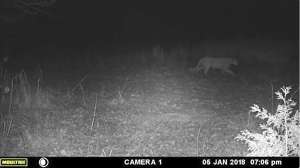
Game cameras are popular and effective tools used primarily by deer hunters, but savvy predator hunters can maximize their success by using them as your eyes in the field. Browning Trail Camera Defender 850 I got into game cameras late in the game. For years I didn't use them, partly because I didn't want to spend the money and partly because I enjoyed letting things progress naturally. Each day was like a new chapter and not knowing what I might encounter was part of the anticipation. About seven years ago, though, I put up a couple of cameras on some property I hunted. Deer were my main focus at the time and the cameras paid off. Images of whitetails visiting a mineral lick revealed does, fawns, yearlings, scrubby bucks and one trashy 12-pointer that made my toes tingle. He showed up twice in two years, both within the first two weeks of October, and never again. I don't know if he was cruising or smart, or both. But during those seasons he was always on my mind. Even better, though, were the other animals I caught on my cameras. By the time I lost access to the land (it was sold), I had eight cameras on trees in key places. Some were travel routes. One was on the mineral lick. One was on an opening. Almost all yielded photos of animals: coyotes, foxes, bobcats, raccoons, opossums and one pesky armadillo that eluded me one afternoon by diving into a hole before I could perforate him with my .22 rifle. My eyes were opened when I added game cameras to my hunting tool kit. The anticipation I once had for "whatever happens, happens" was heightened after using them. How? By being able to more effectively plan my hunting strategy: entry and exit routes, wind conditions, knowing the possibilities for sightings. Game cameras can help your predator hunting, too. Numerous options exist for game camera selections If you're new to game cameras, it can be overwhelming trying to make a selection. Today's models offer everything from simple cameras with a an off-on button to more extensive selections with HD video and images, Bluetooth capabilities and cellular versions that send images to your phone 24/7. I saw the latter in action back in 2015 on a whitetail bowhunt in Kansas. My host, John Vaca with Vista Outdoors, had some Bushnell Trophy Cam Wireless HD cameras set up in our stand locations. Vaca showed us images before we departed, at lunch before returning to our afternoon sits, and in the evening at dinner. It was cool to see what was there. I've used other models, too, including early models of the Stealth Cam G42 (they're supercharged now) and several Browning Trail Camera Recon and Spec Ops models. Primos offers some models with value prices. Spartan and Moultrie offer wireless models, as does Browning with its Defender 850 with Bluetooth and wireless. Budget considerations must be considered just as with any hunting gear. If you're just starting to use cameras, I'd suggest going with a value model at first to get your bearings and figure out if it's something you want to continue using. Knocking out a few hundred bucks for a wireless model and then deciding you don't like it wouldn't be cool. Better yet, if you have deer hunting pals with cameras ask them to show you the ropes and maybe borrow a couple of cameras to try. Then if you're on board, you could buy your own. Or maybe they're good enough friends to let you use them for several months before they get ready for deer season. Tips on using your game camera most effectively Through trial and error, and I'm still learning, a couple of mistakes to avoid with your cameras: — Know where the sun rises and sets, and don't point your cameras directly into either. You'll likely get a lot of wasted images if the sun shines directly into the camera. — Once you secure the camera on the tree or post, clear tree limbs and vegetation from in front of it. Wind can move these and trip the camera sensor. Then you'll get a bunch of wasted images. Pruning snips or a hand saw are good to create an opening. — Fresh batteries make a difference. Once my camera battery sensors show 50 percent, I put in new ones. That may not be necessary but it's just how I do it. If you want to use lithium batteries for longer life, double-check the camera's specs to make sure it can accept them. — I've used SanDisk SD cards for years because that's what I used with my Canon cameras. They're good, strong and hold up well. I've also used SD cards from Dollar General, which are less expensive and work for what I need. Each time I download my images, I format the SD card to clear off any data so it will be fresh the next time I install it in the game camera. — On property I now am hunting, I have one camera set about 6.5 feet off the ground on a tree and aimed down. The main photo (above, top) of the coyote trio is with this camera. I have two others on the property set about 4 feet off the ground. This will give me a different perspective on anything that walks in front of them. — Be sure to read the instruction manual and set the date, time and other options. Date and time are critical so you can get accurate data for your planning. Predators aren't bothered by game cameras With this new property I'm hunting, my hit list now includes a trio of coyotes that I've been watching for months. I'm still learning about the area so I wanted to use my cameras to gain some insight on what's there, their routines and how to form a hunting strategy. These three coyotes have been hanging around for months. I've found signs of their roaming elsewhere, so they're on my to-do list. The land is pretty wide open so I think setting up with a decoy and a good hide will yield positive results. These three coyotes have been hanging around together for at least several months. Surprise! A creek flowing through the property apparently is home to this slinky, cool river otter. He'll get a pass because I think he's cool.Of course, with the creek and hardwoods that means raccoons will likely be around. I have images of a few of them. This one looks like it hasn't missed any meals.This bobcat definitely was a surprise. In the few months I've had my cameras up, this is the first image of it. Between the coyotes and this bobcat, I'd have to think they're doing a number on the whitetail fawns each summer.Here's another image of one of the coyotes. One of the best things about game cameras is if you've set the date and time you can get great data on when predators are cruising through an area. Keeping track of this intel, just as deer hunters do with whitetail sightings, definitely can help you piece together the puzzle for better predator hunting.
I Stock 472333354

Why hunting coyotes near highways works

An increase of auto collisions involving deer means more roadside meals for coyotes. Here’s how you can use their meal advantage as your hunting advantage.
Wolf vs bear

Do wolves eat bears?

It might come as a surprise to many that wolves eat bears. This is a problem that seems to be growing anywhere the two species overlap.