
Hunters are always on the lookout for new places where they can enjoy time afield. Predator hunters, as a group, are at the top of the heap, and rightly so. Ours has been the fastest growing segment of the hunting fraternity for a number of years now. It’s even spawned an evolution of specialized equipment such as predator-specific rifles, scopes, mouth-blown and electronic calls, clothing and other assorted gear. This popularity and growth means finding new ground to hunt can be a pretty tall order, and finding critters that have not been previously pursued, and even shot at, a daunting task.
Waterworks Song Dogs
I was running my 20-hp outboard motor at full throttle, going upriver to do some winter trout fishing. I was equipped with rods, reels and other gear, but had no firearms of any kind onboard. I was a mile away from the boat ramp, making a wide, sweeping turn, when I looked across to a gravel bar extending out into the river about 50 feet. There, ears erect, statue stiff, stood a big coyote intently watching me.
Without really thinking about it, I eased the throttle back and steered my 14-footer directly at the song dog. I wanted to see how close I could get before it broke and ran for cover. I was halfway across the river and the coyote still hadn’t moved. Finally, at 40 yards it turned and trotted back down the gravel bar, disappearing into the shoreside brush. What an easy shot that would have been!
I caught four nice rainbows that morning, but I have to admit I mostly had that chance meeting on my mind, and for good reason. It quickly dawned on me that endless miles of hunting opportunities were available on both sides of the river, accessible only by boat. Both banks were public land managed by the Bureau of Land Management. The next weekend I made the same trip, but this time minus my fishing rods and toting my .243 Winchester bolt-action rifle. And I’ve hunted there many times since. It’s a great overlooked opportunity, one among many more accessible by boat.
Other waterways offer similar virgin hunting opportunities, whether it’s rivers, streams, lakes or reservoirs. Using a boat to hunt either along shore or inland where even four-wheel drives can’t go means accessing hunting country where coyotes and other furred critters have never heard a call. Another big plus is that when coming ashore you don’t need to hike far to set up for a stand.
Predatory animals routinely patrol these same shorelines when traveling, looking for food, checking sign or simply getting a drink. A setup where you can see the shore close by is perfect, and also offers clear shooting should a fox, coyote or bobcat come trotting into sight. These hideaways get constant use both day and night.
Rights-of-Way
Here’s a second way to access often forgotten and unhunted country: powerline rights-of-way. Our nation is crisscrossed with these broad, open pathways that often run through remote areas, and where calling success is often higher. Some have four-wheel-drive roads used to service equipment that can be used. Others do not, depending on the roughness of the country they pass through. These can be either federal, state or utility company rights-of-way. These big towers can be seen from miles away. Predators such as coyotes and foxes use the open pathways to travel on, while bobcats generally move in the cover bordering them.
What I especially like about hunting along these rights-of-way is that I can set up in some small cover out in the middle so animals coming to a call must step out into the open as they close in. And whether they are close or far, they offer clear, one-shot kills. If you use a decoy, such as a rabbit, fawn deer or full-bodied fox or coyote decoy, as I often do, they’re easy to see for approaching animals coming out into the open answering the call.
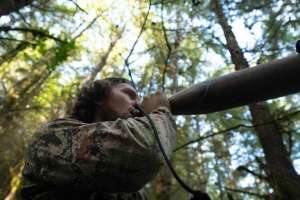
Another advantage of hunting rights-of-way is that predators are not used to being called or hunted there. It’s often country they’ve had all to themselves. And you can find these big towers almost anywhere. They traverse hills, mountains, farmlands, marsh and open desert, providing predator hunters endless opportunities to ply their sport and do so with a real chance for success. When calling in these broad, open pathways, I typically start out on the howler and then switch to distress calls.
Public Shooting Grounds
Some of the largest areas dedicated to public hunting are those administered by federal or state agencies. Many are managed for the purpose of waterfowl hunting, such as the Waterfowl Management Districts and Waterfowl Production Areas under the control of the U.S. Fish & Wildlife Service as well as other similar state and federal lands. These public lands are chiefly used by waterfowl and upland bird hunters, but they can also be predator hunting havens, especially once the waterfowl and upland bird seasons have expired.
Low levees hold pond water, and later in the year when drained, thick vegetation offers endless spots making great natural ambush blinds to call from, not to mention criss-crossing treelines. Predator hunters could not ask for more perfect lands to hunt. Add to this the fact that these public areas are surrounded by private property, and you have premium habitat for both prey animals and the predators that pursue them.
Because these places are thick with ground cover of every kind, I exclusively use distress calls. You’ll be calling in one fairly small area around you, not over big stretches of open ground with little cover. Always check regulations in public areas you want to hunt for days open, permit use and any fees that might apply, or rules regarding where you are allowed to hunt.
Hunting Burned Areas
Most anyone who drives by burned out areas sees nothing but devastation. The general feeling is that everything is dead, carried off on furnace throated winds. For predator hunters, nothing could be further from the truth. Large wild fires made headlines across the nation this past year, and not just in the West. But one winter of rain or snow sees spring weeds, grass and brush popping right back up and blooming in abundance.
That’s when these places become highly productive to predator hunters. Small mammals such as mice, voles, squirrels and rabbits gravitate to this new growth — and so do the predators that hunt them. One productive way to hunt flat lands is to make your stand on any bit of elevation, regardless of how small. A mound, hummock or rocky outcropping is enough. From this vantage point you can see animals approaching in the new, low cover.
When hunting hilly country, I set up half-way up a canyon sidehill where I have a good view of the hill opposite me. From this angle I can see predators coming to the call as they move between low growth and timber stumps. It’s easy to make several stands simply by moving from one canyon or basin to another. On each stand you’re calling only in that one limited spot. Moving to another canyon means new ground, regardless of how close together they might be.
A third setup to call over more ground is to make your stand on a high saddle or where two or three canyons meet at the top. From here your calls can cover everything downhill in more than just one spot, and where you have a good view of all of it. Predators moving uphill can be seen long before they climb out giving you time to set up for a solid shot when they close in. By staying on ridgetops it’s easy to move to new spots where you have several canyons or sidehills to call down in to.
Largely forgotten and overlooked places offer predator hunters endless opportunities to pursue critters in all parts of the country, and in those places too easily passed up. Take advantage of these special places. Your hunting world will expand 10 fold when you do.