
Growing up in a rural area in central California, I spent a lot of time running around public land learning everything I could about the outdoors. Very early on, I became interested in the tracks animals left while moving through the area. Finding game trails at the edge of our rural property, I’d inspect the tracks of the animals that used the pathway. After identifying them, I’d smooth out the trail, erase the tracks and check it again the following morning. I didn’t know it then, but this childhood interest in tracks would pay off significantly when I got into hunting.
Always there to nurture my outdoor hobbies, my dad wrapped up a Tom Brown tracking book for me during my 13th Christmas. When I was outside tracking, that book was always with me. The text taught me the subtle differences between front and hind leg tracks, track patterns and distances and one of the most important tracking traits, the difference between old and new animal prints. I referenced the book so often that the pages began to separate from the binding.
During my mid-teens, I became interested in hunting, starting off with pursuing rabbits. Trudging through fresh snow with my H&R single-shot 20-gauge over my shoulder, I’d look for the asymmetrical tracks of a cottontail rabbit. The quarter-size marks in the snow were almost unnoticeable and didn’t hold any discernable details. However, the pattern and the fact that they were fresh meant rabbits were in the area. I would not have known what those tracks looked like without that book my dad gave me.
Another tracking book paired animals tracks with the scat they also left behind. From game birds to wild pigs, I began to easily recognize the recent presence or absence of the animals I chased in the areas I hunted. Early on, I began to realize that if I could become familiar with animal tracks, habitat requirements, the time periods they were active and the sounds they made, it would allow me to sharpen my hunting skills.
Long before the internet, I had to rely on the public library for information on animal behavior. Books on hunting were extremely limited, but I lucked out on an audio tape that contained animal sounds. Most were of animals I would never see in my area, but I gleaned the sound deer make when alarmed and the distinctive call of a cougar.
The preferred habitat of game animals was almost completely learned from tracking. Understanding that animal tracks were left in the habitat they moved through told me they either passed through the area at one time or were living there. Seeing deer in a distant alfalfa field in the morning and then again near sundown, I discovered that for most of the day, they were bedded somewhere. Kicking through wild edge habitat near the field, I kicked up several bedded deer and soon concluded that most deer bed down close to food.
As I moved more down the hunter’s path, I started to focus on other signs that indicated animals were around. In areas where the terrain made it tough to find animal tracks, I identified regular paths through grassy areas where critters traveled. Following these, I would find areas where larger animals bedded down, as well as vegetation that had been fed on. During my first wild pig hunt, I located a wallow, a wet area where pigs roll in the mud. In the damp sediment I found the impression of the coarse hair of the wild boar that had been there only an hour earlier. I thought that was the coolest thing ever

What’s It All Mean?
While it is important to be able to identify animal tracks, it is equally important to understand the signs left by animals just moving through. Scat, bedding areas, wallows and paths left through vegetation, will allow hunters to gain valuable information on direction of travel and the size of their quarry. Tracks identify the animal; the rest gives you clues on where to find them.
A great place to see an abundance of animal tracks is around a watering hole. The damp soil is perfect for preserving the prints of animals coming in to drink. If I’m ever scouting new areas, I like to locate a spring or small pond to see exactly what species of animals move through the location.
When I started pursuing predators, I made sure that the areas I chose to call contained the prey coyotes and bobcats fed on. Before I set up any stand, I would scout the location, looking for rabbit and other small mammal prints. Concentrating on prints and scat, if the area held enough sign, habitat and forage for small game, I knew the predators would be close by.
As important as accurately identifying prints, is being able to age them. Old tracks will indicate activity, but it won’t be recent. New tracks will give you a better idea of current game abundance in the area. New tracks will be sharply detailed, and depending on the soil type, can have crisp edges, indicating that they were left very recently. Old tracks will be wind worn and not as detailed. They might even contain debris within the depression, indicating they are older, and that the animal might not even be in the area any longer.
Big-Game Bonanza
When I was in my mid-20s, I ramped up my tracking focus while chasing big game in central California. I was on a scouting trip for deer and hiking solo along an old fire road. My goal was to find game trails and locate where deer were bedding for the upcoming deer season. The old road had a gate across it and could be navigated only by foot. Prepared to spend the entire day scouting, I got an early start.
At around noon, I had a solid lay of the land and decided to head back on the same road. Essentially following my own tracks back, I noticed something disturbing about a mile from the truck. An animal had followed my tracks, at times stepping where I stepped, for quite a distance. The animal had eventually left the road, but following the tracks back, it had stayed on my trail for almost half a mile. The tracks were of a large cougar, and once I discovered I had been followed, every hair on the back of my neck stood up. With nothing but a binocular and water in my pack, I grabbed a softball-size rock and kept my head on a swivel as I headed back to the truck.
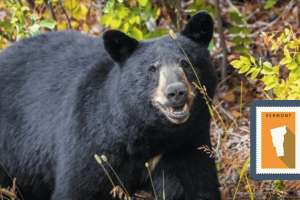
Identifying the tracks of predators early on made me understand that I could track and follow even dangerous animals if I had to. Encountering fresh bear tracks during a work survey, I followed the prints and played the wind for an hour, eventually catching up to a small male bear. He was travelling on a Forest Service road, occasionally dropping into a muddy creek-bottom. My reward at the end of that trail was getting to within 30 feet of the bear without him ever knowing I was there.
From start to finish, understanding tracks and sign led to my big-game success on one particular hunt. In 2016, I was hunting wild pigs on a ranch I had access to. I had spent some time on Google Earth and had located a great looking drainage that looked to have plenty of hiding spots for pigs. When I arrived at the base of the drainage, the wind was moving up the valley and would’ve notified anything with a nose that I was coming. That wasn’t going to work.
Thankfully, I had prepared for this and located a second drainage parallel to the first that I could easily hike, getting me to the top of my target canyon. This drainage was narrow and didn’t have a single tree or bush in it. At the very top sat a large oak, but other than that, it was void of vegetation.
Halfway up, I noticed fresh pig tracks moving up the center of the dry canyon. It was a single set of prints, and they looked like those of a large boar. A hundred yards from the top, I found very fresh pig droppings. A few feet beyond that, the tracks left the drainage and angled toward the lone oak. The path through the grass and the direction of the broken stems told me this animal was moving in the direction of the large tree at the top. About 50 yards from the top, I heard grunting and commotion near the lone oak. A huge boar broke from his bed at the base of that tree and started trotting near the ridge. A single shot from my lever-action .30-30 and the wild pig folded and started rolling down toward me dead.
Encountering the pig tracks in the side canyon, I knew instantly what animal left them. Since it was softer soil and the impressions were sharp, I determined the prints were fresh, likely left earlier that same day. The scat was also fresh and belonged to the same pig. He had dropped it right in the center of his tracks. All this tracking information gave me the size and direction of the animal. The pathway off the creek was easy to see and locating bent and broken grass stems again verified this pig’s direction. Since the wind was at my back and blowing up the canyon, he got my scent and decided to leave. All this tracking information enabled me to prepare for an easy shot on the moving pig.

Targeting Fur
Knowing that every animal leaves prints, tracking can be applied to any animal you hunt. When in pursuit of predators, understanding the tracks you see when calling can help you become more successful. Besides knowing what terrain coyotes, foxes and bobcats prefer, finding their tracks and scat near quality habitat is always a good sign when getting ready to call.
Coyote tracks look a lot like dog prints, but are on the small side and more oval from tip to heal. Walking or trotting coyotes usually leave claw impressions with their tracks. The toe pads are closer together than most dog breeds and the top of the larger back pad will possess one rounded point at the front. Fox tracks are about 50 percent smaller than coyote prints, with slightly wider gaps between the pads. In all honesty, they are so similar in structure, that if I’m out in the wild and see smaller coyote prints, I consider them to be fox tracks.
Bobcat prints are rounder than coyote tracks, and the top of the back pad will be bifurcated. They very seldom leave claw marks with the track, unless the soil is exceptionally soft and deep. With fresh tracks in good dusty or damp terrain, the split back pad is easy to observe. However, when that structure is tough to see, I rely heavily on the roundness of the track and the lack of claw marks in the depression to tell me it’s a bobcat.
Sharpening your tracking skills can also assist in recovering game after the shot. In the terrain where I hunt coyotes, a wounded predator can easily disappear if we lose sight of it after it’s hit. Getting an instant landmark, I make my way to the last spot I saw him, hopefully finding blood. If blood is limited, I’ll track the animal, identifying running tracks, bits of hair, kicked up soil and disturbed vegetation. I don’t hit them poorly often, but when I need to follow up on an animal, it’s good to know I have my tracking tools to lead the way.
I thoroughly enjoy tracking game, and I try to learn a little something new every time I’m out. I now have a solid library of tracking books, and I take a lot of pride in being able to identify what left its mark when I encounter prints. I truly believe that understanding how animals move through their preferred habitat will make you a better hunter. It doesn’t matter if I’m out hunting or just hiking, whenever I’m out in the wild, I look for tracks of the animals that walk the same path I travel.