Loading...

Most Recent

Displaying results 8111-8120 of 13900

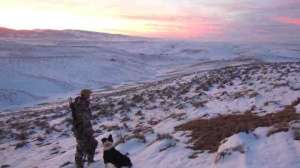
CH557 Mark Kaysers coyote dog Sage after a successful snowshoe hunt copyright Mark Kayser

Proven snow tactics for bagging more late-season coyotes

Late winter comes with numerous coyote-getting complications. Hunting educated coyotes tops the list, but one you may not have thought about with focus is snow depth. For those of you living in a snow-free zone please read along for entertainment purposes only. Yes, snow can be an issue even as days grow longer and spring begins hinting at its arrival. Why? In the majority of snowbound states the heaviest snowfalls occur in this period, ushered in by spring storms laden with precipitation yet blasted by Arctic air that excels at snowmaking. In my area of Wyoming, March and April always reign as top snow-producing months. It started early though and in late February there’s more snow on the ground than the previous winter months combined. If late-season coyote pursuits beckon you then consider defensive planning to set yourself up for success. Tire chains cut through the snow and ice. Be sure to outfit your traveling rig with all necessary possibilities for late winter travel. Remember, you can't use it if you don't have it with you. (Photo: Mark Kayser) SNOW TRAVEL Snow does one thing and it does it well. It stops access cold. Whether it’s a snowbank blocking your trail or deep snow that requires post-hole hiking, snow isn’t helpful at getting to the coyotes. At minimum make sure your vehicle has enough equipment stowed along for an easy extraction if it gets stuck. This includes a shovel, snow chains, tow rope, jumper cables, tool kit and sand to add traction to any icy spots. Your ATV should include a similar list of recovery items, plus you may want to consider swapping tires for tracks if your budget allows. I’m constantly amazed at the places a tracked ATV can go that a standard tire-equipped ATV would falter. Lastly, in the mechanized department, access to a snowmobile almost guarantees access to all snow-covered country. Some resort destinations even rent Jeeps, ATVs and snowmobiles. Check ahead as a day rental is cheaper than a fuel-eating investment. If hiking is your game then be sure to include snowshoes in your gear stash. Even in snow conditions that may only be a foot in depth snowshoes will save you thousands of calories a day. Instead of having to break your own trail you’ll be supported on top of the snow by the wider footprint of the snowshoe. Slogging through snow without snowshoes is laborious at best, but you can reduce the sweating with snowshoes. Mine just got pulled down out of the rafters again after the latest dump. Snow Tactics for Coyotes The message you send at this time of the season has a lot to do on whether the coyotes have seen more bullet testing that the shooting tunnel at the Hornady ammunition plant. One message you can’t go wrong with is coyote vocalizations. You don’t have to get fancy with your coyote vocalization calls. Simple howls work to lure coyotes into range during mating season. Start out your setup with a lone howl, repeat it several times and then sit back and wait. If nothing respond after about 30-45 minutes, move on and try again. That isn’t to say coyotes haven’t been duped by earlier hunters using howls. If your gut gives you that feeling then you may want to spice up your coyote talk. Take a look at coyote vocalizations that have a more seductive approach. Coyotes have a large library of vocalizations. If you listen to your own dog (or the neighbor’s that keeps you up all night) you can hear these various message. And although howls are heard the most, breeding-season females incorporate high-pitched yips and whines into their vocabulary. This tells neighboring males their willingness to mate. A short cadence of these whines could spike the lust in a coyote within earshot. Although coyotes fare better on snow than you and I, they still look for the path of least resistance when inches transform into feet. They also combine those travels to food-rich locations. Look for coyotes to follow any paths broken by livestock, wildlife like elk, farm tractors or windswept plains. When looking for top trails to follow consider whether they lead to food. Creek bottoms bursting with rodents, farmsteads, and borrow ditches holding a roadkill deer all have attractive qualities for coyotes during a snow event. I move closer to ranches when the snow invades because coyotes do the same. A dawn setup before ranch hands begin feeding has accounted for numerous coyotes for me over the years. There’s one bright spot even if you don’t bag a coyote in the deep snow. Spring is on its way!
Top ten 3

2018’s top 10 DIY whitetail hunts

We've narrowed down 10 top destinations for a DIY whitetail hunt. Some of these are well-known destinations, others are not. Each offers varying scenery and experiences.
Osceola Turkeys in Florida Photo FWC Chad Weber

Turkey season takes flight with Osceola season opener

Florida’s spring turkey season opens March 3 on private lands south of State Road 70, making it one of the first spring turkey hunting opportunities in the country. Florida is also the only place in the world where the Osceola subspecies of wild turkey is found. Also known as the Florida wild turkey, abundant populations of this subspecies live only on the Florida peninsula. It's similar to the eastern wild turkey subspecies, which is found in north Florida and throughout the eastern United States, but tends to be smaller and darker with less white barring on the wings. Hunting wild turkeys is popular in Florida and throughout North America. One reason people enjoy it is the range of calls wild turkeys make. The most recognized call is gobbling, which is most often associated with male birds, or gobblers, during spring when they breed. The gobbler will fan its tail, puff its feathers, strut and gobble to attract hens. Hunters pursue this wary bird by imitating various turkey calls to bring gobblers in close. Getting to see a male wild turkey’s courtship ritual is exciting for new hunters as well as those with years of experience. Another benefit of turkey hunting, for those lucky enough to harvest a gobbler, is that the meat is a good source of healthy, organic protein. “Spring turkey season gives hunters the chance to share a delicious wild game meal with friends and family. It’s also a great time to share the turkey hunting experience with someone who has never tried it,” said Roger Shields, the Florida Fish and Wildlife Conservation Commission’s (FWC) Wild Turkey Management Program coordinator. “The weather is mild, the spring woods are beautiful, and the thrill of hearing a gobbler respond to your calls is a wonderful memory you can share with a new hunter.” Wild turkeys are a conservation success story in Florida and across North America. They had almost disappeared by the turn of the 20th century, with populations remaining only in remote pockets of habitat. However, thanks to science-based wildlife restoration efforts, today Osceola and eastern wild turkeys are flourishing throughout the state. SEE ALSO: Try this Bourbon-Based Turkey Brine This Season FWC wildlife professionals use scientific data to conserve wild turkey populations and provide regulated and sustainable hunting opportunities. Hunters also play an important role in wild turkey management by purchasing licenses and permits, and along with other shooting sports enthusiasts, contributing to the successful Wildlife and Sport Fish Restoration Program. North of State Road 70, Florida’s spring turkey season on private lands opens March 17. Florida’s wildlife management area system also offers opportunities for turkey hunters, and because dates and regulations can vary, hunters are encouraged to review the regulations brochure for the WMA they plan to hunt. Get a snapshot of Florida’s wild turkey season dates and bag limits by visiting MyFWC.com/Hunting and clicking “Season Dates.” — Story and photo from the Florida Fish & Wildlife Commission
Ryan Kirby Mountain Painting 3

Wildlife artist finds his work reproduced as tattoos

If you'd like to see wildlife-inspired tattoos, just scroll through this Instagram account and look for the occasional shirtless, white hunter in a sea of oil paintings and sketches.
Glassing open country for coyotes copyright Mark Kayser e1530304744533

Tips for roaming, ranging to bag more late-season coyotes

Every coyote hunt you experience isn’t like those you watch online or on the big screen. I’m reminded of that every time I go out coyote hunting. Rarely do I have coyotes barrel in with white flags waving for surrender. On a recent hunt where I teamed up with Hornady’s Neal Emery on a hunt hosted by Kody, Jordan and Kelly Glause at Heart Spear Outfitters in central Wyoming. Kelly, the elder statesman of the group, spent part of his career as a professional coyote getter and knew the area well, plus local coyote behavior. Coyote breeding changed the game a bit, but the howling, winter winds of Wyoming wreaked havoc on the hunt as we soon discovered. Regardless, when you set aside days to hunt, you simply hunt.Never give up when pursuing late-season coyotes and plan your pack accordingly for any contingencies including changing weather conditions. (Photo: Mark Kayser)The winds held off the first morning and coyotes answered Kelly’s vocalizations, but we still didn’t strike the right chord to lure one into rifle range. Howls, tracks and droppings all told a tale of numerous coyotes calling the area home and as we hiked to our third set of the day we finally met a local inhabitant. Peeking over a ridge, Neal, Kelly and I all commented on the eagles and magpies congregating below. There had to be something dead there and a coyote bounding off in the distance confirmed the Grim Reaper had made a visit. Neal dropped to use his sticks and he was armed with a custom rifle chambered for the new 6.5 PRC. Kelly and I verified the distance simultaneously, but just as Neal dialed in for the shot the coyote disappeared behind a ridge. Our discussion at just what occurred was cut short by the appearance of a second, closer coyote. “250 yards,” I whispered as Neal settled the reticle and a second later he laid the coyote flat. As we headed over to recover the fur prize we discovered what had been drawing the scavenger crowd. A young mule deer buck had become tangled in a barbed wire fence. It met a gruesome death as it likely was alive while the coyotes started dining. The winds kicked up soon after and our calls were practically useless the remainder of the trip. Nevertheless, Neal bagged another coyote simply while roaming between callings sites and another person in a separate party missed a coyote also while hiking to a setup site. So what was the lesson learned? If you can’t call them and the terrain allows, roam a bit. In high-density coyote country you might be able to jump a coyote for a shot or spot, and stalk. If this intrigues you here are some tips to increase your chance at roaming success. First, move slowly, especially as you reach a high point. Before walking over the top of any hill you should slowly peek and scan. Coyotes have great eyesight, but slow movement and a low profile is hard for them to detect. Of course having a quality binocular is essential in determining if the light-colored spots you see in the distance are coyotes or brush piles. In open country you may want to use a 10-power model, but an 8-power model can handle most situations. One thing that speeded up Neal’s shooting was my use of the Nikon LaserForce 10x42 rangefinder binocular. At the same time I was identifying the target I was also able to feed ranges to Neal without switching gear. Lastly, consider a caliber that can “reach out and touch somebody.” Your shots could be longer and a high BC bullet helps keep an accurate trajectory over a long range. You get that in new calibers like the 6mm Creedmoor or its big brother the 6.5 PRC. Pack lightly and tweak your clothing to the conditions. Quality hiking boots, poly-based clothing and layers to add or subtract as you heat up all should be considered. When the coyotes don’t respond to calls or the conditions won’t allow calling, consider roaming for your next fur prize.
BC Sitka Blacktail 2017 156

Top deer-hunting spots for the DIY, road-tripping bowhunter

Start now and you've got all spring and summer to plan your road trip. To help out, we've narrowed a long list of options down to 10 of the best deer-hunting ground in the U.S.
Extreme deer rifles2

8 best new deer rifles for extreme conditions

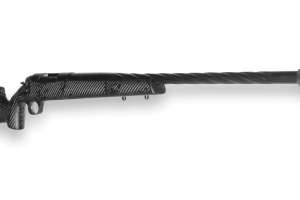
Need a great deer rifle that can withstand harsh weather and demanding backcountry conditions? Read on. We've found eight great options for 2018.
Two grizzly bears photo by USFWS

Grizzly bear hunt plans underway in Wyoming

Grizzly bear numbers have recovered enough after years of federal protection to consider future hunting seasons, according to the Wyoming Game and Fish Department. That was part of the proposal and request WGFD officials made recently to the Wyoming Game and Fish Commission. If a hunting season is set, it would be the first one in more than four decades. Grizzlies were listed for protection in 1975 by the USFWS. From the Jackson Hole News & Guide: Meeting in Douglas, Wyoming Game and Fish Department staffers asked their governing board for permission to draft hunting regulations. The request was granted, which means that in the coming weeks biologists and wardens will pore over maps to devise grizzly hunting boundaries and come up with proposals for how many bears could be killed. Grizzly bears in the Yellowstone National Park, such as this one, have recovered enough after decades of protection that their range has expanded well outside park boundaries. Wyoming officials are making plans for a future hunting season. (Photo: US Fish & Wildlife Service) It’s a development Game and Fish Chief Warden Brian Nesvik sees as “part of the success story” of the Greater Yellowstone Ecosystem’s grizzly population. “There certainly is the opportunity biologically for there to be a grizzly bear season,” Nesvik said. “Grizzly bears have recovered to a point that they can be managed similar to other large carnivores in the ecosystem.” The U.S. Fish & Wildlife Service in 2017 said the bears had recovered enough after years of endangered or threatened protections to allow Wyoming, Montana and Idaho to manage them. Wyoming immediately began making plans then for a possible hunting season for boars by setting license fees: $600 for residents and $6,000 for nonresidents. WGFD officials began trapping and monitoring grizzly bears in 2017. The department has a wealth of information including a map showing the recovery range of the bears. Featured photo: U.S. Fish & Wildlife Service
1518556122797

Postcards from ancient hunters

New cave art comes to us courtesy of whale hunters in Chile, while an ancient hunter's rare copper arrowhead was found in Canada.