
Technology changes at a rapid pace. Although the hunting industry has notoriously been slower to adopt both change and technology, it always catches up … eventually. Thus, it’s no surprise that cellular trail cams are now commonplace within hunting.
It begs the question, though. Is using cellular trail cams for hunting considered fair chase? I’m here to enter the debate. But first, some context, scene setting, and words from each side of the aisle.
Bans on Cell Cams?
The vast majority of states still allow the use of cell cameras and traditional trail cams. In fact, most have no regulations at all on the use of these important scouting tools. In my opinion, that’s a good thing.
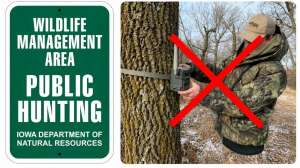
However, not all states look at cams the same way. Alaska, Arizona, Montana, New Hampshire, Nevada and Utah have forms of trail camera bans. Some restrict the use of cell cams. Others limit the use of trail cameras on public lands. Still, some ban trail cams altogether.
More specifically, Montana doesn’t permit the use of cell cameras. New Hampshire allows cell cams, but a hunter cannot hunt on the same day photos are taken. Arizona outlawed live-streaming and subsequently banned all trail camera use. These are but few examples of how some states — albeit the vast minority — are handling the use of trail cameras.
Groups in Opposition of Cell Cams
Some of the record book organizations currently oppose the use of cellular trail cameras (sort of). A look at the Boone and Crockett Club’s and Pope and Young’s fair chase rules clearly outlines their stances. (Click here to read the Boone and Crockett Club’s statement; click here for the Pope and Young version.) While there aren’t blanket statements over the use of cellular cameras, these do address using cams for real-time data. For example, a cell cam set to send photos “automatically” would in all likelihood be considered unfair chase. Those set to send once per day, say at 8-9 p.m., generally would not break this rule.
According to B&C: “Trail cameras can be a helpful tool in game management and selective hunting. The use of any technology that delivers real-time location data (including photos) to target or guide a hunter to any species or animal in a manner that elicits an immediate (real time) response by the hunter is not permitted.
“’Real time’ is the key concept. Seeing a photo and harvesting an animal a few hours later, or even the same day, uses this technology to assure a kill. It also takes advantage of the animal, which cannot detect impending danger from a camera. Waiting several days, or even until the following season, to pursue an animal captured on camera is different, and would not be deemed an unethical use of a trail camera.”
P&Y is similar in its stance: “With the invention of wireless trail cameras, as well as other devices that can send real time data to a hunter, all hunters need to consider how the use of these devices may affect fair chase. While the use of a wireless trail camera is not automatically a violation of the Rules of Fair Chase, using this technology to deliver real time location data of the animal being hunted would be a violation of rule No. 7 of our Rules of Fair Chase.
“For clarification, if you receive a wireless image (photo, video, GPS coordinate, etc.) and it elicits an immediate (real time) response that guides the hunter to the animal, it would be considered a violation of the Rules of Fair Chase and prohibit that animal from being eligible for entry into the Pope and Young Club's Records Program. Fair Chase is defined as the ethical, sportsmanlike and lawful pursuit of free-ranging wild game animals in a manner which does not give the hunter an improper or unfair advantage over the animal.”
Of course, just because B&C and P&Y have this position on the use of cell cams doesn’t make these devices bad. It certainly doesn’t make them illegal. (Only your state and local laws can do that.) However, it certainly can impact whether or not a deer can be entered into their record books.
After all, hunters must sign an affidavit to enter a deer into their record systems. An affidavit is a legal document, and making false statements on one is a form of perjury, which can be met with fines or more serious consequences.
Groups in Support of Cell Cams
Despite the B&C and P&Y rulings against cellular trail cameras, not all record books rule against the use of these. For example, Buckmasters doesn’t consider the use of cellular cameras as an issue with fair chase. Hunters who use these tools can still place deer in the record books.
Furthermore, the National Deer Association (NDA), which was formerly the Quality Deer Management Association (QDMA), released a position statement on the matter. In short, “NDA supports the use of all trail cameras as hunting, wildlife observation and deer management tools.”
Diving deeper into the topic, NDA offers more details on its position. It suggests that trail cameras have increased interest in hunting. It’s connected people to the outdoors in ways not previously possible.
“From a hunting perspective, there is no data to suggest the use of trail cameras has had a negative impact on deer populations,” NDA said. “Rather, deer hunters today are more active in wildlife and habitat management, and trail cameras are an excellent tool for monitoring a deer population and setting management objectives. Trail cameras are useful for deer hunters as well as professional deer managers and researchers.”
As for its official position? “The NDA supports the use of all trail cameras as hunting, wildlife observation and deer management tools,” NDA said. “As trail camera technology advances and social/ethical issues arise, we will evaluate them on a case-by-case basis and, where necessary, support standards and regulations that are science-based and ensure fair-chase hunting.”
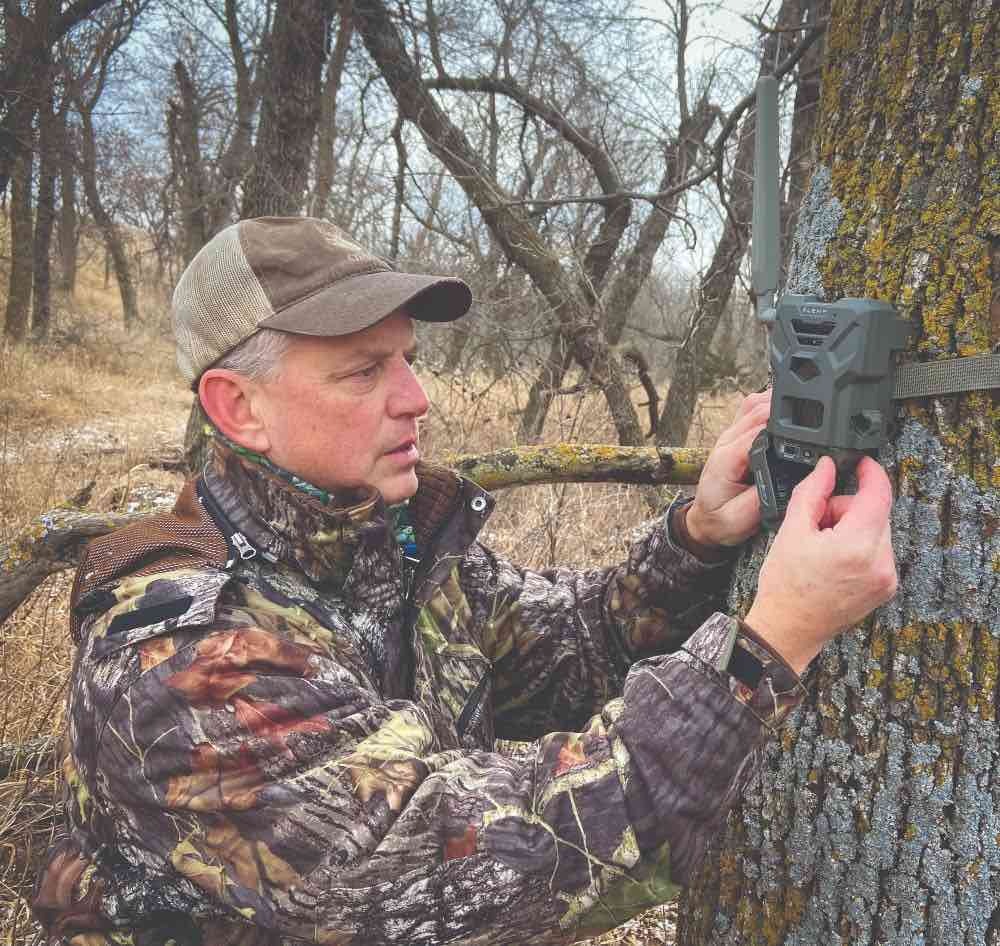
Defining “Real Time” Communication With Cell Cams
From my personal perspective, I believe cellular cameras can be used in unfair manners, especially in terms of real time communication. Even where legal and without restrictions, hunters shouldn’t misuse these tools.
For example, using cell cams to aid real time in a hunt is, in my opinion, an unethical use. In fact, many states regulate against using cell cams in this way. Some have direct language in their game laws. Others are more obscure and indirect. Nonetheless, that’s the issue being addressed.
The same or similar laws still regulate against using handheld radios to communicate with nearby hunters. A quick “Hey, a buck is heading down the valley toward you,” on the radio, is not allowed. Similarly, a text saying, “There’s a deer walking across the field,” isn’t legal, either.
That said, how does “real time” apply to cell cams? While each state regulates it slightly differently, it’s the use of the camera to assist in the hunt in real time.
For example, hunters cannot be sitting in one stand location, see a buck hit a cell cam elsewhere, and climb down to pursue that deer. Furthermore, a hunter can’t be walking to hunt one stand, get a hit on a different cell cam location, and change course.
Of course, this subject is ripe with gray areas. Even within the situations outlined above, states might look at these differently. Hunters might do the same.
Hunters have long had access to immediate sends in the form of individual photos and videos. A newer concept is here, though. At least one cell cam brand offers live-streaming capabilities. Meaning, with the click of a button, hunters can view the camera’s target area. This is even more “real time” than the cameras sending photos of videos “immediately.” Oftentimes, even cameras in “send immediately” mode take several minutes to upload, notify, and appear in the app. This is especially true in areas with poorer cellular service.
With live streaming, that’s not the case. If service allows, this provides far more real-time assistance than any other cellular camera feature. While I support other legal uses of cellular trail cameras, I can’t get behind the live streaming methods. Even if I could, current game laws do not permit it in most of the states that I hunt in.

A Personal Perspective: Cell Cams Make Deer Hunting Better
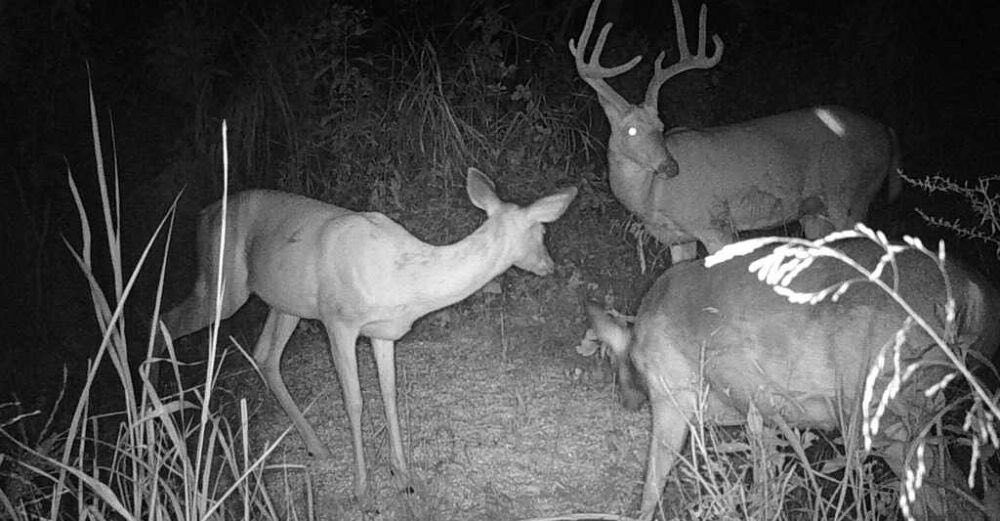
Outside of real time use, I completely and wholly believe that cellular trail cameras make deer hunting better. I also believe cell cams can make deer hunters more ethical. I hold to this belief for several reasons.
First, cellular cameras enhance herd management efforts. These are more powerful tools than SD cameras and provide management intel that’s simply not possible without cams on the landscape.
These tools make it possible to more accurately conduct trail camera surveys, gauge buck-to-doe ratios, determine buck age structures, observe herd health, and more. This elevates a hunter and land manager’s ability to improve deer populations, make harvest decisions, and more.
Cell cams also allow hunters to be more selective. Despite some arguments, this is a good thing for the overall deer herd. Cameras can reveal bigger deer on the landscape that hunters otherwise wouldn’t know about. Because of this, they are more willing to pass on younger 1.5-, 2.5- and even 3.5-year-old bucks.
It’s no coincidence that the National Deer Association reports that the percent of yearling (1.5-year-old) bucks in the United States antlered harvest was 62% in 1989, and only 26% in 2022. Observing the curve, the significant improvement coincides with the advent and eventual proliferation of trail cameras. It appears that trail cameras are improving deer herds thanks to more awareness and better decision-making.
It even helps in making the best decisions when harvesting antlerless deer. For example, if you need to reduce the deer population, shooting a more productive doe is the best method. If the deer population is far too low, it’s better to shoot an unproductive doe, or shoot no doe at all.
These things considered, this allows the deer herd to mature and thrive at or close to the carrying capacity. It helps keep balance within deer and plant life alike.
Lastly, cell cams minimize disruption of wildlife. The ability to check cameras without needing to walk the hunting property and physically pull cards decreases the amount of stress applied to the deer herd. That’s especially important during times of year when they need to conserve energy.
Furthermore, although trail cameras don’t always paint an accurate picture of the activity in an area, if hunters see via cams that deer movement is minimal, they’re less inclined to hunt a given area. Instead, they might wait until a later date to hunt. This too applies less pressure to the deer, effectively reducing stress and burned calories.
From the hunter standpoint, trail cameras (cell cams included) have increased hunter interest. It’s kept people engaged who otherwise might’ve moved on. Also, it’s helped bring new hunters into the fold. Simply, cell cams make deer hunting better IMO.
Define Fair Chase for Yourself
Overall, cell cameras provide no guarantees. Just because a hunter uses trail cameras, or cellular trail cameras, does not guarantee a filled tag on any deer, let alone a mature buck. I’d argue it saves more deer lives due to increased pickiness in selection, effectively allowing increased percentages of young bucks to age. Used ethically, and within the confines of game laws, this is merely another scouting tool in a hunter’s bag of tricks.
My parting words? Within the confines of hunting regulations, it’s important for everyone to define fair chase for themselves. So long as hunters abide by hunting regulations in their states, zones, and counties, there isn’t a right or wrong answer. Follow that moral compass.
Sidebar: Advanced Call Cam Tips for Deer Hunters
Some bowhunters are ready to take their cell cam game to the next level. Keep the following in mind to implement more advanced cell cam tips and tricks.
- Deploying cams in layers: Position some cams along food sources, others in staging areas, and still, others closer to bedding areas.
- Placing cell cams closer to daytime deer haunts: Locate cell cams in more sensitive areas, such as the edges of bedding areas, staging areas, and food and water sources within cover.
- Letting a cam soak in a bedding area: Hunters should never enter a bedding area to pull an SD card. However, letting a cell cam (with external battery source) soak in a bedding area until the post-season gleans much information.
- Hanging high and angling low: Cell cameras are bulkier and more visible than SD cams. Thus, it’s even more important to hang them higher and get them out of whitetails’ lines of sight. Hang cameras higher and angle them downward toward target areas.
- Hanging cams over scrapes: The best option for capturing the bulk of bucks on the property is hanging cell cams over active scrapes.
- Pairing with an external battery: The one Achilles’ heel of cell cams is battery life. Pair these with external battery sources to maximize battery longevity.
- Studying direction of travel: Observe the first and last frames of deer that walk in front of cams. Note the direction they came from and went to in relation to time of day, travel pattern and other relevant contextual details.
- Observing preferred wind directions: Study each daytime trail camera photo of target bucks. Using a historical weather data service, such as Weather Underground, note the wind direction for the timestamp in the photo(s).
- Moving cams throughout deer season: Deer use various portions of their home ranges throughout the season. If needed, move cameras to new locations as conditions and circumstances dictate.