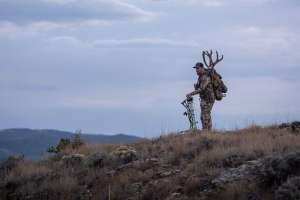

I started actively hunting coyotes back in the early 1990s. Using mouth calls and whatever firearm I had available in the safe, I’d head out to learn what I could about predator hunting. The learning curve was steep during those early years, but I slowly started to hone my calling skills and pick spots that held animals. It wasn’t until I started killing my first predators that I realized I might need specialty calibers more suited for the 20 -to 30-pound animals I was targeting.
Back then my personal inventory of firearms contained a few shotguns and Ruger 10/22s, a .17 HMR and a couple deer rifles. Wanting to push the distance of my shots, I grabbed the deer rifle I was used to shooting for my first hunt for predators; a .30-06.
After a few weeks of hunting, I finally had some luck and shot my first coyote with that rifle at 150 yards. I had spotted it coming in from a long way out, and once it got closer, I dropped it. When I went out to pick up the coyote, I realized there wasn’t much left of it. Its whole back half was destroyed, and its prime fur was ruined. I quickly decided I needed to store the deer rifle for deer-size animals.
After doing a bit of forum reading, I discovered that some coyote hunters used the newly produced .17 HMR for killing coyotes. Months after Hornady released the round, I picked up a Ruger heavy-barrel bolt action chambered in .17 HMR, grabbed some 17-grain ammo and headed out to hunt.
On a solo morning hunt, I killed my first bobcat with a single shot to the neck at 90 yards with the small round. The cat dropped in its tracks. A week later, during a night hunt, I shot another bobcat right in the chest with the .17 HMR as it faced me at 100 yards. The cat fell, got back up and took off. We tracked it for over 500 yards in the dark and never found it.
I knew the .17 HMR was fast, but deep in the back of my mind, I also knew the bullet was just too small to drop coyote-sized animals in their tracks. That was the last time I took a shot at a predator with the .17 HMR. If I was going to get serious about calling and killing predators, I’d need to acquire rifles more suited to animals of this size. This was the beginning of my predator hunting caliber evolution.
Ruger .204 (Fat Sally)
While everyone was touting the .223 Rem. as a great predator round, my focus was on the newly produced Ruger .204. I looked over its blistering ballistics and overall performance and was sold.
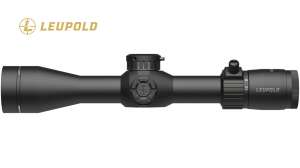
In the early 2000s, I purchased a used bench rifle chambered in .204 Ruger. The rifle was heavy, but sat stone still on my shooting sticks, and the price was right. Topping it with a Leupold scope put the total weight at about 13 pounds, earning the rifle her very fitting nickname of Fat Sally.
From 2004 until about 2012, I hunted predators hard behind Fat Sally and was constantly impressed with the round’s knockdown power. Coyotes, bobcats and foxes were all regularly taken with the speedy centerfire round.
During the first season, I found that my rifle absolutely loved the 39-grain Sierra Blitzking round and I stockpiled as many I could find. With the amazing performance of the round, I figured I had finally found my predator hunting rig.
Despite the amazing number of critters killed behind Fat Sally, I started noticing a couple performance issues over the years. Out to about 225 to 230 yards, the bullet was a killer. However, beyond that the bullet’s reduced energy and size could be a problem.
I was tucked into the brush on a solo calling trip with all conditions perfect. I had just finished a calling series when I noticed a coyote standing broadside looking my way. I grabbed my rangefinder and put it at a distance of 310 yards, the longest shot I had ever taken at a predator. I put the crosshairs on it and pulled the trigger. I heard the thump and the coyote started spinning and then took off.
I eventually found the coyote but had to put a second round into it. When I skinned it out, I noticed that the bullet had hit exactly where I was aiming, but the damage was minimal. I felt lucky that I had found it. The smaller projectile also had a tough time punching through any type of vegetation. Pieces of sage, dry grasses and even the smallest of twigs would deflect the bullet or cause fragmentation, resulting in a missed opportunity. It had happened enough for me to notice.
I still hunted with the .204 and it happens to be my daughter’s favorite coyote-killing caliber. However, I wanted to see if I could expand my knowledge of other calibers and how they performed as predator rounds.
AR .223 (The Night Rig)
The state I lived in at the time had continued to strangle gun owners with excessive regulations and outright restrictions. Its constant target was the AR-platform rifle and the newest regulation back in 2014 was the banning of AR lowers. I had never really had a desire to build an AR, but with the looming restrictions, I figured I had better jump in sooner than later. I picked up a lower and started accumulating all the parts to make it complete. I had decided to keep it simple and build it chambered in .223 Rem. I also decided I wanted to build a rifle as a dedicated night-hunting rig. My specifications included a solid stock, longer barrel and crisp, two-stage trigger.
The build went well, and I seriously enjoyed customizing the rifle to my exact specifications. It was a bit heavy due to the solid stock and barrel length, but on paper the rifle grouped well with the 55-grain Sierra Blitzking round. I decided to start the season off by making day stands with my new rifle.
My second stand was made overlooking a canyon, with a commanding view of the desert floor. Only 45 seconds into calling, I spotted a set of ears coming up fast directly in front of me. By the time I got on the coyote, it had spotted me and raced back down the hill. Out at about 150 yards it stopped and looked back. Steady on the shooting sticks, I squeezed one off. I heard the bullet hit, but instead of tipping over dead, the coyote took off.
I swung on the wounded coyote and was just about to start spraying lead, when I watched it stumble and tip over 200 yards from where I had first shot it. I remember instantly thinking that the .204 would’ve dropped it in its tracks.
When I got to the animal, I noticed that I had hit it exactly where I was aiming, but the damage was minimal. I knew the velocity of the .223 Rem. at 3,250 fps was substantially slower than the .204 Ruger at 3,935 fps, but I figured the larger bullet weight (55 grains compared to 39 grains) would provide a little more knockdown power between 100 and 200 yards. Sacrificing speed for weight didn’t seem to be working.
I continued day hunting with the AR for several months and noticed that inside 100 yards, the .223 Rem. would, for the most part, knock coyotes down. Longer shots resulted in animals running a hundred yards or so before succumbing. Having built this rig specifically for night hunting, I began to wonder if I’d be spending too much time wandering around the dark desert looking for critters that didn’t fall where I shot them.
On the evening before the bobcat opener, I headed out with my buddy Jose De Orta to look for bobcats. As we’d done during previous seasons, we drove out the evening before and started night calling at midnight.
Around 3 a.m., we already had one bobcat in the truck, and it was my turn on the rifle. Jose was in the back of the truck operating the red light, and I was standing next to the truck toward the back, with the AR resting on shooting sticks. With everything set, I started sending out rabbit death chaos through a Dan Thompson closed-reed call. We didn’t have to wait long.
In less than a minute of calling, Jose gave me the signal that we had a critter coming in. Instead of scanning and searching 360 degrees, he was now focused on a small group of boulders about 100 yards out. “Right here!” he whispered. I moved over under the red beam and found the cat standing broadside looking at us. I placed the crosshairs just behind the shoulder and squeezed the trigger.
I hit the cat solidly, but instead of falling where it was, it started bouncing and then ran off. Again, I couldn’t help thinking that my .204 Ruger would’ve dropped that animal. We eventually found the bobcat 120 yards from where I shot it.
The following week, I shot another cat at night with the AR that dropped at 90 yards from a frontal chest shot. Three nights later, I called a third cat in and shot it broadside at 140 yards. Again, it took off and after searching for nearly an hour, we didn’t find it. We returned the following morning and found the cat crumpled up in some bushes over 100 yards from where I shot it.
Shot placement on these animals taken with the AR-15 chambered in .223 Rem. was perfect. Day hunting with the rifle wasn’t really an issue, as I could see the animals take off and where they eventually fell. Hunting with the rifle at night was a different story. Having to search for an animal shot well with the AR at night wasted our time and illustrated that the AR was not a quality nighttime rig.
.22-250 Rem. (Thumper)
Back when I purchased Fat Sally, I also picked up a brand-new .22-250 Rem. I had read a bunch on the caliber and thought I’d hunt a little behind it as well. In all honesty, it spent a great deal of time in the safe once I found success with the .204 Ruger. Now it was time to dust off the Remington.
I changed out the stock trigger and topped the rifle with a Leupold VX-111, 4.5-14x50mm scope and loaded it with 55-grain Hornady ballistic-tip bullets. It was time to go hunting.
Starting in about 2015, I began taking two rifles out predator hunting: the Remington .22-250 and a lightweight Ruger in .204 as a backup. I wanted to trade off between the two to see which performed better. Since I had shot it very little, I started that next season off with the Remington. After a few successful stands, I never went back to the .204 Ruger. The larger 50-grain bullet has a slightly higher muzzle velocity at 4,000 fps than the .204 Ruger and the smaller the .22-250 Rem. bullet grain, the faster it goes. This makes the .22-250 Rem. the fastest factory load out there.
I can remember that first season clearly. I absolutely fell in love with the faster, heavier caliber so much that I picked up another rifle in the same caliber. That season was at the tail end of a good rainy year, and we called in a lot of coyotes. And I didn’t have to chase down a single one. If I did my job and shot straight, the coyotes and bobcats fell in their tracks. So effective and predictable was the shooting outcome that I nicknamed the rifle Thumper.
I remember one stand. I was hunting with my buddy Tim “Spike” Davis in the desert when we called in a pair of coyotes. Both animals checked up at about 90 yards and stood firmly behind sage brush. I could see part of one animal’s face clearly and just a hint of brown behind the bush. I picked a bullet path and put one right through the vegetation. The coyote dropped there.
Coyote after coyote fell to Thumper without issue that first season. The round was accurate, fast and heavy. I honestly don’t ever remember losing a critter to the round. The rifle performed equally as well as a night hunting rig and was lighter and quieter to put into battery than the AR.
As far as dropping distance, my wife recently shot a coyote at 275 yards with Thumper and she just started coyote hunting this past year. Hands down, when it’s time to head out and make some predator stands, I reach for my pair of .22-250 Rem. rifles.
Over the years, I gradually evolved through these three main calibers to find the one that works the best for the way I hunt. The .204 Ruger was my go-to round for many years, but I started to notice a distance limitation issue with the small, faster bullet. The blistering speed of the round would also easily deflect and fragment whenever it encountered even the slightest vegetation, but it is still one of my favorite calibers to hunt with.
Looking toward the AR platform, I built one and decided to hunt for a season behind it. Despite the heavier round, the muzzle velocity of the .223 Rem. was far slower than the .204 Ruger and it didn’t perform the way I was used to. Trading muzzle velocity for bullet weight was not the right combination for me.
Finally, the .22-250 Rem. provided the speed, bullet weight and accuracy I was looking for in a predator hunting round. The heavier, faster bullet stays deadly out at considerable distance, and I’m constantly astounded at the accuracy.
We all have our preferences when it comes to gear, calibers and the endless cycle of predator hunting equipment. This journey has taught me to not just listen to forum banter and to get out there and use what works best for me. This evolution isn’t a judgment on calibers; it’s simply an evaluation of popular predator hunting rounds I have put to the test. It just so happens that the .22-250 Rem. works the best for me and how I hunt predators.