
Feral hogs are an invasive species that cause significant ecological and agricultural damage across much of the United States, especially in the South. They have established populations in approximately 35 states, with the largest numbers in Texas, Florida and California, but sizable populations exist in many other states. Their range has expanded rapidly due to their adaptability, high reproductive rates and a lack of natural predators.
While classified as game animals in California and Hawaii, they are designated as an invasive nuisance species in most states. Regulations vary, so check the rules where you plan to hunt; some states require a hunting license, but in others, such as Texas, there are no restrictions. Make sure airguns are a legal method of take in the state where you plan to hunt; some explicitly allow air guns, some do not place any restriction on the method of take, while a few expressly prohibit their use.
Hunting with an Airgun
A fair question is why anyone would want to use an air rifle for hog hunting. I believe there are two main rationales: from a sporting perspective, it’s all about getting close to your quarry, selecting the perfect shot and executing it. This is one of my favorite hunts, sharing many of the qualities of bowhunting, but utilizing traditional shooting skills. From a practical standpoint, an air rifle allows you to shoot more quietly and safely, which might be the most important aspect of airguns for those doing pest control in populated areas.
For hunting feral hogs, the only airguns that you should consider are PCP rifles. Feral hogs have been taken with spring piston guns, but considering most spring piston power plants generate less than 20 foot-pounds of energy (fpe) (one-fifth of a .22 LR), let’s just say they’re not the best tool for the job. For an all-around gun that will let you take body shots and consistently reach out to 60 or 70 yards on bigger hogs, I’d stick with a PCP rifle in the .35- to .50-caliber range. My primary big-bore pig guns generate close to 600 fpe, and a big, solid slug from these guns will anchor a boar on the spot.
However, there are specific situations in which a smaller-caliber gun makes sense when doing pest control on a golf course or a suburban setting, for instance, where reducing the carrying capacity and power can be beneficial. These smaller .25- and .30-caliber air rifles also tend to be much quieter, have a higher shot count and deliver laser-like precision. But using a smaller-caliber rifle requires the hunter to limit the range, stick with smaller pigs and take only headshots, so I consider this more of a “specialist” rig.
My expectation for a big-bore air rifle is that it can print sub-1-inch groups at 60 yards and generate 400 foot-pounds of energy or more. For smaller-caliber rifles used for specialty applications, I want a .25- to .5-inch group and for the gun to generate at least 80 foot-pounds. Understand that this is “rule-of-thumb” advice. I have .25- and even .22-caliber guns generating about 40 fpe that I’ve used to consistently and effectively drop pigs. But these lower-powered rifles require the discipline and skills mentioned previously, and have complete confidence that you can precisely place a pellet or slug into a small kill zone.
Getting Started
Once you’ve decided that hunting feral hogs with an airgun makes sense, the first step is choosing the right rifle. I’ve already covered several key requirements and will use three of my primary guns as examples. You’ll also need suitable optics, whether that’s a scope, red-dot, IR or thermal sight, depending on how and where you hunt. In most cases, I think a scope is the best choice.
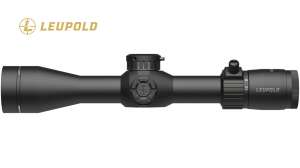
While I don’t have room to discuss specific models, I recommend a compact scope with strong low-light performance and adjustable magnification up to 12X. Precise shot placement is essential, but hog hunting with an airgun usually happens at moderate ranges, and higher magnification often adds size while reducing light transmission. A couple of my rifles carry IR or thermal optics, and if you plan to hunt at night, either option is worth considering.
One of the most important and overlooked requirements for new airgunners is determining how to keep the gun charged with high-pressure air. You can use a hand pump, which (trust me) is not a practical solution for a big-bore airgun, or a high-pressure air tank, which works well but requires access to a refilling tank (at a dive or paintball shop).
I think a small portable compressor might be a better option because these devices can provide a virtually endless supply of high-pressure air. The portable compressor I’ve been using is the Air Venturi Nomad Nano, a compact 15-pound portable PCP model designed to provide reliable high-pressure air on the go. It delivers up to 4,500 psi, runs from either a 110/220V outlet or a 12V car battery and features an adjustable auto shutoff. It’s maintenance-free and a lightweight yet capable solution for directly filling PCP airguns anywhere.
Big-bore airguns can be air-hungry, and unlike tanks, a compressor experiences no drop-off in pressure with multiple refills of a rifle to 4,400 psi. Even on hunts where I plan to refill with a CF tank, I’ll pack the Nano in the truck in case the CF tank pressure drops below my rifle’s optimal fill pressure, and I need to top the rifle back up to peak pressure.
Author’s Hog Battery
I have taken hundreds of feral hogs with airguns over the past 30 years and used just about every airgun on the market, but three guns get regular use when I’m heading out to put pork in the freezer.
The Hatsan PileDriver .45-caliber is a high-powered, single-shot PCP bullpup rifle that excels for hog hunting. It delivers over 700 foot-pounds of energy, with a 900 fps muzzle velocity, and features a 33-inch precision rifled barrel. The 480cc carbon fiber cylinder fills to 4,350 psi, providing five shots at optimal velocity before performance drops. It features a long side lever for easy cocking, a large, accessible loading port for quick reloads and a two-stage adjustable trigger. The ergonomic synthetic thumbhole stock is adjustable and offers good offhand shooting while stalking big boars.
This is a solid, hard-hitting gun that provides a stable shooting platform and lives up to the PileDriver name. I recently dropped a massive boar with a broadside shot at 75 yards with this gun (using a 295-grain Vortex slug), knocking him off his feet. The PileDriver has proven to be very reliable; it functions well with a wide range of projectiles, and I have a lot of confidence in it.
The Umarex Hammer Carbine .50-caliber has become one of my favorite compact big-bore PCP rigs for hog hunting. It was designed to provide maximum power in a shorter, more maneuverable platform, and though I like the rifle version, the carbine hits the sweet spot for hunting pigs in the dense Texas thickets. Despite the reduced length compared to many of the big bores I use, it still launches a 350-grain slug at about 820 fps and delivers roughly 523 fpe. The Hammer Carbine uses a 35-cubic-in carbon fiber tank for onboard air storage and fills to 4,500 psi.
Besides the compact design, I like the two-shot shuttle magazine that provides a fast follow-up shot when additional pigs pop up. I get about four full-power shots per fill, so with an extra magazine in my pocket, I can take four fast shots if needed.
It’s not uncommon on some of the properties I hunt to come across several hogs at the same time. For these situations, the Western Airguns Rattler .357-caliber is the most capable semi-automatic big-bore air rifle I’ve shot. It was purpose-built for larger game and long-range precision. This rifle delivers 15 full-power shots, each capable of approximately 270 fpe, enough energy to anchor a boar cleanly or follow up on multiple targets.
Of course, the real differentiator for the Rattler is the semi-auto action, which is rare in the big-bore airgun world. The accuracy is on par with my bolt-action guns, and it is one of the most reliable semi-auto air rifles I’ve hunted with. Its 580cc air cylinder, adjustable regulator and hammerless firing system work together to provide exceptional shot-to-shot consistency, and the adjustable power allows optimization for specific hunting conditions or projectiles. I shoot heavy 174-grain slugs when I’m after pigs, but use a lighter pellet when I’m pursuing predators.
So, whether you want to hunt feral hogs with an air rifle for the heightened challenge of close-range encounters, or because you need to deal with nuisance animals in an area where stealth is important, an air rifle is worth considering. There are many brands and models to choose from, depending on the specifications, aesthetics and budget that suit your needs. But get the right rig and take it out after feral hogs, and you might find it becomes one of your favorite hunts!