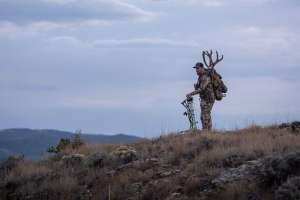

Elk hunts, especially DIY efforts on public land, have a disposition to test you to the core of your very physical and mental limitations. Will your physical condition be qualified to traverse rugged country for days, possibly weeks on end? Even if you have the fitness required to tackle elk terrain, will you be able to mentally push your mind to continue the pursuit?
This mental trial includes keeping up your spirits with sparse elk sightings, the grind of insufficient sleep, the ability to make a snapshot under pressure and not to mention the depression of intense public hunting pressure. The following hunts each tested me in different ways and give you a glimpse into what might be waiting for you on a future DIY elk hunt.
Never Ending Pursuit
“Never ending” seems a bit of an overstatement, but bowhunting elk for most of September one season had never ending connotations continually crossing my mind. That season I held two archery elk licenses — a general in my home state of Wyoming, and a permit license in Montana. My game plan included hunting one area and then moving to the next if the previous one faltered.
The first 2 weeks of the season flew by in the blink of an eye, although seasonal extremes of heat tested my stamina on many days with temperatures near 90. By week three, my confidence was crashing as elk sightings were not consistent anywhere. Because of this, I spent most nights sleeping in the cab of my truck, moving between locations daily in hopes of finding elk that were here one day and gone the next.
How did I stay hopeful? First, I had worked ahead in my job, so career obligations were not weighing too heavily on my mind. Second, my two kids were now in their early teens and capable of helping out, plus driving themselves to extracurricular activities. Third, my wife was offering all her support. Finally, my physical condition had not played out yet, despite the beginning stages of fatigue. Overall good physical fitness benefitted my mental drive to stay in the game.

Montana seemed more consistent, so I focused my attention there with emphasis on a block of public land that held nearly 4 square miles of roadless access. On day 22 of my hunt, I rolled out of my truck cab camp to be slammed with driving winds. Oh great, I thought. How would I ever hear an elk bugle in this torrent as I hiked through the predawn timber? I almost turned around due to the wind, then I heard a bugle! It was faint, but across the canyon and likely on its way to a high ridge. I jogged off with new hope using darkness and the noisy gale to cover my approach. With the distance closed, I ripped a bugle inquiry and to my surprise, a bugle responded back near where I had just hiked. We passed in the dark!
Pushing back toward the bugle, I soon slipped up on the herd and almost cut loose an arrow on a satellite bull, but the angle and thick brush restricted a clean shot. The herd, drinking at a seep, now offered me a chance to close the distance when suddenly an unseen hunter started bugling at the herd like an amateur boy band. The lead cow lifted her head in alarm and trotted off with the herd bull in tow.
Once they were out of sight, I followed along, and not seeing them cross a huge canyon, I surmised they just ducked into a nearby basin. Thirty minutes later the wafting scent of wapiti confirmed they were nearby. Peeking into a brushy bowl, I spotted elk, and 5 minutes later the mature bull fed out. I ranged, launched and ended the season after a short tracking job. Packing the bull out solo in temperatures butting against 90 did not phase me even after the grind of 22 days. That long stint ended in my best bull to date and a freezer full of elk. Physical and mental conditioning paid off in a hunt that seemed never ending.
Buddy Abandonment
Hunting alone doesn’t phase me, even in the backcountry, but one season two of my buddies approached me with a chance to join them on a Montana general unit hunt. We scouted that summer, and afterwards I finalized my physical conditioning, plus assembled a hunting kit to tackle any situation ahead.
We all planned to meet in mid-September, giving me time to put a tag on a general-unit archery bull in Wyoming beforehand. I could have ended the season there with a smile, but hooked up my horse trailer camp and met the boys in Montana.
Hunting pressure was way more intense than we envisioned, so much so, it wore down my whitetail hunting friend within 4 days. He packed up and left, despite hearing bugles almost daily atop a treacherously steep mountain.
Several more days of chasing bugles in the Everest-like topography, along with a deluge of forecasted rain, had my remaining buddy making permanent exit plans. I admit, a break sounded good, so we parted and I returned home to regroup and wait out the days of downpour. I’ve discovered over decades of elk hunting that a day or three off during the hunt (if possible) is an unbelievable confidence booster. Your body and mind both get a break from the grind, and 3 days later I pulled back into my camp to start the hunt again, despite my buddy abandonment.
Not sure where the elk may have moved, I returned to the steep mountain and scaled it in the dark. Sure enough, bugles as previously heard resounded below. For the next 3 days I played a game of cat-and-mouse with the elk, never succeeding in laying a bow-shot trap. Quicker than before, my mental momentum began to falter, but worse, the straight-up 1,500-foot push every morning was also overwhelming my body’s complaint department. With the end of September now less than 4 days away, I set the end of my elk season when the calendar flipped to October.
Two days later I caught a break in the sense the elk changed their pattern. I still clamored my way painfully to the mountain peak in the dark, but as dawn broke, the herd, on its way to me, pulled a Crazy Ivan. The herd pulled a 180-degree turn and soon parked on a smaller mountain. I quickly put my mapping app (see sidebar) to work and found a shortcut to that mountain via a fast descent and ATV ride to another trailhead.
By noon I found a spring on the smaller mountain to nap by as the elk went silent. Three hours later, the woods rang with bugles, but instead of lollygagging on the smaller mountain, the elk once again raced off to the far-off, steep mountainside, too far for me to reach with the diminishing daylight.
Dejected, I sat down and sent a bugle after them only to be shocked by a resounding bugle nearly within bow range. I jumped to my feet and moved quickly to get a positive wind angle on a bull I surmised was in transit. In fleeting minutes, I spotted the bull angling to get downwind, but fortuitously my move set me up for a 30-yard shot.
Walking up to the heart-shot bull brought a huge sense of relief and accomplishment. After a nighttime deboning job, morning bear encounter and multiple meat packing trips, I still did not feel the mountain pain waiting to escape from my body. That would reveal itself on the long drive home after the adrenaline crash. What did I learn? Be prepared to go it alone.

Hell Hole Revisited
I could not believe I wanted to revisit the steep Montana location, but it gave up a bull two seasons prior despite me being abandoned by friends. This time nobody wished to join me, so the abandonment disappointment was canceled early.
After stumbling upon this elk oasis, I found a vertical, backdoor entrance nobody used. Why not use it? It took nearly 1.5 hours to hike the steep slopes encumbered with beetle-killed downfall, but when I arrived at the top, I was in place (and alone) to intercept elk leaving lower meadows for secure sanctuaries in the clouds.
The misery of the mountain quickly came back on the evening before season after packing a treestand to the top to hang near a seep. I never reached the seep because elk were watering, but I was able to spy a good bull from a distance and snap a few images of him. He would be on my mind the following opening morning.
The opener came and went along with the next week of hunting. On nearly every morning and afternoon I followed, called to, chased and attempted to set up ambushes on moving bugles. By the eighth day of hunting it took all my energy to crawl from my sleeping bag and start up the treacherous slope for another attempt. My only optimism came from the fact the elk still consistently wanted to climb that mountain with me.
The bugles had a different tone that morning, I believe from a cow coming into estrus. I jogged on a rocky, steep slope to get above the ascending herd when suddenly I stumbled, crashing into the scattered scree rocks. Quickly inspecting my bow, I breathed a sigh of relief that my bow had not been damaged. The slash in my pants and the blood trickling down my leg would have to wait though as the elk chatter picked up momentum.
Adding in an occasional bugle, I stealthily slipped into the thick timber and soon was staring at a young 6x6 bull thrashing a sapling. Ten steps put me into bow range every time he would rub, but my close form was too much when he opened his eyes, and he exploded back to the herd.
This surprise shocked the herd bull because a moment later he stomped around a small rock outcropping straight at me. At 8 yards he rolled his eyes toward me, but it all happened so fast I had no time to draw, and he blasted off in alarm. I drew as he spun, then I mewed, and at 30 yards he skidded to a broadside halt to reassess the situation. It was too late for him. I watched him stumble into a pile 60 yards away.

Immediately my 8 days of body aches, the gash in my leg and the premonition of meat packing ahead disappeared as I walked up to the huge animal. In awe, I recognized him as the bull I photographed the first scouting day. That afternoon I packed out two loads of meat nearing 100 pounds each. The pack out included a gain of 500 feet through a small cliff opening and then a sheer descent of 1,500 feet. The next afternoon I piloted the last load of meat and the rack off the mountain. My adrenaline had worn off, so every ache was accounted for, but I still had a smile on my face from a successful solo hunt in the backcountry of Montana.
Stay mentally positive because anything can play out during the elk rut.
A Satellite Victory
I have two rules I follow on most general unit, public land elk hunts: set aside as much time as possible with 2 weeks being preferable, and settle for a satellite bull unless you have something special occurring.
This hunt uses those guidelines with a series of difficulties along the way. First, a buddy of mine did wish to join me. Opening morning he almost tagged out, but the bull would just not step into a shooting lane. I give him credit. He powered through 7 full days of mostly slow elk hunting, and finally he called it quits to return to work. Not me. I stuck to my 2-week guideline despite again going solo in the backcountry.
Two days later I positioned myself above a herd of elk in the predawn. Everything seemed on track for them to pass by me on their ascent to a higher plateau for daytime bedding when bugles below them signaled hunters. The pressure of intense calling put the herd on alert, bumping the animals. Nearly getting run over, I brushed it aside and followed the mews to no avail. Nevertheless, their escape route led me to another mountain bench I had not considered as an elk mainstay. It would soon pay off.
Three more days in the new elk honey-hole was paying dividends. Each day I caught elk passing through, but could not lure them with calls or cut them off before they moved to another section of the mountain. Nearly 2 weeks into the hunt and I was feeling the pain. The daily ascent to the elk hideout was nearly 1,600 feet and steep. The only way to access via my mapped route was through a narrow cliff gap. A heavily used elk path took me there, but my legs were beginning to feel rubberier each passing day.
Giving it one last day before either calling it quits or taking an extended break, I trudged again to the plateau, hidden under a dense fir forest. Over several encounters I noticed elk clamoring through downed timber, but on an obvious, steep trail. Just before noon I set up in a deadfall near the trail in whitetail wait mode. At noon, I spotted a young bull wandering 250 yards away. Instantly I used my Rocky Mountain Lil Flirt cow callto chirp one note at the bull. He noticed and I took the end of my bugle tube and tapped out a series of glunking calls. He was hooked!
In the dark timber he angled past me and I picked an opening at 42 yards for the potential shot. When he hit the opening, I mewed again. He stopped and ate the arrow. After giving him an hour to expire, I slowly stalked down his exit path to find a plump satellite 5x5 sporting a perfect heart shot.
With a quick mapping app check, I found a longer but easier route to pack out the bull. One load that afternoon was followed by two bear-filled-encounter loads the next day in a downpour. Tylenol aches, bears and rain aside, that satellite bull still stands as an outstanding moment. Two weeks of power climbing mountains led to a great moment of solo, self-satisfaction that tested me to the core.

Sidebar: Staying Scent-Invisible During the Grind
As you surmised from my core-testing examples, mental perseverance and physical endurance hold equal value. With a focus on physical endurance, you understand elk hunting is a sweaty proposition, especially during the sometimes-heated month of September. To stay odor-free during the hunt I employ a trio of strategies.
First, I use odor-elimination sprays liberally and keep a bottle handy in camp for needed applications. I begin by pre-spraying every hunting article with Wildlife Research Center’s Scent Killer Gold. It’s designed to keep protecting for up to 20 days. When I have a particularly sweaty/grimy day, I mist an update on my gear for overnight drying.
Next, I carry an extra base layer for the pre-dawn hike that often includes a 1,000-foot ascent or more. Even on chilly mornings, the long-sleeved Muddy Outdoors Base Layer Crew Top provides enough protection during a strenuous climb. After reaching my destination, I trade out the base layer and stash the sweaty one in a Ziploc. A quick wipe down with Scent Killer Gold Field Wipes (also double for wipes when nature calls) puts me back on track for scent invisibility.
Finally, during a midday break when temperatures allow, I nap near water and rinse any sweaty articles in it, including my morning hiking shirt. I hang those to dry in the sun and let the breeze aid in drying. This routine certainly helps in sneaking close to elk.
Sidebar: Hunting App Extras
Your hunting app has the power to help you find elk, navigate elk country and keep you from going down a trail of no return. My HuntStand Pro Whitetail app is map and overlay heavy with more information than I can even begin to process. Sixteen map overlays give you the ability to decipher, find and understand your targeted hunting area. One of the most helpful overlays is the HuntStand 3D Map. It includes a view of your Hunt Area illustrated by the terrain you can expect to tackle. Combine that 3D flyover with Quad Topo information to understand the steepness of what’s ahead and your path forward becomes less ominous.
Because you won’t have cellular coverage everywhere, HuntStand provides a built-in platform to download offline maps. This ensures your smartphone keeps disseminating information even when cellular tech fails you in the outback. Download your map with service and the map stays with you throughout your adventure. These and more mapping powers incentivize you to consider an upgrade to HuntStand Pro Whitetail to power through a grueling elk hunt.
Photos by Mark Kayser