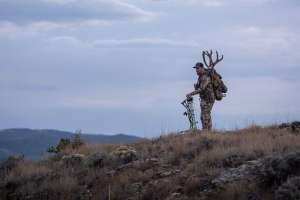

Walking an acreage for the first time and realizing your name’s on the deed is an emotional experience, especially after working your butt off to purchase it. My wife, Becca, and I took that walk in March 2024, exploring the first parcel we’ve ever owned that was large enough to hunt on — just under 40 acres. Previously, we’d lived in three different homes situated on parcels of 1.5 acres or smaller. Suffice it to say, I hadn’t known the convenience of bowhunting out the back door since moving out of my folks’ place 14 years earlier.
After hiking our new property’s hardwoods, wetlands and ag field, it was obvious that we had a diamond in the rough. The previous owner wasn’t a hunter, and he owned the land for more than 40 years. In other words, deer used it, but it was basically a blank slate. Optimizing it for bowhunting sounded exciting yet overwhelming for someone who’d always been primarily a public land hunter.
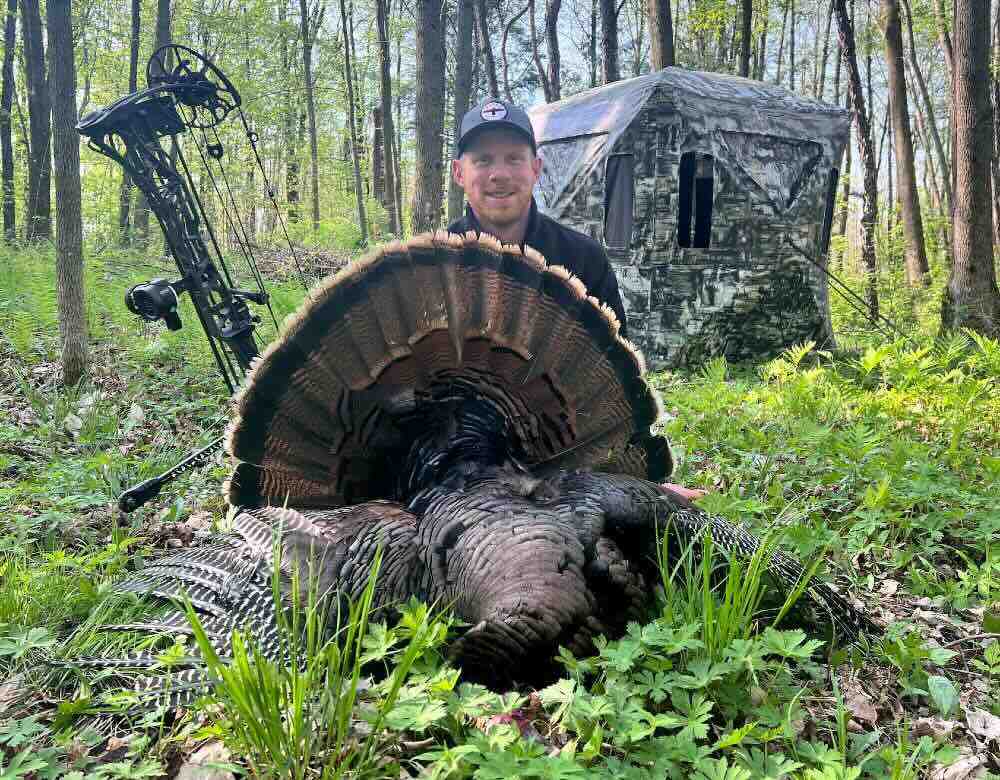
About a month later, I arrowed a big gobbler in my timber, which was incredibly fulfilling and the first of what I hope will be many memories made on the land in the coming years. Because the home badly needed a makeover, we had no free time to improve our “blank slate” for deer in 2024. So, like the previous owner, we rented the 10-acre field to a local farmer. The deer had some food, and we collected some cash.
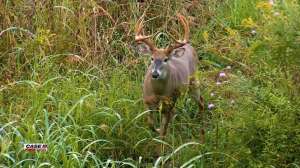
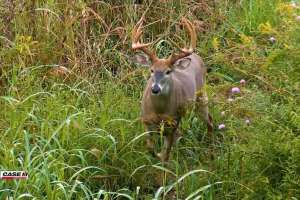
That first year, the wetlands, timber and field were fairly busy with deer, but with no trees in ideal locations for bowhunting, I mostly watched the deer through my spotting scope or on my Stealth Cam trail cameras. Two decent bucks appeared during the rut, but they weren’t quite mature or frequent visitors.
After deer season closed, I began planning ways to make the property more attractive to wildlife and more bowhuntable. Here’s a glimpse into how we turned our blank slate into a wildlife hotbed within a few months last spring and summer.

The Big Picture
The first step in planning was to consider the big picture. In addition to spending the previous hunting season tracking deer movement tendencies, I practically wore out my HuntStand Pro app. The sky provided a broader perspective, allowing me to be a nosy neighbor.
Using HuntStand's Satellite and Monthly Satellite maps, determining what the neighboring landowners are doing or have done in terms of management is fairly easy. Often, you can see water and food sources, land-clearing activities, potential bedding areas, and more. Gaining a better understanding of your parcel’s surroundings can inform your improvements. For example, if a neighbor has a food plot near the lot line, why plant one on your line? Have respect for the neighboring landowners; don’t blatantly compete with one another.
Besides the bird’s-eye view gained through e-scouting, I also thoroughly considered the prevailing autumn wind direction, which is west-northwest. HuntStand’s HuntZone feature provides a clear perspective of how the wind disperses throughout an immediate location for any given wind direction. This insight is priceless for selecting water and food source locations, as well as stand/blind placement.
Access is key when plotting out your projects. My property works really well for hunting the westerly winds, but entry and exit are slightly challenging due to the location and lack of trees. I found that screening is good for access, and being picked up by my wife with our tractor at the end of my hunts is a good way to bump deer without spooking them for cleaner exits.
Equipment
Becca and I are blue-collar folks. Using cash from selling our previous home, we purchased a tractor. But I shopped around for months before finding a great deal on a smaller but newer John Deere. The next necessity was a tiller. Diligent searching led to a two-year-old but unused 66-inch tiller from a dealer. I made a low offer, and the dealer was eager to move it and accepted.
Had our tractor and tiller purchases not panned out, it would have been pretty cost-friendly to rent a tractor and tiller, or hire someone to till for us (check Facebook Marketplace for listings). If you can’t pay cash for equipment and don’t want a loan, or you don’t have storage space for the equipment, renting equipment or hiring the job are viable alternatives.
In some instances, a small bowhunting plot can be accomplished with a rake and a seed blend that requires only decent seed-to-soil contact, such as Whitetail Institute’s No-Plow. Even if you don’t have a way to till, I’m a firm believer that grit and goals yield results.

Create a Menu
Planting a food source or a handful of them on a property is never bad, but it’s important to consider what deer eat in the property’s geographic region throughout the year. If you don’t have food for every season, you’ll likely lose deer to neighboring food sources as food preferences shift.
Knowing that, I obtained non-GMO soybean seeds from Albert Lea Seed Co. Then, I obtained Imperial Whitetail Clover, Alpha-Rack (clover, alfalfa, and chicory) and Destination (a combination of early and late forages) from Whitetail Institute. I also obtained and planted apple, chestnut oak and persimmon trees. This gives deer food all year.
Improvement Layout
Based on intel and e-scouting, I had ideas as to where deer bed on neighboring properties. Before doing any work, I picked a location 130 yards from the treeline (lot boundary), which is in the middle of the field. Any well-hit deer at that location should easily expire before reaching the boundary. Deer naturally feed near the treeline, so I needed to give them reasons to reach my hunting location in the middle of the field before dark.
Based on the prevailing winds, I selected a blind location, then stuck flags in the dirt to mark out a circle 40 yards in diameter. It became a perennial plot of Whitetail Institute’s Alpha-Rack, and at the very center, we installed a waterhole 15 feet in diameter (more on the design in the next section). I call that circle “The Hub” because I want every deer to walk into it for a drink; my Hawk Office blind sits 22 yards away.
Next, the deer needed to be encouraged to hit The Hub. From the major field entrances, we planted narrow lanes running from the boundary and intersecting at The Hub. We planted the dead space around those lanes in switchgrass for security cover and to funnel deer on the lanes straight to The Hub. We didn’t have access to a no-till drill, so the results with broadcasting, at least last year, weren’t great. We’ll see how the switch looks this fall, but if it’s mostly weeds, we’ll either plant switchgrass with a no-till drill in 2027 or we’ll annually plant milo for screening and cover.
The water and food in The Hub are attractive, but the other reasons I gave deer to funnel through The Hub before dark are the destination food sources of soybeans and Whitetail Institute Destination straight east of The Hub. As a side note, I used HuntStand to draw area shapes for all of my different plots. It helps with mapping your layout and calculates the acreage, so you know how much seed you need.
Add a Water Source
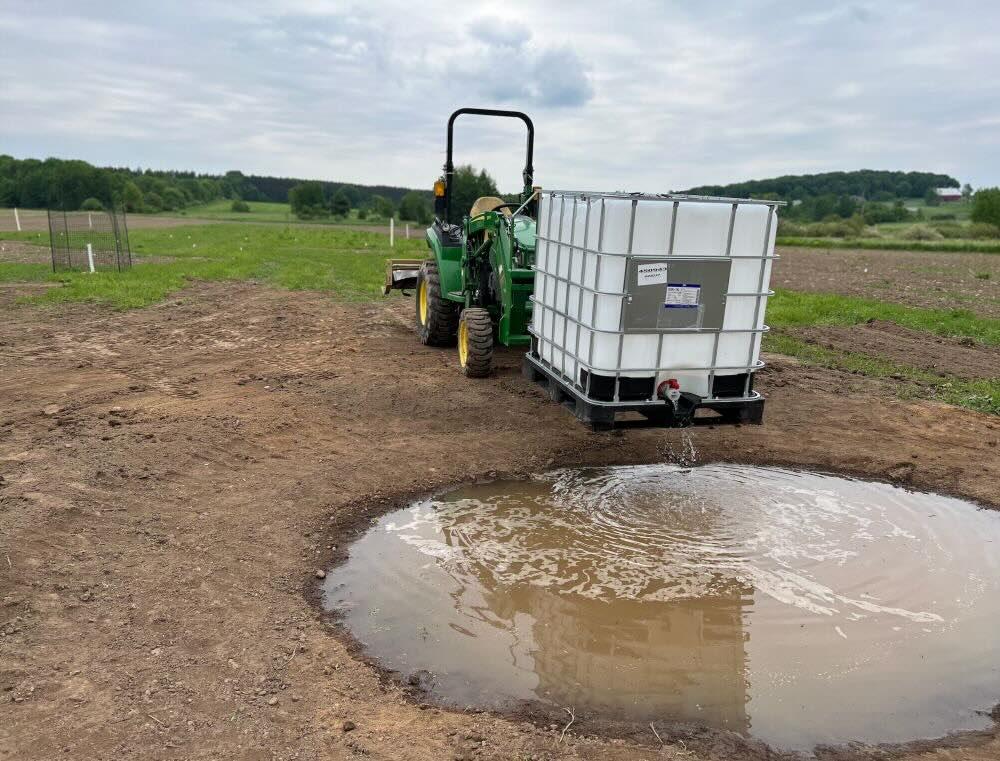
I mentioned my waterhole in the previous section; here’s how we constructed it. I purchased a 15-by-15, 45-mil pond liner for about $270. I dug a hole with my tractor’s bucket, and then Becca and I finished shaping it with shovels and a garden rake. We picked out as many rocks as possible, then laid out the pond liner, cutting the corners to fit the circular depression. Then, we filled an IBC tank to one-third full multiple times and transported it to the waterhole using our tractor.
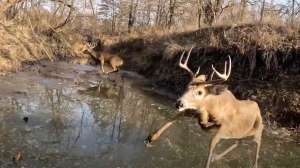
Within two days, the waterhole had deer tracks going up to it. And within a few weeks, we had does and fawns using it daily. And then the bucks began using it, including a big shooter towards the end of October. Deer, turkeys and sandhill cranes visit it daily during the months when it isn’t frozen. It was a simple project that yielded maximum results.

Plant Trees
A Chinese proverb says, “The best time to plant a tree was 20 years ago. The second best time is now.” Because the benefit of tree plantings takes years to realize, this proverb is accurate. But we didn’t just start shoving trees into the ground. We planned strategically for tree species and planting locations.
I’m always looking for ways to generate additional income, so we reserved about three acres of the 10-acre field for balsam Christmas trees. We started with 500, and we’ll add more until we have about 2,500. We planted Whitetail Institute’s Imperial Whitetail clover amongst the trees to add food, control invasive weeds, and create a root base to reduce erosion. In several years, those trees will begin to provide some screening and security, and one day, we’ll sell them to help with property taxes and other expenses.
We planted two apple trees in The Hub and persimmon and chestnut oak trees in the destination food source. We’ll be adding more trees over the next several years. To my knowledge, nobody around me is planting chestnut oak or persimmon trees, so those particular trees will someday set our property apart.
Plot Shape
Earlier, I detailed my hub kill-plot design, which encourages deer to walk within easy range of my blind. Perhaps your property has limiting factors with regard to plot design and stand/blind locations. Regardless, design your kill plots such that you can cover them — or at least parts of them — easily with a bow. Also, try to utilize plot shapes that keep cruising bucks curious. If they can see the entire plot from the treeline, they don’t have a reason to walk by your stand. If you use the right shape to encourage deer to explore, early season bucks are likely to venture to areas of the plot they cannot see from the treeline or cover to see what other bucks are around. During the rut, they’ll do the same thing, looking for does.
Identify a Sanctuary
Every good deer property, even a small one, can benefit from a sanctuary. This is an area where deer can avoid human pressure. I don’t trudge through my property’s wetland other than a couple of times during the spring. There are willows, tall grass and other brush for cover, and when the hunting pressure on surrounding properties increases, I’ve watched deer enter it and lie low. It’s not a year-round bedding area, but I have plans to thicken it up with thermal cover so that several years from now it will become a main bedding area, encouraging bucks to bed closer to my food plots, increasing the likelihood of more daylight appearances.
If the area you set aside as a sanctuary is in the timber, you can often achieve fast cover by hinge-cutting trees. The felled trees provide both vertical and horizontal cover, and the extra sunlight that reaches the soil will spike broadleaf plant growth, providing both food and cover.
Minimize Pressure
Once you’ve done all the work, keep out. Deer are very sensitive to pressure influxes; needless intrusions will likely have negative impacts. Rely on wireless trail cameras — I’ve had great luck with Stealth Cam, especially the Revolver on my hub plot — and long-distance glassing. Only enter the plot areas when necessary, such as to mow perennial plots or refill a waterhole.
Delayed Gratification
Finally, be prepared for delayed gratification. I passed up lots of bucks last fall, including two that 95 percent of Wisconsin hunters would have called me crazy for passing. But I want to harvest mature deer, and at least one of those bucks survived and will be a shooter this fall. Even though I passed bucks, there are too many does on the property during the fall and winter, so I selected two adult does during the firearms season. Gathering venison from my own land was thrilling, and I look forward to the satisfaction I’ll feel when I slip an arrow through an awesome buck, which I believe will happen within the next few years.
A Work In Progress
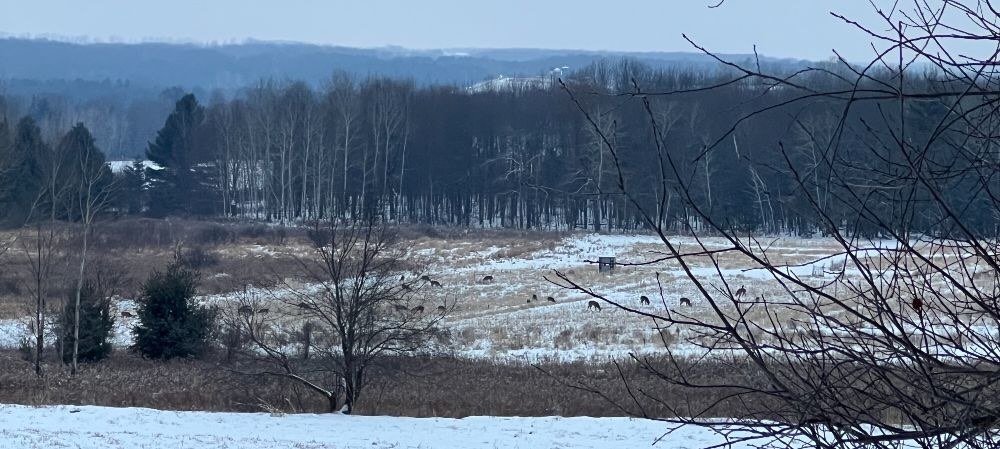
Last fall, there were way more and nicer bucks on our ground than the first fall when we hadn’t yet made improvements. Still, I know I don’t have everything right and will need to make tweaks in the coming years as time and money allow. That’s the fun of it.
I’m very optimistic about the results we’ve already seen. Taking a blank slate and making the deer hunting better seemed like a daunting task, but a handful of projects last spring and summer did wonders. I guess all it takes is some dirt and a vision.
Sidebar: Land of Opportunity
When you improve habitat, wild turkeys will likely frequent your property. Walking out the door and hearing toms gobbling in the spring is awesome. Even if you’re not a turkey hunter, consider trying it as a side benefit to your land improvements. Also, keep tabs on additional opportunities such as mushroom foraging.
Photos by Darron McDougal