
Show me a successful bowhunter who’s never made a mistake, and I’ll show you someone who doesn’t exist. The path to consistently and successfully arrowing animals is one that comes with many hiccups. And it’s one that not only newer bowhunters get lost on, but sometimes it can dang near break them all together.
If you’re a new bowhunter, the odds are stacked against you tenfold. I’ve been there, and I still make mistakes to this day. You never stop learning in this game. With that in mind, I want to try to buck the odds here for the newbies in the bow woods based on my own experience, as well as those I’ve had the privilege to share the field with.
1) The Wrong Kind of Practice
There’s a difference between being accurate in your backyard or at the archery range and being accurate in the bowhunting woods on animals. You don’t just need practice. You need the right kind of practice.
Pick a Spot: First and foremost, the animals we hunt don’t have conveniently placed dots on them for us to aim at. While you might be a backyard superhero on your bag target, aiming at live animals is totally different. Instead of having a spot to aim at given to you, you need to create your own. This is the art of “picking a spot.” A fantastic way to practice this is by shooting at 3-D targets. You get the experience of aiming at an animal-like target, but also, you have to pick your spot, because there are no bull’s-eyes to hone in on.
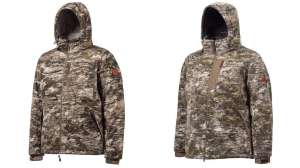
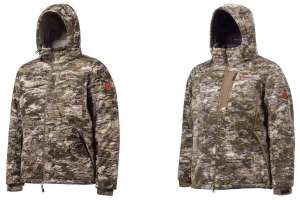
Look the Part: Another thing to work into your practice routine is wearing the actual clothing and gear you plan on wearing in the field, especially on your upper body. So, your bino harness, backpack, gloves and maybe your jacket, depending on the time of year. If these things impede your accuracy, you want to find that out before heading into the bowhunting woods. Common hiccups are your string hitting the sleeve of a jacket on the shot, or even your hood interfering with the string. Some backpacks can also constrict movement and even throw off your balance, too.
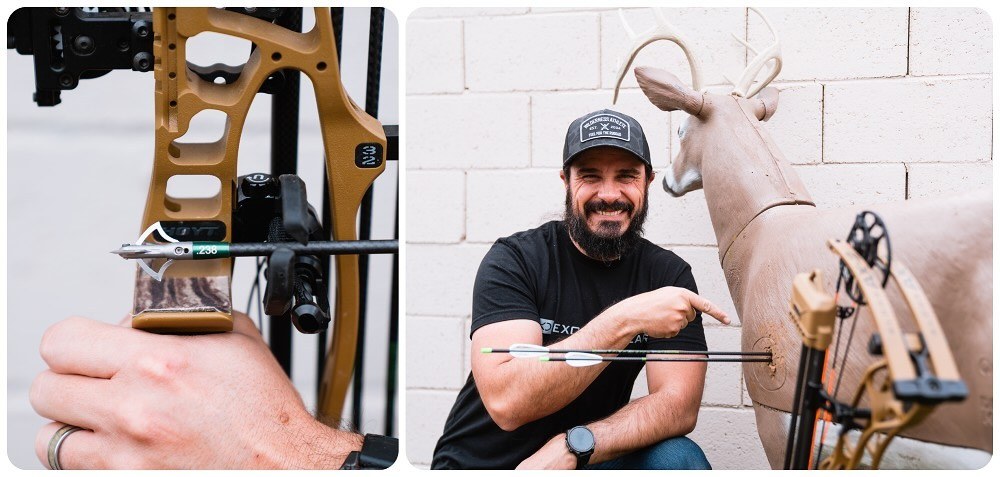
Shoot Your Broadheads: Last but certainly not least is shoot broadheads. I don’t care if you’re shooting mechanical heads, fixed heads or hybrids. You need to confirm broadhead flight before setting afield, regardless of what marketing or packaging promises tell you.
Start at 20 yards by shooting one broadhead and following it up with a field tip. If they hit in the same spot, all is good. If they don’t, you know something is off, and it needs resolving. Most of the time, this can be accomplished by a simple arrow rest adjustment; however, before moving anything, I recommend checking all of the specs on your bow first. Check things such as cam timing and draw weight. Check for the presence of nock pinch, too. If you’re not comfortable doing these things yourself, head to your local pro shop and let the pros handle it. Figuring out that your broadhead isn’t hitting where you want it to on an animal is not a fun experience, and frankly, the animal doesn’t deserve that.
Gear Doesn’t Replace Knowledge or Skill: Knowledge is power. So, while there is nothing wrong with investing in your gear kit, you should also invest in your knowledge. Take the time to actually research the animal you are planning to hunt. What do they eat in the state you’re planning on hunting them? What elevations do they prefer at certain times of year? Are they crepuscular? What is their general behavior throughout the day, given the time of year? I could go on and on here. The bottom line is the more you know about the animal you are hunting, the better prepared you’ll be to hunt them. There are plenty of resources out there where you can learn these things. Whether it’s reading articles, biology reports, books or even calling the local game and fish department, you’ll be glad you did.
The core objective of hunting is to be able to find the animal you’re looking for and harvest it. In order to do that, you’ll need to be able to recognize animal sign, and be able to read it. Simple things, such as knowing which way a deer track is facing, and if it’s fresh or not, will do you wonders. Or rooting around through a fresh pile of bear scat to see exactly what they’re feeding on. Recognizing that the barrel cactus you just walked past has been stripped of its fruit means there are likely deer in the area. These are fundamental skills that every bowhunter needs in order to find success.
2) Wind, Movement and Noise
Spend enough time trying to get close to big game animals and you’re inevitably going to get busted for one reason or another. I’ve had everything from other hunters and other game animals bust me, to doing something careless like me falling over to alert animals. Ever seen someone do yoga in bow range of a mule deer buck because they started cramping on a stalk? Yeah, that was me. With all that in mind, I’m going to break down the three biggies that will strip the carpet out from under your bowhunting pursuits. These are in order of importance.
Wind: The absolute No. 1 thing that is going to give up your existence to an animal is the wind. Their eyes and ears can be fooled. Their nose cannot be. When it comes to monitoring the wind, there is nothing better than having a windicator on you. These are small bottles of talcum powder. Squeeze the bottle with the spout open, and the powder will shoot out and show you exactly which way the wind is blowing. Not only are these fantastic for on-the-surface, in-the-moment type situations, but they are also very educational.
As you go from terrain feature to terrain feature, you’ll be able to see how wind actually changes in certain areas. For instance, the bottom of a canyon intersection vs. a long sunny hillside. Wind tends to be unpredictable right at a canyon intersection. Whereas a long sunny hillside will have a steady, consistent wind. Paying attention to these things will help you better anticipate how to react in certain scenarios, whether it’s planning a stalk or planning a sit. You simply want to avoid your wind blowing from you to the animal. A crosswind is fine and even a quartering-to wind, but not from you to them. This is everything.
I need to mention one small note about thermals. These are often mistaken for wind, but the two are different. Thermals have to do with rising and falling air. Wind is more on the horizontal plane. So, the thermal on that sunny hillside will be pulling the air up, because heat rises. You can see this with your windicator. Pay attention to not only the left/right of the powder, but also the up/down. I once set up an ambush on a black bear with the wind direction going from me to the boar, but the thermal pulled my scent right over him. He never knew I was there until he fell to my arrow. Wind and thermals can be your friend or your enemy.
Movement: No. 2 on the list of things that will bust a bowhunter is movement. Animals are keyed into it, and if you’re not careful, you’ll be made in a second. Most new bowhunters move too quickly, and it’s understandable. We are not conditioned as a species to move slowly. We live in a fast-paced world. So, to switch things up and have to all of a sudden slow your roll goes against the grain of what is natural to us.
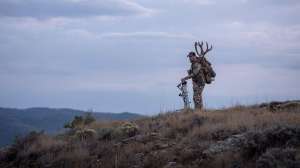
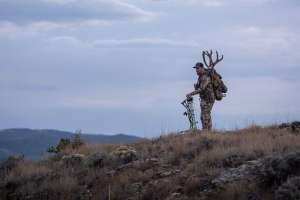
A few things to keep in mind about movements while bowhunting are being slow, avoiding lateral movements, avoiding skylines, and using cover to move. Animals spot quick movements especially well, so keep this in mind whether you’re reaching for that beanie or drawing your bow. Keep it small, slow and fluid. With that, they’ll also spot lateral movements easily. If you’re closing the distance with limited cover, try to move straight at the animal rather than side-stepping. You’ll get busted less. And another thing that will get you busted less is not walking on the skyline. Western hunters are famous for walking on skylines. Animals can literally see you from a mile away, along with myself. Stay beneath the ridgelines. Try to have a backdrop behind your movements, and try to stay in the shadows if you can. You’ll be seen way less.
The good news about movement is you can absolutely fool an animal’s eyes. If you are spotted, freeze and just wait. Most of the time, there will be a stare down, and the animal will likely go back to doing what it was doing. Don’t move the first time it puts its head down after the stare. Sometimes, they do this to try to get you to move in order to spot the danger.
Noise: Another culprit of busting bowhunters is noise. New bowhunters are fantastic at being too noisy. I think the reason being is they aren’t thinking of the little things. This goes back to what is natural for us. Most folks aren’t aware of all of the little noises they make. Like shutting a truck door, sniffling, even talking, you get the picture. We’re not going to get away with making zero noise. What I want you to pull from this is the kind of noises we choose to make.
There are natural noises and unnatural noises. Natural noises are things such as leaves rustling, loose gravel crunching together, or sticks breaking. These are noises that would occur whether you were in the woods or not. They might cause an animal to pick up their head, but they aren’t going to make them just bolt out of nowhere. Unnatural noises are more cause for concern in their minds. These are noises that wouldn’t occur if you weren’t there. A truck door shutting isn’t a naturally occurring noise, and neither is your sniffling or a bow clanking on a treestand. We want to try and nix the unnatural noises across the board.
3) Not Understanding Animal Anatomy
Learning the anatomy of the species you’re bowhunting can literally mean the difference between success and failure in the field. To not learn it is quite honestly irresponsible, and we owe the animal much more than this. Know what you’re aiming at.
The main reason we need to learn animal anatomy is knowing where to aim and where NOT to aim. From there, we need to apply that knowledge to different angles as well. For instance, you wouldn’t aim exactly where you’d aim broadside as you would on a quartering-away animal. Quartering away would require one to aim a bit farther back in order for the arrow to travel through the vitals. You want to aim for your exit.
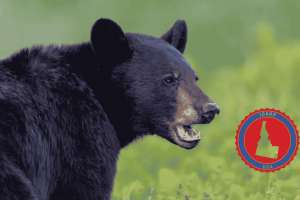
Different species change things, too. Black bears are a prime example. Many will try to heart shoot bears like they would a deer. This will often result in a wounded bear or even a miss, cutting through only the hide. Vitals on bears sit a bit farther back than deer. Combine that with the fact that the hide on a bear hangs down lower, giving a false impression of where the bottom of the body cavity actually is, and an adjustment is in order. Instead, you want to aim middle of the middle on a bear. The mid point from nose to tail and the mid point from top to bottom. Where those lines intersect is where you’ll kill that bear every single time.

4) Not Having Patience
When the dust settles, this whole bowhunting thing really all comes down to patience. Patience to learn, patience for the animal, and patience for your shot. A good bowhunter knows when to take action and when to hold back. This is only learned through experience.
So, I encourage you new bowhunters out there to stick with it. I know that some of this might not make sense to you now. You may feel like you’re never gonna punch your first tag. But I promise if you see it through and apply yourself, you’ll succeed. Most of all, and above all else, have fun out there. Bowhunting is fun.

Sidebar: Watch Your Footfalls
When spotting and stalking big game, one of the hardest things to do is stay quiet along the way. Through the years, I’ve learned a few tricks to help do so, simply through trial and error.
The first is to be willing to take off your boots. Now, this may not be applicable all of the time, but if you can swing it, sock feet are always quieter than boots. Next, consider tucking your pant legs into your socks. This will help eliminate the unnatural sound of your pants potentially swishing together. Lastly, watch your footfalls. Don’t let your feet just hit the ground. Place them gently. This actually takes a great deal of strength to keep up the slow and fluid movements, but it will pay out in the end. You’re not a baby elephant, you’re a cat. Remember that.
Photos by Josh Kirchner