
Few December and January issues of hunting magazines discuss the cold reality that your bow season could end with a deer tag in your pocket. Instead, most share a common sunshine-and-lilies theme like: Time’s Ticking: Punch That Buck Tag Now! If only it were so easy. Of course, some readers occasionally learn beneficial tips from such articles, and in some instances, it helps them arrow that last-day-of-the-season buck, however, this is rare.
Thus, I have a problem with articles themed this way. First, most are simply re-writes. Second, they ignite false senses of hope, almost like you’re somehow guaranteed to get a buck if you follow steps A through Z, regardless of your current situation.
In the past, I often thumbed through such themed magazines and instantly felt like I was going to automatically get my December or January buck. Boy, was I wrong. Get this: In the world of fair-chase whitetail hunting, you can’t pull a rabbit out of the hat. You can follow every late-season article you read to a T, but it guarantees nothing. Wild whitetails are wild whitetails.
Another word of caution regarding last-minute-success-slanted content is that it often doesn’t apply to our individual situation(s) — land, food sources, hunting skills, etc. What worked for one man on his managed property has extremely low odds of working for you on public land or land with subpar winter nutrition. And, it’s possible that he executed a perfect shot, where maybe you’re struggling just to hit a target due to target panic. Many other variables exist that differentiate one hunter’s situation from the next.
Don’t ignore these articles entirely. Rather, to avoid false expectations, pay close attention to every detail within to ensure you get the most relatable data to your individual situation.
Facing Reality
At the risk of being slightly pessimistic — out of character for me — there comes a point near the end of the deer season when you must admit that it’s possible you won’t get your buck. Don’t throw in the towel early or lower your confidence — simply understand that no-kill seasons are often a reality. I don’t know any whitetail hunters who’ve shot a mature buck every single year of their hunting career. For that reason, you must be prepared to face a tag soup ending with your chin up.
Occasionally, I still momentarily wallow in the sinking feelings associated with past unsuccessful bowhunting seasons. I think about the buck that needed to take one more step or the buck that wouldn’t respond to my grunting. However, I no longer let them eat me alive. I put them behind me and look ahead.
Looking Forward
Whether or not you punch your 2019 buck tag, the whitetail season will soon be in the rearview mirror, and all that will matter is what awaits in 2020. Drowning in sorrows of an upside-down season will only hurt your preparation for next season. Why? Because the end of one season is the start of the next one. We have no time to waste. How you spend the time between seasons has great bearing on next year’s turnout, so let me suggest a few ways to spend the months following a no-kill season.
Fix Mistakes
Many things must align in order to arrow a mature whitetail buck. Honest mistakes are most often the culprits keeping us from that feat. Maybe you weren’t selective enough with your stand-access routes. Perhaps you hung your stand 10 yards in the wrong direction. Or, maybe you rushed a shot and whiffed. In any case, one little mistake is all it takes to miss a big opportunity.
Newsflash: Everyone makes mistakes. Don’t beat yourself up over them, but don’t ignore them, either. Consider all points related to your lack of success, and then analyze and identify what went wrong. Pro football teams do this. They don’t watch and re-watch the films merely to agonize over lost games. They analyze, strategize and make changes so that they can achieve a greater result next season.
Get on that program. Like them, if indeed you identify that your own mistakes cost you, create plans to avert them in fall 2020. You have many months between now and then to do this. Use them to the fullest.
Set Goals
I’ve read the saying, “Failing to plan is planning to fail,” a thousand times. It applies so much to bowhunting whitetails. Yes, there are a million variables that could prevent you from achieving your goals, but that is relatively unimportant. What’s more important is you make realistic goals and then plan the steps necessary to achieve them. How can you achieve a goal you haven’t set, and how can you achieve a goal if you make it right before next season and have no time to work toward it? For 2020, set a few realistic goals of your own.
Start Early and Work Diligently
When you’ve been beaten or have fallen short, you can react one of two ways. You can be downcast and hang your bow up until next summer, or you can resolve to immediately take steps to improve your approach and strategy for next season. Time heals, and the more time and effort you spend on fixing what went wrong, the higher your expectations can be for fall 2020.
One example was the time immediately following my 2016 season. That year, I missed a 23-yard shot at big Kansas whitetail. I also missed an elk and a mule deer. During the season, I’d actually entertained the thought that maybe I should quit bowhunting. But then, I came to grips with the reality that I could get back to my confident self if I started early and let time heal my injuries.
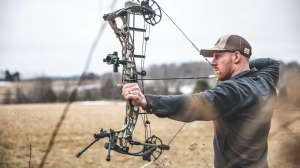
I wasted no time. I completely revamped my setup and even made a gutsy release switch — I’d shot a thumb-activated release for more than 15 years and switched to an index-finger release. The changes helped, but I also disciplined myself to practice perfect shooting and then stuck with the program. By spring, I was executing perfect shots on turkeys. Had I simply hung my bow in the garage and swept my problems under the rug, my 2017 bow season would’ve ended in similar dismay as my 2016 season.
Consider this analogy: When the Super Bowls conclude, the losing players can cry, bury their faces in their laps and pout all the way home, or they can hold their heads high, congratulate the winning team and resolve to work toward individual betterment before next season. Which will you choose?
Reflection
Time is certainly ticking, especially if you’re still packing a buck tag. In most instances, the “6 Steps to Kill a Buck Before Season Ends” articles will be of little help to you. And while I urge you to remain confident and keep hunting all the way to the bitter end, I suggest facing the possible reality that you’ll end the season with the buck tag still in your pocket. That way, it won’t bite so hard when it happens, and you can count it a new beginning rather than a failure. As the band Semisonic put it in “Closing Time,” a late 1990s hit song, “Every new beginning comes from some other beginning’s end.” Need I say more?