Loading...

Whitetail Journal

Whitetail Journal Logo small banner
I Stock 537292432

8 Cool Facts You Didn’t Know About Beagles

The friendly, curious, easygoing beagle loved by so many has an interesting history that’s often overlooked.
Elk Roll up 1

Elk Steak Roll-Ups Recipe: A Twist on an Old Favorite

Grab a meat mallet, and pull out the round steaks. It’s time to turn this less-tender cut into the highlight of your dinner party!
DSC06863

Making a Perfect Food Plot

If you’re thinking of making a food plot, here’s how to do it right.
PR Browning One Six Two 1

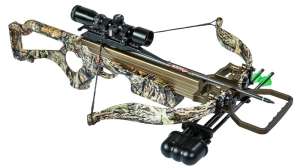
Crossbow Review: Browning OneSixTwo

Ready straight out of the box, this crossbow boasts no complaints.
I Stock 493580974

How to Control Your Deer

It’s not hard or expensive to make your deer go where you want.
Venison Heart Teriyaki 12 10 10 010 181003 161615

Deer Heart Teriyaki Recipe: Why You Should Save This Cut for the Table

Don't toss the deer heart the next time you harvest. With the right recipe, preparation and patience, it's a delicacy.

What's the Value of a Deer?

The value of a deer hide ranged from a halfpenny per pound in 1831 up to about 30 cents per pound in the late 1870s. But what's its value today — not just the hide, but the venison too?

Top 3 Camera Locations To Spot Summer Deer

You want to know what deer you have using your property well before the hunting season begins in the fall. Placing cameras at these three locations will assure you get photos of the deer using your land.

The Secret Foodie Life of Seasoned Hunter Bob Robb (Recipe Included)

He’s made a name for himself in the outdoors industry as an expert sportsman, guide, writer and editor. Now, as it turns out, Bob Robb’s just another fancy pants.

My Top 10 Scariest Hunting Moments

Let’s see, there was that time a battery cover sufficed as a paddle, a wire and duct tape were used to repair a bush plane, a lion jumped into the bed of a Land Cruiser and, oh yeh, a winter rodeo.

Recent Buck Study Shows Young Bucks Mate As Often As Bigger Bucks

A DNA buck study shows that older bucks may not edge on younger bucks on mating. If true, what does this say about the Quality Deer Management practices?

Does Improving Herd Genetics Grow Bigger Bucks?

Every hunter would love to see more big bucks with trophy antlers, but is quality deer management the way to make that goal a reality?

I Hunt Because ...

There are many stories about "Why I Hunt," but possibly none as honest and touching as this one. Hunting, actually, is about more than the shick-shick-boom.

Best Deer Rifles Of 2017

Here are some of the best deer rifles we saw at the 2017 SHOT Show, including the Weatherby New Mark V, the Tikka T3x and the new bolt-action Barrett Fieldcraft.

Learn how to estimate antler size

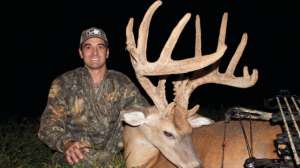
Before you pull the trigger or release an arrow, do you know how to estimate antler size? For those who hunt simply to fill the freezer, this isn’t really an issue. But for those hoping to shoot a buck with antlers that meet or exceed a certain numeric score, more often than not, they overestimate the size of the antlers. This miscalculation leads to that common malady known as “ground shrinkage.”Here are 6 tips to quickly estimate antler size:Your first impression will be of the rack’s height, width, mass, and number of points. Your next impression should be of the length of the main beam, length of the points, inside spread between the main beams, and the rack’s mass at four places. As a point of reference -- and forgetting about those monster bucks of Canada and tiny deer of the South -- the average buck has a distance of 16 inches between the tips of his ears, when the ears are in the alter position. Each ear is about 6 inches in length. The circumference of the eye is about 4 inches. From the center of the eye to the tip of the nose is about 8 inches. Of course, if you have hunted an area a lot and seen a lot of dead bucks, you can adjust these measurements accordingly. To estimate the inside spread of a deer's antlers, it's easy -- how far outside the tips of the ears do the antlers protrude? Main-beam length is judged using the ear length and eye-to-nose distance for reference, keeping in mind that the beams may curve in and nearly touch, which makes them seem shorter than they really are. Scorable points are any points that exceed 1 inch in length and is longer than it is wide at one inch or more of length. In a quick estimate, forget about these and look for all the longer antler points including the brow tines. Use the same ear length reference point to give you a quick idea of how long the tines might be. Mass: Here is where the deer’s 4-inch eye circumference is helpful. Is the circumference of the antler at the base, as well as between the tines, larger or smaller than the eye?Antler Size: Top 10 Components of a Typical, Whitetail Rack (And the percentage of the overall score they account for, in descending order): 10) Circumference between points 3 & 4 (H-4):         4 percent 9) Circumference between points 2 & 3 (H-3):           5 percent 8) Circumference between points 1 & 2 (H-2):           5 percent 7) Circumference of Bases (H-1):                               6 percent 6) Fourth Point Length (G-4):                                     7 percent 5) Third Point Length (G-3):                                      12 percent 4) Second Point Length (G-2):                                    12 percent 3) First Point Length (G-1):                                        6 percent 2) Main Beam:                                                            30 percent 1) Overall Symmetry: In both the Boone & Crockett and Pope & Young club’s scoring systems, deductions are taken off the gross score of a typical rack for imperfections. There was no ground shrinkage on Robb’s biggest typical buck to date — it grosses 181 3/8 and nets 177 3/8 Boone & Crockett points. In a perfect world, you would be able to leisurely look the antlers over before deciding to shoot, or not. Whenever possible you want to be able to look at the rack from the front and both sides, which is extremely helpful to estimate the length of the main beams. And never forget that a rear view almost always gives an inflated impression of how big the antlers really are. And of course, as the saying goes, if you have to talk yourself into the buck being big enough, it probably isn’t. Conversely, if the antlers take your breath away at first glance, who cares what it scores? Shoot! Need some practice? Then use some mounted heads. Use the reference points mentioned above to quickly estimate the score, then check them against the actual score.

Hunt Science: Do Whitetail Bucks Really Use Seven Scent Glands?

There’s seven glands examined here. None more important to a hunter than the forehead gland. And then there’s No. 4. It’s about toe glands.

Why Do Deer Shed Their Antlers?

Cold weather, snow, altitude and food availability can influence when whitetail deer shed their antlers.