
I didn’t stumble into trapping. I backed into it with a sack of dead gophers and a dollar bill that felt like a fortune. I was 12, pedaling a bicycle with a carrier basket full of problem animals a neighbor was glad to be rid of. My dad owned a dry-cleaning business and repaired and stored furs in a cold storage vault, where I spent hours helping repair fur garments and became obsessed with quality fur. During the next couple summers — because I wasn’t old enough to drive — I added gopher and mole control to my yard-mowing work.
Shortly after my 15th birthday, I lucked into shooting huge buck mink, and a friend’s dad — a farmer who raised a few mink — showed me how to skin and stretch them professionally. He told me to hold out for $30, and I did. At the fur buyer, I got an education most guys never get. Two old-timers rolled in with over a hundred mink in an old, battered Ford coupe. Their stretchers were slapped together from plaster lath, nailed into crude A-frames with a crosspiece — pelts jerked over them and tacked down. It was the worst fur handling I’d ever seen — and I’ve never forgotten it. They averaged $14 per pelt. That was all I needed to see.
I made most of my spending money in high school running a trapline instead of bagging groceries or waiting tables — and I never regretted that choice. Back then, the only fur that really paid was mink and beaver, but everything else still had its place. In the mid- to late ’50s, I was averaging about 60 cents on muskrats, around $20 on mink, and maybe $2.50 for coons and fox.
Minnesota’s $4 fox bounty and South Dakota’s $7.50 helped a little, but truth be told, it was never about the money on fox. It was about matching wits with a predator that makes a living by not making mistakes. That’s what kept me going. I’d leave the house at 5 a.m., run 30 to 40 miles of line, and still make it back in time for early basketball practice by 7:00. Somewhere in there, I also knocked out a correspondence taxidermy course and got dialed in on tanning fur the right way.
In college, I ran a trapline around Brookings, South Dakota, and combined it with my duck and goose hunting. I often traded predator-control trapping for hunting permission and never lacked for great hunting opportunities. At the same time, I picked up work mounting wildlife and fish for the South Dakota Wildlife Department and sold and traded my taxidermy work or whatever moved me forward — traps, guns, clothes, and more hunting and trapping access.
During my junior year of college, I got the unique opportunity to ride shotgun for a pilot out of Brookings, South Dakota, who was doing predator control for the state. South Dakota was considered the pheasant capital of the world back then, and fox numbers were through the roof. Over a few months, we took more than 200 red fox and a handful of coyotes. The state paid a $7.50 bounty on each fox, and we moved the whole batch at $2.50 a pelt — the first time in years fox had any real value.
After college, I spent the better part of two years working for Alaska Fish & Game, then got drafted into the Army during the Cuba crisis and landed at Fort Carson, Colorado, where I managed hunting and fishing on the post. Fur prices were still in the basement — coyotes and bobcats weren’t worth much on the raw market — but that didn’t stop me. I started tanning everything I could and moving finished hides through the Rod & Gun Club and the local bird farm. That’s where the lightbulb went on. A tanned pelt had real value — cash or trade — if you put it in front of the right people. Over the two falls I was there, I moved roughly 30 coyotes and a dozen bobcats that way. Same animals, different approach, completely different return.
After the Army, I went to work for Colorado Game and Fish and figured out quickly that the best fur market wasn’t the traditional one — it was the one nobody was taking seriously. While others were complaining about fur prices, I was trading foxes, coyotes, coons, beavers and badgers to the “hippies” flooding the mountain and ski towns, then placing tanned hides in tourist gift shops where they’d bring $50 to $100 or better. I kept that approach going after moving to Pagosa Springs, right up until the fur market took off in the late ’70s and early ’80s. When it did, I scaled up. I started working with Native artisans from the Jicarilla, Ute and Navajo reservations, trading fur for silver and turquoise jewelry, and partnered with a handful of talented leather workers turning out handmade shirts, vests and jackets. Those folks could turn fur into something people actually wanted — and they were always ready to trade.
My peak year was 1979 — the year I went all in. I trapped and hunted predators full time, and for the first couple weeks, I never saw my house in daylight. When the season finally wrapped up, the numbers told the story: 205 coyotes, 66 bobcats, 60 pine martens, 40 coons, 20 beavers and a dozen gray foxes between trapping and shooting. And the timing couldn’t have been better. Prices were as strong as I’ve ever seen — averaging $77 on coyotes, $360 on bobcats, $20 on martens and north of $30 on coons and gray fox. Looking back, that was the kind of run guys still talk about — the real “good old days” of the Western fur market.
But the fur boom didn’t last. By the early ’80s, things started to cool off, and by 1987, long-haired furs had bottomed out again. That’s where a lot of guys walked away. I didn’t — I just adjusted. These days, most of my trapping is focused on coyote control on our hunting lease, but I still pick up value where I can. A few foxes, some coons, and a surprising number of clean, extra-large roadkills that most people drive right past. I get them tanned, move them through gift and tourist shops in Colorado, and even sell out of our hunting camp in Iowa. It’s not about volume anymore — it’s about knowing what something is worth and making sure it doesn’t go to waste.
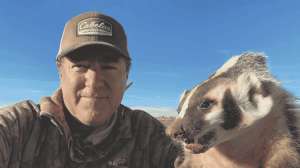
Last year, I had 22 tanned pelts on hand going into hunting season, and by the end of January, every one of them was gone. That tells you something. A client paid $250 for a big, silvery male badger I took out of a neighbor’s pasture at his request. Skunks were bringing $85. Bobcats were pushing north of $1,000. So, before anyone tells you the fur market is dead, they might want to look a little closer. The “good old days”? They’re still there — you just need to know where to find them.