
The third coyote-killed deer fawn that showed up on our best Iowa lease in a week raised hob with the popular belief that predators are the biggest detriment to wildlife during the winter months. A popular consensus that many game and fish departments push as gospel to the public they deal with and their license buyers. There are winters when weather conditions and or poor crops or available food can stress both large- and small-game critters and make them more vulnerable to predation. However, late in the spring and early summer when predators are reproducing, I have found that predator management makes for effective game management and can have a drastic impact on fall hunting.
When fur prices were at their peak, it took some serious contemplation to decide whether your fall hunting ventures were worth more to you or others than the value of potential predators you were going to remove from the population during the off-season, at a time when the pelts were worthless.
When furs prices were at a high, and I got called in during the spring and summer to help a rancher or farmer eliminate a depredating coyote or fox, on several occasions I would call in family group including the adult pair and their offspring. The largest group I ever called in was seven coyotes from one stand, on a sheep ranch in southwestern Colorado.
In such a situation, my shooting tactic was to take the most distant adult with the first shot, generally the female, and the closest second adult next. If there were juveniles, I’d send a shot or two in their direction to further their education a bit. Killing the adults would typically put an end to the livestock killing and the hunting education by the adults and make the impressionable juveniles a bit skittish of that particular area. It also left them to mature and provide some prime pelts come fall.
Eliminating the adults and stopping the depredation would generally satisfy the landowner and often add one of the real windfalls to this off-season predator hunting — getting permission to hunt and trap predators later during the fall and early winter when the furs are prime and pricey or permission to hunt big game or birds on the property. This aspect can make the off-season management effort well worthwhile and should be taken into consideration when planning and setting up for some serious off-season predator hunting.
At this time of year, furred predators and feathered predators as well produce young well in advance of most prey species so the predatory offspring are ready to take advantage of their prey’s vulnerability.
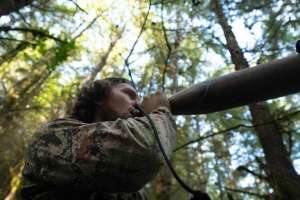
When I found a third fawn adjacent to a small tank dam near a favorite brassica foodplot, tracks indicated a pair of adult coyotes and three young coyotes had fed on the deer. The following morning, I set up several hundred yards from the waterhole and started calling with some lone howls and got an immediate reply. Five minutes later, both adults came on the run, looking for the challenging interloper. Figuring I might con the whole family, I had toted my super accurate Remington R-15 .223 instead of my .22-250.
The obviously smaller female was lagging 100 yards behind the male, and I flattened her at 100 yards. When the male whirled at 50 yards a 52-grain Sierra travelling at 3,700 fps put him down for the count as well. There was no sign of any juveniles, so I waited silently for half hour and then filled the valley bottom with a continuous series of Foxpro’s gray fox distress sounds. Within a minute, two almost full-grown pups bit the dust at 100 yards. All four coyotes showed signs of mange and would have been worthless even during prime pelt time.
This is only speculation, but that following fall during the deer season our clients never saw a coyote on the food plot and we took a 165-inch and a 196-inch buck off the plot.
Since the decline in fur prices, predator populations — especially coyotes — have exploded across the country and are impacting whitetail herds in many areas as well as other prey species. At the same time, many state game and fish agencies seem to have lost interest in knowledgeable predator management. With motivation by the liberal bunny huggers, anti-hunters, animal activists and SFC (soft fuzzy critter) lovers, a few states are limiting predator hunting season dates, hunting methods, license needs and even bag limits. Make sure you check the state regulations where you intend to get involved in some challenging and rewarding off-season predator/game management hunting.