
Illinois Closes Seasons for Hunting, Trapping Gray Foxes
Hunting and trapping seasons for gray foxes are closed in Illinois, with surveys and preliminary results of current research indicating a substantial decline in gray fox distribution and abundance during the past 10 years. Although Illinois hunters and trappers harvest few gray foxes, this closure will remove additional pressure and additive mortality from harvest. The Illinois Department of Natural Resources (IDNR) will continue to conduct annual surveys and evaluate the gray fox population.
On June 30, Gov. JB Pritzker signed into law Public Act 104-0019, which changed language in the Illinois Wildlife Code and allows IDNR to open or close the gray fox season by administrative rule. This bill was an IDNR initiative with broad support from diverse conservation groups including the Illinois Trappers Association and support from state legislators. On July 9, the department filed administrative rules indefinitely closing the hunting and trapping seasons for gray foxes.
Research indicates the gray fox population is on the decline. The closure of the hunting and trapping seasons is a responsible change to protect the species and is supported by most hunters and trappers. Reasons for this decline are complex. Most research indicates that diseases such as canine distemper and competition from other canids, such as coyotes, are the primary causes.
IDNR uses the best available science to guide the management of furbearers in the state. During the past 25 years, the department opened a trapping season for river otters and a hunting and trapping season for bobcats. Data from research and surveys indicate the populations can support a carefully managed otter and bobcat season and allow these species to thrive throughout the state. IDNR will continue to monitor the gray fox population and look for ways to reverse the decline.
Bear Attacks Wisconsin Woman, Eludes State Wildlife Officials
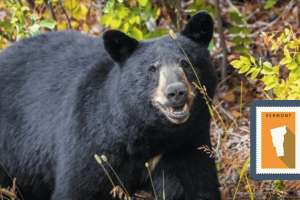
Wisconsin Department of Natural Resources officials concluded efforts to trap the black bear involved in a midday attack on a 69-year-old woman in Barron County. The sow and cub involved have not been observed since the attack despite more than two weeks of aggressive monitoring and extended observation since. The DNR, in partnership with the Barron County Sheriff's Office and U.S. Department of Agriculture Wildlife Services, maintained and monitored a series of live traps and game cameras on the property since the attack occurred the afternoon of July 12.
The victim, 69-year-old Karen Frye, was attacked while in the backyard of her rural residence near Comstock. Frye was transported to a nearby hospital for treatment and recovered. Randy Johnson, WDNR’s large carnivore specialist, said officials conducted two weeks of round-the-clock surveillance on the property without additional signs of the sow involved. He said officials trapped and released two boar black bears, two yearling bears and two sows determined to be unrelated to the incident. They also collected a dead sow found along a road about 1.6 miles from the site of the attack, but necropsy results were consistent with injuries from a vehicle collision. There was no evidence of it being the same bear linked to the attack.
Preliminary investigation findings, including information from the family, suggest the bear exhibited a sustained series of aggressive behaviors toward Frye before the attack. Black bears can behave defensively when feeling surprised, cornered or to protect their food or cubs. True aggressive behavior is both rare and distinctive from defensive behavior. Unfortunately, black bears displaying aggressive behavior are an elevated risk for repeating the behavior. Euthanasia was the DNR’s plan if the sow had been trapped. If the cub had been trapped it would have been relocated and released.
“Humane euthanasia is not always the standard practice in human/bear conflicts,” Johnson said. “Our actions in these types of situations are very carefully determined based upon the totality of the known evidence of each event.”
Rodenticide the Reason for Blue Feral Pigs in California
Wild pigs in the Monterey County, California, area were exposed to pesticide bait containing the anticoagulant rodenticide diphacinone, according to findings by the California Department of Fish and Wildlife’s (CDFW) Wildlife Health Lab (WHL) and the California Animal Health and Food Safety Laboratory in Davis.
In March, a wildlife trapper reported multiple observations of blue muscle or fat found in wild pigs. The blue tissue can be a sign of rodenticide bait ingestion. CDFW’s WHL investigated, finding the anticoagulant rodenticide diphacinone in the stomach and liver contents of one of the wild pigs that was recovered with blue tissues.
Wildlife can be inadvertently exposed to rodenticides either by eating rodenticide bait or by eating other animals that have ingested rodenticides. Rodenticide baits often contain dye to identify them as a poison. Blue-colored muscle or fat may be a sign that game meat has been contaminated by rodenticides, although this blue discoloration might not always be present. CDFW urges hunters to always use caution when harvesting game animals and be aware of potential risks.
“Hunters should be aware that the meat of game animals, such as wild pigs, deer, bears and geese, might be contaminated if that game animal has been exposed to rodenticides,” said Dr. Ryan Bourbour, CDFW’s Pesticide Investigations Coordinator. “Rodenticide exposure can be a concern for non-target wildlife in areas where applications occur in close proximity to wildlife habitat.”
A 2018 study of anticoagulant rodenticide exposure in game animals across California found anticoagulant rodenticide residue in 10 out of 120 (8.3 percent) of the wild pig and 10 out of 12 (83 percent) of the bear tissue samples. These samples were collected largely from animals that were frequenting agricultural or residential areas where rodenticides are commonly/more likely to be used.
Pesticide applicators are urged to take measures when applying rodenticides so as not to expose wildlife. Prior to application, it is important to ensure non-target wildlife are not using the area where the pesticide is to be applied. It is also important to use appropriate bait stations and application methods that exclude access to non-target species. Using an integrated pest management approach for rodent control might help reduce the opportunities for rodenticide exposure for non-target wildlife.
Yellowstone Grizzly Euthanized After Acclimation to Human Foods
Yellowstone National Park staff trapped and killed an 11-year-old male grizzly bear on May 14 after the bear repeatedly sought out human food sources in developed areas of the park. Between April 3 and May 13, the 400-pound grizzly bear overturned several large, bear-resistant dumpsters and gained access to human food and trash near Old Faithful, the Nez Perce Picnic Area and the Midway Geyser Basin parking lot. In addition to developing a strategy to flip over 800-pound dumpsters, the bear also uprooted smaller bear-resistant trash cans from their concrete bases to gain access to human food and garbage. As a result, the bear became increasingly food-conditioned and posed a risk to public safety in one of the busiest areas of the park. The decision to kill the bear was made to ensure public safety and reduce the chances of other bears becoming habituated to human food. The last grizzly bear killed in a management action in Yellowstone was in September 2017, when the park removed a grizzly bear that was damaging tents and accessing human food in backcountry campsites at Heart Lake. “It’s unfortunate that this bear began regularly seeking garbage and was able to defeat the park’s bear-resistant infrastructure,” said Yellowstone Bear Management Biologist Kerry Gunther. “We go to great lengths to protect bears and prevent them from becoming conditioned to human food. But occasionally, a bear outsmarts us or overcomes our defenses. When that happens, we sometimes have to remove the bear from the population to protect visitors and property.” In accordance with Yellowstone’s Bear Management Plan, the park provides bear-resistant food storage lockers in all campgrounds, food storage devices in all backcountry campsites and bear-resistant garbage cans and dumpsters. Utilizing these bear safety measures remains crucial in ensuring public safety and preventing wildlife from developing dangerous habits.
Arkansas Task Force Removes More Than 12,000 Feral Pigs
The Arkansas Feral Hog Eradication Task Force eradicated more than 12,000 hogs during 2024, including more than 400 in the northwest part of the state. The group was created in 2017 by the state’s Department of Agriculture to fight the pigs that cause more than $1.5 billion in damage to agriculture and ecological interests.
“These include damage to and loss of crops of at least $800 million; injury and transmission of disease to livestock; ecological destruction; property damage; threats to native ground-nesting birds and other small wildlife (including endangered species); and contamination of human food and water supplies,” according to the Department of Agriculture.
The task force currently has an interactive program tracker that records the number of hogs taken statewide since 2020. More than 73,200 have been removed by the task force, with another 8,200 eliminated by the public.
Feral Pigs Root Up Oklahoma Cemetery Gravesites
Feral pigs and dogs have caused such significant damage at an Oklahoma cemetery that officials and residents are trying to raise money for a new fence around the property. Salina Mayor Randall Plumlee said the pigs and dogs have dug the ground on grave sites and around headstones and created problems for families with loved ones buried in the cemetery. They have begun a GoFundMe campaign to try to raise $50,000 for a new, better fence around the cemetery grounds.
“We have had problems with stray dogs and wild pigs out here in the area, which causes destruction in the grounds on people’s headstones and on the burial plots,” Plumlee told Fox 23 Tulsa KOKI. “Then, the dogs cause a nuisance out here to people that have family members buried. They come out here to see their loved ones, and sometimes they’re met with a herd of dogs. So, we’re trying to raise some money to finish fencing the entire cemetery.”
Plumlee said the cemetery has more than 2,000 plots. Salina is about 55 miles northeast of Tulsa, located on Lake Hudson, with a population of about 1,800. Raising the money was one option town officials turned to after exploring other financial options.
“It’s been a year. Inflation [and] all other things going on factor so that’s why we put it on there for $50,000. Also, we had a bid back a year ago that said $59,000 and that was to redo the entire fence all the way around — brand new,” he said. “We do care. It’s just a financial problem and that’s everywhere you go. There are issues with rising costs, inflation, everything that happens. We have to try to find unique ways to do things and make those dollars stretch.”
Hunting Licenses Increase Significantly in Washington State
Hunters will see up to a 38 percent increase in hunting license costs this year in Washington after state officials passed legislation in spring for the new fees. The Washington State Department of Fish and Wildlife said it did not request the legislation asking for the increased fees. Department officials say most of the revenue will be used to cover increased costs within the agency, and the remainder used to offset State General Fund reductions as a fund swap.
Nonresident hunters will see fees of $306.10 for a bear or cougar license, and a second black bear license and tag would be another $306.10. The standard big game combination license, which includes tags for deer, elk, bear and cougar, would increase from $85 to $117.30 for residents.
The increase went into effect July 1 and is the first since 2011. The legislation included a senior discount for hunting licenses, and a senior and disabled veteran discount for license packages (Fish Washington and Get Outdoors).
WDFW officials said the “fund swap” is $10.1 million for 2025-27 and $7 million per biennium ongoing thereafter. State economists estimate the bill could generate $19.6 million next year, even after accounting for an expected 11 percent decline in license sales.
Montana FWP Establishes Bear Relocation Dashboard
In an effort to provide more insight to bear management and to keep local landowners and communities aware when black bears or grizzly bears are relocated, Montana Fish, Wildlife & Parks published a new online Bear Relocation Dashboard. This page displays general relocations on an interactive map. FWP relocates bears for a variety of reasons, and the interactive features allow users to click to see information about the relocation including the species of bear, general reason and the date of latest relocation.
FWP will continue posting relocation information on its website as it has done for years. The Bear Relocation Dashboard augments that information. The agency also has a Grizzly Bear Mortality Dashboard and Grizzly Bear Conflict Dashboard.
“These tools are useful for the public to understand what’s happening with bears around the state,” said FWP Director Christy Clark. “The expansion of grizzly bears, both in numbers and distribution, has a real impact on the lives of Montanans across bear country. Keeping people informed about what FWP is doing with bears continues to be a top priority.”
The new dashboards help keep the public informed and provide insight into the reason that bear conflict occurs along with the tools FWP uses to help landowners and communities reduce conflicts.
Grizzly bears remain federally protected in the Lower 48 under the Endangered Species Act. This protection remains despite populations in the Greater Yellowstone Ecosystem (GYE) and the Northern Continental Divide Ecosystem (NCDE) growing well past recovery goals. Montana, Idaho and Wyoming have petitioned the U.S. Fish & Wildlife Service to delist grizzly bears.
FWP is required by law to inform the county and tribal government within 24 hours of which the grizzly bear or black bear is to be relocated. Grizzly bears can be relocated by FWP only to sites approved by the Fish and Wildlife Commission. Under state law, grizzly bears that cause conflicts outside of designated recovery zones cannot be relocated by FWP staff. The dashboard reflects only those bears relocated by FWP.