
The suburban setup that I was about to make was tight. Far too tight for my liking, but I did it anyhow. As I put my Foxpro X2S e-caller on the ground and headed back to my chair, I realized the brushy cover was less than 40 yards on either side of the call. I would have to react quickly should a predator appear.
Sure enough, after less than a minute of Baybee Cottontail distress, a red fox darted out of the vegetation and sprinted toward the caller. By the time I found the fox in my thermal scope, it had stuck its nose in the speaker and raced back into the security of the cover … never to be seen again!
As I retrieved my caller, I realized how I could have made this stand much more effective. There was a free-standing birdhouse nearby. I should have hung my call on that! That simple maneuver would have made the fox stand below the speaker and ponder how it could reach the source of the sound for a nocturnal meal. A week later, I did just that and dropped a fox as it stood and looked up at the call.
While analyzing what went right during the second hunt, I was reminded of the many facets that contribute to a successful stand. While hunters are often cognizant of factors such as sound choice, volume and duration, many vital factors are taken for granted or ignored completely. This article will examine the often-neglected factor of elevation.
Use a Proper Approach
Without a proper approach, a hunt might be over before it ever begins. Because many hunters like to position themselves high on the terrain, how they get there can greatly impact a hunt. Whether the hunt takes place in the daytime or nighttime, elevation factors into a proper approach. Many hunters complain that coyotes will often bark and howl at them, but fail to appear for a shot. While there can be several reasons for this unfortunate occurrence, being spotted by the coyotes is a valid concern. To avoid being visually detected, make every effort to conceal yourself as you walk to your setup location.
One way to do this is to use available landscape features such as farm buildings, farm equipment and available vegetation to hide behind as you make your way. It might help to walk on the backsides of hedgerows, hillsides, knolls in a field or drumlins to remain totally out of sight. The major caveat is to avoid skylining yourself as you move over crests of hills or knolls. This is true day or night, so pay attention to your backdrop as you maneuver across the terrain.
Equally important as avoiding visual detection is avoiding being “scented” by predators as you approach. Again, elevation factors into this conversation. Common advice says to pay attention to the wind direction and not let the prevailing wind blow your scent toward an area that you believe is holding predators. Where elevation comes into play is when thermal air currents are present, and they can wreak havoc on your hunting success.
Many hunters like to call from atop a ridgeline and watch the area below. This is an awesome tactic when the prevailing winds allow you to go undetected. However, when hunting at dusk and dawn, thermal air currents are a frequent phenomenon and hunters need to be aware of how they work. Because thermal air currents flow upward in the morning, daybreak hunters should be fine while approaching because their scent will not be flowing down to where predators might be lurking. However, that same approach at dusk will have the hunter’s scent flowing down the hill. This will broadcast a foreign presence to any predators you are trying to call in. If you must make this approach, make your progress from a direction where you do not believe any predators will be located so you still have a chance to call predators that might be farther down the ridgeline.

Setting Up for Success
When making a setup, playing the wind is typically the main concern, and with good reason. Wind direction is vital on every hunt. The discussion of elevation also relates to the art of proper setup. Most hunters attempt to set up high within the terrain, because a high vantage point allows for maximum visibility of the surroundings. A commanding view of the landscape will allow them to see incoming predators from a greater distance and that will allow them to get physically and mentally ready to make a lethal shot. From a safety standpoint, an elevated position can mean safer shots, because bullets will typically be traveling at a downward trajectory with a better chance at having a backstop. Conversely, when setting up low in the terrain, there exists a greater opportunity of taking uphill shots, and a proper backstop might not be as present.
When selecting a setup location, try to get to the highest spot in the terrain so incoming predators are not hidden behind knolls and other landmark features. Of course, it might not be possible to have the predator in sight 100 percent of the time as it approaches, but try to make sure there is not a ridge or knoll directly in front of you that will conceal it as it makes the final stages of its approach. This is easy to do during the light of day, but more difficult at night, and is especially true if you are unfamiliar with the area where you are hunting.
I experienced this last season when I relocated on a nocturnal coyote while hunting a huge cut corn field. The coyote was 500 yards away and ignoring my sounds. Because the wind was in my favor, I got up and closed the distance by 100 yards. The coyote was milling around in the field as I hastily positioned my chair and shooting sticks. I placed my call a mere 20 yards away because I wanted to minimize my movement.
As soon as I sat down, I realized that I had not advanced close enough in the terrain because there appeared to be a crest in the field just beyond the caller. I hope this doesn’t cost me, I thought as I sent Baybee Cottontail sounds across the field. A coyote instantly trotted my way! As I prepared for the shot, I knew I was going to lose sight of the coyote in the terrain. Sure enough, it was gone, but not for long! It popped up just 25 yards away and the white glow filled my Pulsar thermal scope. I quickly took the shot and the coyote rolled down the hill. I got lucky and the hunt reinforced my belief in setting up with maximum elevation, even when making impromptu setups.
Sitting Versus Standing
Let us assume that you have made a stealthy approach and are now set up in an elevated location. It is time to begin your calling. The question is: Are you going to sit or stand as you call?
Back in the 1980s, when I first started predator calling, I used a boat cushion to sit on. After a season of wet buttocks and limited visibility, I thought, There has to be a better way! For me, the better way came in the form of a lightweight camp-style chair. The benefits included a dry keister and a better view of the surroundings. Even though I was elevated only 20 inches above the ground, my field of view was much improved. Not only was my ability to see incoming predators enhanced, but my comfort level soared. No more getting damp from snow and wet grass/mud for me. When combined with a bipod for my rifle, it is a setup and shooting system that I still use to this day for 95 percent of my hunts.
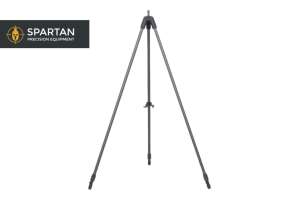
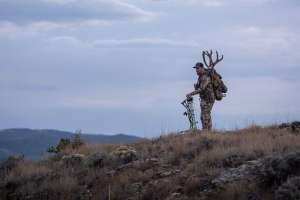
Over the past few years, the use of expandable tripods has become the rage for hunters. This is especially true for night hunters. Advocates of tripods praise the stability that they provide. Additionally, the fact that most hunters use their tripods from a standing position allows for an even better field of view than what sitting in a chair can provide. I find that this enhanced elevation is crucial when hunting certain terrains. Specifically, I use a tripod when I am hunting a convex hilltop. It is difficult to see incoming predators day or night — when set up on rounded hilltops. When standing, however, visibility improved greatly, and that allowed me to spot predators before they could be when seated in a chair or on the ground.

Elevation and E-callers
Electronic caller performance can be directly affected by elevation. From sound projection to communication with remote controls, elevation can play a part in the hunter’s effectiveness while using an e-caller.
Let’s start with sound projection. Even hunters with minimum experience with e-callers can tell how their call sounds when placed on the ground. When calls are set on gravel or hard dirt laneways they tend to sound louder and clearer than when they are set on a blanket of fluffy snow or tall grass. It only makes sense to gain some elevation to allow sound to project.
While some e-caller models come with built-in legs to gain slight elevation, hunters are always searching for more. A common remedy is to attach a small tripod to the call. This is a quick, easy and adjustable way to get the call off the ground to enhance sound quality. Hunters not wanting to add a tripod have other options: Enhanced sound projection can be achieved by placing the caller upon an existing structure. Placing the caller on a rock, in a bush, on a piece of farm equipment or hanging it from a fence post will all enhance performance.
Getting the caller off the ground can also allow it to communicate better with the remote control. Sometimes, when setting the caller out and returning to the setup location, it ends up not being in the line of sight (and hence the remote control). The key is to be meticulous when setting the unit out. However, mistakes happen, especially at night, when it is sometimes hard to know your exact setup location, and the caller is not placed in the best location.
Unless I totally mess up my call placement, I rarely have a problem with my Foxpro not performing correctly with the remote control. The exception is on one piece of property I frequently hunt. I mention this because the same sad phenomenon might happen to you.
On my first visit, I placed my caller out approximately 50 yards away. To my frustration, it would not function at all. I leaped up and moved it 10 yards closer and got the same result when I returned to my chair. I could clearly see the caller in front of me! Again, I moved it closer. Now, it was a mere 20 yards away — too close for my preference.
My initial thought was that the ground was haunted by some old ghost. I even brought friends along as witnesses because I told them of this occurrence and no one believed me. I have heard that telephone lines and cell phone towers can cause issues with e-caller performance, but there were none around. It was not until years later when I learned that certain metals in the soil can cause interference, although my theory of paranormal activity is still far more exciting.
This article started with the true account of a fox that raced to my caller, which I’d placed on the ground. Ever since that hunt, I have been positioning it and an accompanying decoy in an elevated position as a means of slowing the predator’s approach. Predators that lock eyes on a motion decoy (or even a caller by itself) will often attack so quickly that the hunter has no time to take a quality shot. By using elevation, the hunter is setting up for success.
In this situation, the predator will typically approach quickly, but stall underneath the source of the sound as it ponders how to grab it. This momentary pause presents a shot opportunity, a tactic I always use when daytime hunting in the woods. For the best results, I try to find a tree stump to place the caller on. A fallen tree will work, but make sure you’re not “broadside” to the length of the downed tree because you might not see the predator on the other side. In my experience, a stump is much more effective.
Elevation often gets overlooked when discussing predator calling. This is a shame because it affects so many different aspects of the hunt. In many ways, predator calling is like putting a puzzle together, where each piece is a different factor, concept, tactic and strategy. When you put them all together, you are left with success.