
I drove into the ranch through the front gate. A feral cat raced across the gravel driveway and stopped near a wild rose bush. Two other cats milled around the outbuilding next to a recently refurbished home. Pulling to a stop in front of the house, I noticed two more feral cats near the barn. Having sat vacant for over two years, the property was now overrun with these wild felines. From a wildlife restoration standpoint, those animals had to go.
My friend, Mike Bridges, purchased the Idaho property in 2020. The parcel consisted of a couple large ponds, quality upland habitat and a half-dozen agriculture fields. His goal was to manage the land to enhance upland and waterfowl habitat, and he wanted my help.
I spent my career as a biologist, retiring and relocating to Idaho the same year I met Mike. During my working years, I spent plenty of time monitoring state property and assisting in habitat restoration and maintenance to benefit native animals. If he wanted help pulling the land into shape to benefit the native fauna, I could certainly assist.
After a quick tour of the property, we discussed restoration steps. The land was loaded with quality habitat for quail and pheasants. Having hunted the property for waterfowl before Mike owned it, I knew the ponds drew plenty of ducks and geese during hunting season. In all honesty, the habitat was already there and in excellent shape. The only thing I could recommend was to start an aggressive management plan to control the animals that had overrun the property unchecked. In short, it was time to start targeting the egg eaters.
With Mike’s blessing, I spent a few days exploring the land and looking for regularly used animal trails and prints. I determined the property was well used by coyotes, foxes, racoons, skunks, opossums and feral cats, all of which would heavily impact upland game and waterfowl production. Despite the quality habitat available, I didn’t see a single quail or pheasant during my initial three-day inspection.
Within weeks of relocating to Idaho, I had secured my trapping license and had fallen into a side business of controlling nuisance animals for farmers and ranchers. If beavers were plugging irrigation ditches, I could trap them out. If coyotes were harassing cattle, I could call them into range and remove the problem. If feral cats and coons were causing issues, within a day or two of setting traps, they’d be headed home with me.
I told Mike that with a combination of calling and trapping, I could start removing the nuisance animals from his property. I again explained that the habitat was there and healthy, but with so many nuisance critters running unchecked, they would keep the upland game from thriving. Hearing this, Mike couldn’t set me loose fast enough.
The Players
As predator hunters, we’re all aware of the impact coyotes, foxes and bobcats have on small game and upland game in the areas where we hunt. In certain places, these predators can also take a heavy toll on turkeys, waterfowl and deer. Managing predators on ranches and farms to ease this pressure on other animals we hunt is nothing new. However, predators are not the only critters impacting these game animals.
Critters, termed nuisance species, can also be devastating on game bird eggs and their young. Racoons and skunks are known consumers of quail, pheasant, waterfowl and turkey eggs. Opossums will consume eggs as well and have been documented feeding on the young. And if you’re looking for an animal that has the heaviest impact on both songbirds and game birds in general, look no further than the feral cat.
Free-ranging cats are a major source of bird mortality. They are estimated to kill between 1.3 and 4 billion birds annually in the United States. This animal, completely introduced by man, has caused more damage to the native bird community than any other source of mortality. Where feral cats roam, birds, especially ground birds, will become so pressured, they will either become extirpated from the area, or will find habitat elsewhere. A major part of habitat enhancement for native species involves gaining control of these nuisance animals.
Calling Predators
At just 160 acres, the property did have a couple of decent calling spots, but I knew controlling coyotes through calling alone would be limited on the parcel. However, it was an additional control tool, and I was anxious to give it a try. As it turned out, we had early success calling coyotes.
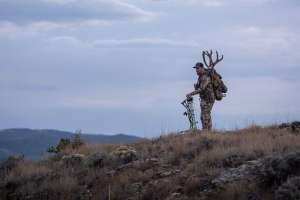
A week after I started working with Mike, I headed out to spend a morning calling the property. My wife, relatively new to predator hunting, came with me. We set up at the edge of a fallow field, bordered by heavy brush. Within a minute of calling, a large male coyote appeared on my wife’s side, 100 yards out. One shot from Cheryl using her trusty Remington .22-250 Rem., and the first animal of the restoration process was down.
Despite our early success, predator calling on Mike’s place was usually a one-shot deal due to the size of the property, and I decided to put more of a focus on trapping. If I could locate areas of coyote use on the property, I could put pressure on the predators through trapping.
Tools of the Trade
Understanding the nuisance animals I was targeting, I put together a trap set suited for the purpose. Conibears, in the 160 and 220 sizes, were always my go-to traps for smaller animals and setting them up in baited bucket sets was always a winner. Pre-baiting a raccoon area and then sprinkling DPs (dog proof) traps in the location was like shooting fish in a barrel. I’d utilize snares in locations where animals, such as coyotes and foxes were accessing Mike’s property, and lastly, I’d use live traps in areas that were limited in setting potential. With the tools identified and a solid plan in place, it was time to get to work.
The week before I laid out my trapline, I found over a dozen solid trails and areas where animals were regularly accessing and using Mike’s property. An area I dubbed “Sugar Corner” was loaded with raccoon prints. Liberally sprinkling sugary cereals in this section bordering the river a week prior to setting attracted all sorts of critters to the spot. I set a half-dozen dog-proof traps, each baited with a sardine in the corner. This combination of sugary and savory baits is deadly on raccoons, skunks and opossums.
At the eastern border of the property, I found a small opening in the barbed wire fence, complete with strands of coyote hair. Tying off to a post, I set a snare in this location. Searching a bit more, I found another access spot close by and set another snare there.
A hundred yards from the house was an old barn built in the early 1900s. Open on one side, the dirt floor of the structure was loaded with feral cat and opossum prints. I set two live traps inside the barn, each baited with a small can of cat food and then placed three bucket sets baited with sardines outside. In the mouth of each of the buckets was a Conibear trap waiting to snap. Bucket sets are great because you can place them anywhere and I’d often put them on edge habitats where animals like to travel while hunting.
I set another dozen bucket sets, Conibears and dog proofs throughout the remainder of the property, baiting them heavily. Any place I noticed a regularly traveled path and found prints, I’d set. Using OnX maps, I sent Mike a link of everything I set on his property, and told him I’d return in a day or two to check on everything. Idaho allows a 72-hour trap check, but if I can, I like to check the line 24 to 48 hours after setting up.
The Check
Ask any trapper and they’ll tell you checking the trapline after a good set is like Christmas morning for adults. I tell people it’s like an Easter egg hunt for grown-ups. I enjoy the challenge of figuring out animal movement patterns and then selecting the best trap for the job. There’s just something challenging about placing a dog-proof trap in the path of a raccoon and convincing it to reach his paw into a 1.5-inch hole. Or placing a bucket set in the path of a skunk and baiting it so he’ll walk through a 6-inch (Coniber #160) square. For me, trapping is gathering all the natural information together and placing a good trap set in the right place. Every trapper understands that after the work of setting things up just right, the trap check is your reward.
First Check Results
On the morning of the first check, I met Mike at his place. Everything I was doing was new to him and he wanted to tag along to see how I had done. Since the old barn was close, we checked there first. A huge opossum sat frustrated in one of the live traps, and all three bucket sets had scored: two with feral cats and one with a skunk. I reset all the traps, and we headed for Sugar Corner.
At the old road that formed the corner sat two very upset raccoons, their hands secured in the dog-proof traps. Another trap had been set off but sat empty in the dirt. I dispatched the coons, reset each trap and rebaited the entire area. Right before we headed to the next set, I spotted another feral cat down by the river, so I set another bucket set at Sugar Corner.
At the eastern side of the property, where I set the pair of snares, waited an angry coyote. The other snare had been knocked down. I collected the coyote and reset both snares. From there we drove an old two track to another outbuilding and found two more feral cats and another opossum in bucket sets.
That first check produced 10 animals for 20 traps set. Mike was impressed that we took so many animals off the property during the first run. I told him that the first check will usually result in the most animals, especially on a parcel that has not been trapped before. It indeed was a good first check.
That first spring, I trapped Mike’s property for two months, setting one day and then running those traps for three days a week. During those months, we removed an astonishing 40 feral cats, as well as a good number of raccoons, skunks and opossums. A lone red fox fell victim to a dog-proof trap and the coyotes figured things out early and essentially avoided the area once I got there.
Mike now has me trapping each year during the spring, prior to egg-laying season. Reducing the number of nuisance animals during that time is a perfect management tool to help boost upland game bird numbers. During the second season, I started noticing an incredible increase in both quail and pheasants on the property. Mike has even had me out to hunt waterfowl, quail and pheasants during the season to show his appreciation.
Hunting predators on farms and ranches will help ease the predation pressure on game species that inhabit the property. Going a step further and controlling nuisance animals, especially during the spring egg-laying season, will ensure a healthy clutch of eggs make it to the hatching stage. If you’re like me and hunt everything, managing nuisance species will ensure a bumper crop of upland game when the season arrives. Using all the control tools available, such as calling and trapping, will ensure that happens.