
It was 1854 when Horace Smith and D.B. Wesson patented their lever-action rifle. It was fed from a tubular magazine and sent follow-up shots faster than most of its contemporaries. The repeater’s ability to heat things up downrange earned it a nickname etched into every firearm lexicon — the “Volcanic.”
Despite its success, Smith & Wesson left the lever-action market to its competitors, concentrating instead on pouring its famed quality and innovation into dozens of other groundbreaking designs. Its reputation for double-action revolvers is legendary today. The company’s product line expanded through the years and now includes semi-auto pistols and rifles. It didn’t return to the creative spark that launched the firm’s journey, however, until 2024 when it released two Smith & Wesson 1854 models.
Earlier this year, Stealth Hunter versions were unveiled, wearing features ideal for taking predators, filling tags or protecting the homestead. Their chamberings piled onto the virtues.
Volcanic It is Not
The 1854 line honors the company’s lever-action rifle legacy, but today’s models are vastly different. They are built from materials unthought of in the 1800s, with CNC precision, and add modern safety features.
The 1854 Stealth Hunter receiver is constructed from stainless steel, which was developed well after the Volcanic was invented. The barrel is 410 stainless steel, is 16.3 inches long and threaded 5/8x24 for mounting muzzle devices. Rate of rifling is right-handed, one twist every 14 inches. A thread protector ships on the rifle.
The gun’s exterior metal is flat black. It wears Smith & Wesson’s Armornite finish, which improves resistance to wear and corrosion, yet increases surface lubricity. It’s so effective at dampening reflection that rim lighting from behind for photos is the best way to see some of the rifle’s fine details.
The “Stealth” name is well deserved, obviously. Mr. Wesson and Mr. Smith would be impressed with those improvements alone, but there’s more.
Field Rugged Rear Stock
The polymer stock at the rear is field rugged and maintains that discrete, hard-to-see look. It’s black and wears a sling swivel stud aft. Texturing in all the right places ensures a positive grip in wet conditions, or when wearing gloves. A generous recoil pad minimizes perceived recoil, although there wasn’t much in the .357 Mag.-chambered model shipped for testing.
There are two Smith & Wesson logos on the stock, again, black. They are on the bottom of the stock and recoil pad. The company didn’t compromise stealth with unneeded embellishment. Even the Smith & Wesson name on the barrel is understated black. The theme continues at the forend, one of the two most notable departures from a lever action’s classic profile.
The M-Lok Jackpot and Optic Mounting Rail
The rifle’s forend is constructed from aircraft-grade T6 aluminum and, as expected, is flat black with matching finish. It’s 10.5 inches long and features 15 M-Lok slots, five each on the 3, 6 and 9 o’clock positions. The only white surface on the gun, the M-Lok logo, is found underneath the forend. It is ideal for mounting lights, lasers or a bipod and far forward on the unit is the rifle’s second sling-mounting point. The system is a great advantage for today’s shooters, although very different from tradition. There’s another one that stands out just as much, if not more so.
Atop the receiver is a generous 10.5-inch Picatinny rail for optic mounting. At that length — with 25 grooves open if the factory-installed rear sight is removed — odds are good you’ll find an ideal position, regardless of magnification or eye relief. I would have been tempted to try the gun out in a pseudo-scout-rifle setup if I had a 1-4X scope on hand.
At that length, stretching well over the barrel, the rail is not integral to the receiver. Instead, it’s affixed by three torx-head screws. The rear sight, which is easily removed, nestles into the rearmost pair of grooves in an innovative manner.
Iron Sights With a Twist
An XS Sights ghost ring with a 0.191-inch aperture serves as the rear sight. It’s constructed from steel, and windage and elevation can be adjusted without removal.
Changing windage is simple and fast. Loosen one of the bolts on the sight’s side, push the ghost ring over and tighten the opposite bolt. It’s old-school, simple and unfailingly reliable. Elevation adjustment is equally fast and somewhat similar in approach to the A2 post on many AR-15s. Loosen both the mentioned bolts, rotate the ghost ring up or down, then retighten. All that is required is a small flathead screwdriver.
A big part of the magic is underneath, though. The rear sight rides in a groove milled into the rail, like the footprint often milled into semi-auto pistol slides to mount red-dot optics. The design ensures there is no fore or aft movement, regardless of torture, and a single bolt keeps it firmly in place.
Owners who prefer a different diameter ghost ring can also order others from XS Sights. The sight picture, however, would be compromised unless something equally versatile rides up front on the barrel. It does. There a Hi Viz Litewave H3 sight makes target acquisition fast, regardless of light conditions. Its green fiber-optic tube is bright, even in low light. When things get really dark its tritium ring glows. The fact that the Litewave H3 line is extremely popular for home and self-defense speaks volumes. Of course, keeping the gun on target takes practice, form and a good trigger.
Trigger and Groups
The trigger is grooved to minimize the chances of slip in nasty conditions or when wearing gloves. It’s a single-stage design, and let-off weight — measured on a Lyman Digital Trigger Pull Gauge — averaged 4 pounds 2 ounces.
Long-distance is not where pistol cartridges shine, including the .357 Mag. Uncomfortable conditions during the first series of tests — with the iron sights on a muggy 100-degree day in North Carolina with scarcely a breeze — likely didn’t help results optimal at 100 yards.
Hornady’s LEVERevolution 140-grain load printed the best five-groups — three shots each — at 100 yards. They averaged 3.16 inches from a sandbagged prone position. Federal’s Hammer Down 170-grain load came in at 3.49 inches. American Eagle .38 Spl. 130-grain FMJ’s were loaded one at a time (lead soft points were not available at the time) during the session just to gauge performance. Its groups swelled to 4.17 inches.
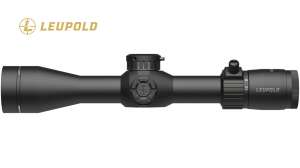
For a second test, Talley medium-height Tactical Picatinny scope rings were used to mount a Leupold 3.5-10x40mm VX-3HD scope. The rear and front sight were not visible in the optic, so they were not removed.
Shooting from the same prone position on a more comfortable, cloud-covered day, groups shrank. One of the Federal three-shot groups came close to the 2-inch mark, although Hammerdowns still averaged 2.73 inches — user-error, I suspect. Hornady’s load trailed slightly this time at 2.91 inches.
There were no stoppages or malfunctions encountered during both range sessions. The rifle doesn’t seem very finicky about bullet weight. Cycling the oversized lever loop was a breeze and as the barrel laps in, with practice, there’s no doubt groups can shrink.
Manual Safety and Magazine
The Smith & Wesson 1854 Stealth Hunter has a crossbolt safety. When engaged it’s possible to operate the lever to remove a chambered round. Some traditionalists find the safety an abomination on the receiver, but it’s another touch with modern shooters in mind. A red ring appears on the mechanism when the gun is ready to fire.
The hammer also has a half-notch position to guard against accidental discharges. A hammer spur extension ships with the gun for owner installation, if wanted.
Pressing cartridges through a gate on the receiver’s side — just below the ejection port — is the field-expedient and traditional method of reloading centerfire lever actions. When the day’s over, and it’s time to unload, many models require the lever to be operated until all cartridges are removed.
The 1854 has the option of turning the tube knob up front and removing the entire magazine, cartridge, spring, follower and tube. A single operation of the lever then removes anything that remains chambered. It’s a great added layer of safety that doesn’t require remaining cartridges to pass into and out of the chamber after the day is done. The system can even be used to reload, although it’s slightly more cumbersome.
Overall Impression
There’s another consideration to weigh, perhaps the biggest one for many hunters. If you live in one of the states that has recently made straight wall cartridges legal for taking big game, the 1854 Stealth Hunter qualifies.
For predator hunters it’s a rifle that can do it all. The fact it also comes with modern features to deliver a decided advantage in the field, especially in thick brush or low light, is icing on the cake. Smith & Wesson has a winner in this rifle, one well worth a close look the next time you visit your favorite sporting goods dealer.

Specifications
Smith & Wesson 1854 Stealth Hunter
Chambering: .357 Mag. (tested); also available in .44 Mag. and .45-70 Gov’t
Method of Operation: Lever action
Overall Length: 33.3 inches
Weight: 6.5 pounds (unloaded)
Trigger Let-Off Weight: 4 pounds, 2 ounces
Barrel: 16.3 inches, 410 stainless steel, threaded 5/8 x 24
Receiver: Stainless steel
Rifling: 1:14 RH
Stock: Synthetic black with aluminum M-Lok compatible forend, synthetic buttstock
Magazine: Tube with eight-round capacity
Accessories: Hammer spur extension, trigger lock and cable, manual and every rifle is covered by the Smith & Wesson Lifetime Service Policy
MSRP: $1,399
Website: www.smith-wesson.com