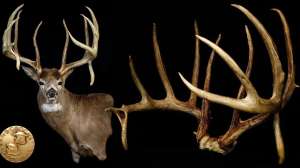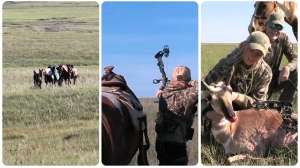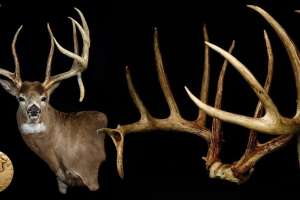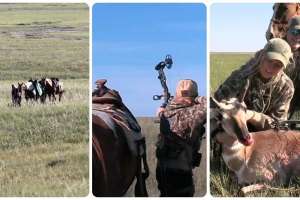

About 30 minutes before dark, several deer surrounding me scattered abruptly, then stopped. A big buck suddenly appeared, heading up a gradual slope towards a wheat field. My rangefinder read 57 yards, but he took a few steps quartering away as I drew back and settled in. When he stopped naturally, my 60-yard pin floated solidly on his ribs, and my arrow launched, passing perfectly through both lungs. My December buck ran 40 yards and collapsed.
The entire encounter lasted only 20 seconds. I took that quick, longer-than-average shot with total confidence. My bowsight of choice played a big part in that.
There are so many bowsights on the market these days that it’s mind-boggling, and some bowhunters find settling on one a steep task. I get it. I’ve been shooting archery for 31 years, and I’ve spent the last 25 of them bowhunting and tirelessly testing equipment. Choosing one bowsight is indeed challenging. But given my experience, I believe I can help you make sense of this perplexing product category.
To that end, let’s discuss some different schools of thought around bowsight selection.

Keeping It Simple
When my family ran a pro shop from 2002-2010, we sold piles of HHA single-pin sliders. Folks loved them. They’re still a favorite among many bowhunters today, and many other sight companies now manufacture single-pin sliders, too.
The main advantage of single-pin sliders is to-the-yard accuracy. Simply slide the yardage indicator to your target’s distance and aim dead on — no guesswork. Next, you can enjoy an uncluttered sight picture. With only one pin in the sight housing, you’ll see more of your target and details of it, such as a deer’s belly line and front shoulder crease. In contrast, a multi-pin sight visually obstructs the target, and selecting the right pin when you’re under adrenaline’s influence can incite panic and poor shooting.
Of course, single-pin sliders also have drawbacks. First, anytime you range an animal with your laser rangefinder and determine that it is closer or farther than what your slider is currently set at, you’ll have to adjust the sight, which takes time and requires some movements. An animal could also walk towards or away from you after you draw your bow; you’re stuck at full draw with a sight set to the incorrect distance. You’ll have to let down, range the animal, adjust the slider sight, and try again — or aim high or low with the pin set where it is.
A single-pin slider makes an ideal choice for beginners because several fixed pins can be confusing. Folks who see fuzzy pins when looking through a peep sight will also find a single-pin slider the superior choice. And anyone who experiences anxiety with a multi-pin sight should seriously consider the simplicity of a single-pin slider.

Fixed Pins for Fast Action
If your hunting applications consistently require fast action, a fixed multi-pin sight is unbeatable. Think whitetail hunting on travel routes, especially during the rut when shot opportunities are typically now or never. When a buck comes rolling through, you likely already have the trail he’s on ranged, and all you have to do is draw back, select the right pin, and shoot — no sliding required.
If you’re skilled and can confidently shoot to longer distances, a five-pin fixed sight with pins set for 20, 30, 40, 50 and 60 yards is a solid solution. But if you want to simplify your sight picture and keep your shots closer, a three-pin sight with pins set to 20, 30 and 40 yards will do.
As I alluded to earlier, the downside to multiple fixed pins is the decision-making that must happen at full draw. You must choose the correct pin for the yardage, and decide whether to hold one pin high, another low, or stare between two pins when shooting at odd yardages. If you can keep your head right and think fast, this sight style is often best.

The Best of Both Worlds
Some people like cake, some like ice cream, and some like both. Multi-pin sliders are the cake AND ice cream of bowsights, providing the convenience of fixed pins for fast action, when necessary, but with the option to slide to specific yardages. The downside? Multi-pin sliders are pretty technical. The newest models are fairly straightforward for dedicated bowhunters to figure out and set up, but beginners might find them perplexing.
Multi-pin sliders are excellent sights for 3-D shoots with long-range targets, such as the Total Archery Challenge (TAC). When you face an extremely long shot, such as an elk target at 93 yards, simply dial your sight to the yardage for precision accuracy that aiming high with a 40-yard fixed pin will never achieve.
I’ve been using and testing different brands of slider sights for hunting since 2009, and sliders continually check all of the boxes for my hunting needs. I get to shoot well beyond 100 yards during my summer practice, which boosts my confidence for closer hunting shots. And, I love that I can dial my sight when a follow-up shot is required. I’m a believer that ethical shot distance goes out the window when an animal has been mortally hit and requires follow-up.
Once, I finished a wounded gobbler with a 78-yard shot made possible by my slider sight. Another time, I did likewise with a wounded mule deer, making a 114-yard shot. I’m not sure I would have recovered either animal without precision, to-the-yard sight dialing. In case you’re wondering, the broadhead ricocheted off the base of the gobbler’s neck on my first shot at 9 yards, skidding along the body rather than penetrating the body cavity. And the muley buck ducked my first arrow at 34 yards, resulting in a high hit.
Cyber Sights
To my knowledge, electronic sights are available from Garmin, Burris and Trophy Ridge. These are illegal for hunting in some states but perfectly legal in others. Thus, study the regulations and know if they’re allowed where you’ll be hunting.
Trophy Ridge’s electronic sight has a digital yardage readout for easy reference when sliding, while the Garmin and Burris models have integrated rangefinders. With these, you draw back on the animal, range it, and the aiming dot that appears on the optic will be for the animal’s exact yardage. It’s pretty sweet technology.
As with the other sight styles, this one has downsides. Fog and precipitation can blur or obstruct your view through the glass. Sunshine can induce glare. It can also be more difficult to tell what you’re ranging with a rangefinding bowsight than with a magnified, handheld rangefinder. Finally, you’re trusting battery power, and batteries can fail, especially in cold weather.
A Few More Things
Let’s discuss a few more details. When choosing a peep sight, make sure it perfectly fits your sight housing at full draw. Too much or not enough sight visibility makes it easy to unknowingly alter your anchor point, which can hugely impact accuracy. Another thing, a sight that adapts directly with the riser (modern dovetail and Picatinny mounts) yields a more dependable connection, eliminates a mounting bracket, and positions the sight at the lateral center of the riser, improving balance.
Don’t forget pin-size considerations. Large pins can cover up too much of your target at longer distances, making it more difficult to aim precisely, especially on sub-sized targets. For shooting beyond 60 yards, .010-inch-diameter fiber-optic pins are ideal. Bowhunters with poor vision or those who keep their shots close might find .019- or even .029-inch pins easier to see.
Let’s close the discussion with first-, second-, and third-axis adjustments. The first-axis adjustment tilts the sight housing forward or backward. The second-axis adjustment levels the pins and housing laterally, although some sights have it where the bubble level is adjustable instead of the entire housing. The third-axis adjustment can be thought of as a hinged door. It swings the scope housing toward or away from you.
These are must-have features if you shoot on uneven terrain or from steep inclined and declined angles. Leveling all three of these can substantially improve your accuracy, especially at longer ranges and when attempting technical shots.
Photos by Darron and Becca McDougal