
We had strategically set up folding chairs under the cover of a thorny bush, which provided great background cover to help keep us concealed. The electronic caller was positioned about 60 yards in front of us in a grassy corridor. A deep, brushy creek, ideal for holding predators, was upwind and cut through the landscape. My partner, Tyler Beam, from the Lowrance Ranch in Texas, was operating the caller and gave me the thumbs up to let me know he was ready.
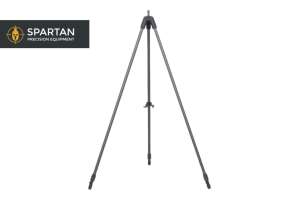
I had my rifle steadied on shooting sticks and pointed toward the e-caller so I could dial in for a shot without having to move. Tyler started with some soft calls and eventually increased the volume and intensity — bird noises and then, eventually, a distressed cottontail cries echoed down the creek.
We had been sitting for about 10 minutes when I spotted a big bobcat standing in a sneak position and staring at the speaker of the e-caller. It had appeared like an apparition, and I had no idea how long it had been standing there. I whispered, “Cat,” as I found the feline in my scope and squeezed the trigger. The bobcat disappeared into the grass and never kicked a paw.
Getting the drop on a big male bobcat was beyond exciting, because it had been our primary goal for several days. When it happened, it happened so fast. Without keeping a vigilant eye on the surroundings, it would’ve been easy to miss the chameleon-like critter that blended perfectly with its environment.
I ran excitedly to retrieve the bobcat and quickly checked the condition of its hide. The white belly with well-pronounced spots was incredible. The cat had been quartering toward me when I took the shot, and I was concerned that the exit hole would be significant, but to my surprise, it was a non-issue.
That Texas hunt had been primarily for deer, but harvesting a nice buck on the first day left me time to concentrate on predators using the same rifle/scope combo — a Springfield Waypoint bolt action chambered in 6.5 Creedmoor topped with a Trijicon Credo HX 2.5-15x42mm scope. Some might think the caliber is excessive for a cat, but I’d rather have too much gun than not enough.
The Great Caliber Debate
Choosing the right firearm and caliber for a predator hunt can generate significant debate. Do you bring the biggest, hard-hitting rifle you can find, or pack the one you shoot the most accurately and comfortably? Are smaller-caliber bullets with small diameters more appropriate for harvesting fur? Are there hunts where you should scale back your firepower? There are lots of variables you need to consider before packing a rifle. On this hunt, I used the same rifle for deer, hogs, coyotes and the bobcat. All were killed quickly and cleanly, and no fur was ruined by my caliber choice.
Before the Texas hunt, my choice of caliber would have been much different. The .222, .223 and .22-250 Rem. have always been my “go-to” calibers for hunting predators. They have been efficient in harvesting hundreds of critters, and I will continue using them. However, there are times when more gun should be considered.
Beefing Up for Wolves
Wolf hunting gains popularity yearly, with opportunities in the Western states and Canadian provinces. Good fortune, luck and spending significant time in the wilderness have allowed me to harvest many wolves over the years. One thing I learned is that a wolf has a will to live that’s greater than most animals. I also learned you have a stronger chance of leaving disappointed if you show up without enough gun.
Most of the wolves I harvested were during moose or elk hunts when I was packing a .300 Win. Mag. Some will roll their eyes and say that the magnum caliber is too much gun. I beg to differ. I have seen wolves shot with the big calibers get up and run away. Bullet placement is critical, but having extra energy and knockdown power is not considered excessive in my books. A .30-caliber bullet, whether shot from a .308 Win., .30-06 or .300 Win. Mag, is often used on deer-sized critters, so why not consider it for a wolf that can weigh in at over 100 pounds?
I regularly get asked which caliber is best for a wolf hunt. My answer is always the same: the one you shoot most accurately. But given the option, a .270 WSM or 6.5 PRC would fit the bill nicely. Wolves are hard to kill; and you never know what type of shot opportunity will arise. A 100-yard shot is what most hope for, but having to reach out beyond 300 yards isn’t uncommon. Wolves have a sixth sense and often show themselves at a distance, only to change their mind and blend back into the forest. The best advice I can give is to bring enough gun.
Jason Frank at Northern Backcountry Adventures (www.northernbackcountryadventures.com/) runs winter wolf hunts in northern Alberta. He recommends that his hunters shoot a 6.5 or larger cartridge. Frank shot a huge male wolf this past winter with a 6.5 PRC, and the animal ran out of sight but died a short distance away in heavy cover.
Every wolf outfitter tells their hunters to wait for the right shot and not to rush. You often get only one chance; if you mess it up, the wolves will not return. Most shots are over 100 yards, because setting up close to the bait limits animal activity. Longer shots might be required, and the larger calibers provide the stability and hitting power to reach out and do the job.
Best Bullet Options
The 143-grain Hornady ELD-X bullet I used in Texas worked flawlessly on everything from bobcats to deer and giant hogs. It delivered its energy inside the animals and did not leave gaping exit wounds. Anyone wanting to save meat or fur must consider the bullet to finish the job properly and cleanly.
A controlled expansion bullet provides modest expansion and, at the same time, retains almost all of its weight. These are the bullets you want to plow through thick hide and even bone and hold together to get the job done. A premium bullet will retain 90 percent or more of its total weight, which ensures proper penetration every time.
There are two types of controlled-expansion bullets: the conventional ones with lead cores and heavy, bonded copper jackets and newer bullet designs that are all copper or copper alloy.
Predator hunters who want undamaged hides need a bullet design that maximizes damage inside and leaves a small or no exit wound. Manufacturers use hollow point bullets to achieve specific goals, which sport a very thin copper jacket and soft lead core. As much as we ponder cartridges and calibers for predator hunting, the bullet ultimately plays the biggest role in lethality and minimizing fur damage.
Lessons From the Field
North American hunters and shooters often overthink firearms and calibers. My experience of hunting in Africa has proven that a “big gun” does not necessarily mean big damage. I hunted cape buffalo, hippo and giraffe with a .470 Nitro Express with Federal 500-grain Premium Safari ammunition. As an opportunist, I also shot a nyala antelope with the rifle and was shocked by the lack of damage. The animal did not go far after the shot, and the exit looked no different from any plains game shot with a 7mm Mag.
There were predators shot during the hunt with a .375 H&H, and all had no issues with hides or trophies being damaged. The big gun lesson drove home the point that you are better off having too much gun than not enough. Is there really any such thing as too big? My experiences in the field have shown that there can be benefits of using larger calibers. The same experiences proved no downfalls of being over-gunned.
The first wolf I harvested was on a moose hunt, with a .300 Win. Mag. Many coyotes have fallen victim to a well-placed bullet while deer hunting, with calibers that would be considered excessive by most predator hunters. The important considerations were that the animal died fast, and there was minimal damage if hides were wanted.
A .30-caliber bullet is .310–.312-inch (7.87–7.92 mm) in diameter. The popular .223 bullet is 0.224 inches (5.7 mm). The difference between the two is 0.086 inches or 2.18mm. The difference is small, even though it sounds drastically different. Upsizing caliber or cartridge may provide an advantage to hunters wanting clean kills and potentially more range and less bullet drift.
Going Real Big
While hunting caribou in the Northwest Territories, I opted to purchase a wolverine license. When opportunity knocked, my front stuffer belched smoke. I shot the wolverine at 104 yards in the neck, and the bullet did not exit. Shooting the wolverine was like shooting a bag of concrete mix, and there was little damage to the hide. Is a .50-caliber bullet too big to harvest a trophy furbearer? Not in this case!
Hunting coyotes near urban centers restricted my firearm choices to shotgun or muzzleloader. The smokepole had significantly more reach, and dozens of yotes fell victim to bullets much bigger than predator hunters would consider. The .50-caliber was a huge advantage under the circumstances, and the skinned coyotes showed only minimal bullet damage.
The best way to know with certainty that you can use a larger caliber is to try it. Many varmint hunters do not save hides or fur when they are of little value. Hunting is conducted to control numbers or alleviate problems. Try a different firearm than you usually take and see if there is any change in success or hide quality.
The Right Optics
Firearm optics are always important when accuracy is the key to success. Clear glass with exceptional light and color transmission makes a huge difference. Long-range shooting is easier with a variable scope. Age changes the quality of your vision, and I have learned to appreciate an illuminated reticle or small aiming dot to locate and focus on the target. Good optics will up your game no matter what firearm you decide to tote.
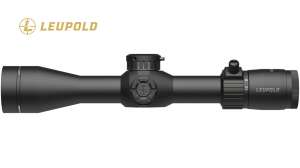
The Trijicon Credo HX 2.5-15x42mm riflescope is built for durability with tactical advantages. Its wide field of view makes it easy to find moving predators and stay on target. The reticle, with red and green illumination and a center aiming dot, allowed for fast target acquisition and accurate shots.
The Credo HX provided a bright, clear image from edge to edge. Precise windage/elevation adjusters require no tools and have zero-stop adjusters. An easy-to-find repositioning magnification lever made it easy to keep situational awareness and quickly dial in the shot.
The Right Gun
We often overlook what the right gun for any situation could be. Fit, feel, comfort, accuracy and consistency play a significant role in bullet placement with every shot. Instead of worrying if a bullet hole is 2mm larger than what others use, shoot what gives you the most confidence and, ultimately, success. List the pros and cons of using any firearm and see if it is reasonable and rational. When the pros are accuracy and positive results, and the cons are the cost of ammunition, it will not take long to figure out what is best for you.
Sometimes, the right gun is what you have in your hand. I was on a handgun deer hunt and shot a whitetail, two javelinas, a turkey and a coyote with a Ruger Blackhawk chambered in .44 Mag. It was the right gun to be successful, but it was not what most would choose if given options. It was a great learning adventure that helped solidify the notion that there really isn’t a gun that's too big.