
Those who pursue coyotes are a special lot, with special needs when it comes to the equipment they deploy. This crafty canine is the most widely distributed predator in North America, and as such, there has been more focus on them in recent years. But do you have the right specialized equipment to become a new-age coyote hunter? Here’s a look at the gear that can make or break your game — or even take it to the next level.
Ammunition — Bad to the Bone
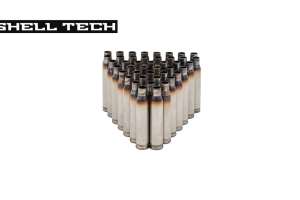
Coyote hunters are no different from any other group of hunters. They all have their factions of cult-like followings of certain calibers — neither side willing to concede that any other choice is just as likely to accomplish the job as well. Coyote hunting is often a long-range endeavor, with hunters relying on flat-shooting cartridges, most often of the centerfire variety, delivering a medium-size bullet with unquestionable accuracy and reliability.
For years, the battle between .22-250 Rem. and .223 Rem. enthusiasts has raged. “I’m faster,” is met with “more ammo availability.” I’d wager these two rounds account for the vast majority of ammunition used to pursue coyotes. Others include stalwarts such as the .243 Win. and maybe even the 6.5 Creedmoor.
The proliferation of the modern sporting rifle (MSR) during the past two decades has given rise to some rounds that are less popular, but whose following is just as intense as those mentioned. Sure, the most common chambering of MSRs is still something in that .223/5.56mm family, but here are two more you might want to make consider.
The .224 Valkyrie: Longer, more slender bullets built on the 6.8 SPC case sets this round apart from the .223 Rem. While not quite as fast as the .223 Rem., and certainly not as fast as the .22-250 Rem., these rounds do produce more energy downrange. For MSR-specific applications, the .224 Valkyrie is getting a reputation as a great option for predator hunters.
The 6.5 Grendel: There’s a lot of love for 6.5s in all their forms right now, and the 6.5 Grendel is no exception. You won’t get the performance of a bolt-gun chambered in 6.5 Creedmoor, but it is a remarkably solid all-around option for the MSR platform. With bullet offerings from 90 to 130 grains relatively easy to find, you can cover a lot of ground with the Grendel, from varmints to big game. That flexibility has a lot of appeal, and if the Grendel isn’t already on your radar, it probably should be.
Guns and Optics — Armed to the Teeth
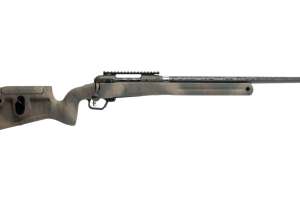
For years, super-accurate bolt guns dominated the predator-hunting scene. But over time, as the accuracy and caliber options for MSRs improved, we’ve seen a transition over to that platform. Modularity and easier customization certainly play a part, but I think the semi-auto functionality that allows for quicker follow-up shots on doubles or misses is the biggest reason for the jump.
There also has been a big change in optics during the past decade. As technology evolves and quality optics have gotten more affordable, night-vision and thermal scope options have absolutely exploded on the scene and changed the optics game for predator hunters. It wasn’t so long ago that spotlights or gun-mounted lights were considered essential gear for hunting coyotes. And while there are still some hunters who go that route, many are investing in IR and thermal optics to do the heavy lifting for their night hunting efforts.
Optics from companies such as ATN, Pulsar and others have done a great job of driving affordability into the night-vision market. With many of these new options being digital, they also offer through-scope recording, which means it’s easier than ever for hunters to share their hunts on social media, which continues to grow in popularity as well.
Traditional long-range optics still get the nod for daytime use, and many predator hunters prefer those with tactical-style turrets, especially in the West where longer shots are often the rule. In low-light conditions, large objective lenses are a must. Hunters in the East might opt for low-power options, depending on the terrain where they hunt. Where 200 yards is a long shot, the action might be fast and in your lap, so the zoom ratio — the ability to crack the scope to low magnification — is actually more important than the top end magnification.
Other Gear — Don’t Forget the Essentials
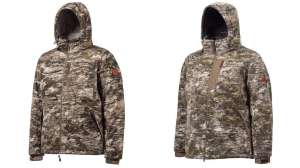
Nothing is more location-specific than clothing. Make sure you have a camo pattern and clothing weight that matches the conditions during the peak of coyote season. This probably means snow camo in the North and drab mid-weight garments farther south.
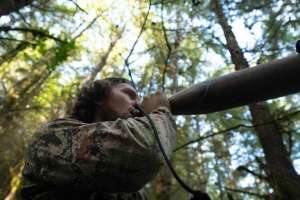
There are really only two other things you really need to make sure you’re covering all the bases: calls or e-callers and decoys.
Many serious hunters have transitioned over to using e-callers in place of traditional mouth calls. Familiar brands such as Foxpro, ICOtec, Primos, Mojo and others offer models that help even the playing field.
Decoys round it out. I know a guy who absolutely won’t even go hunting without his Flambeau Lone Howler decoy. He wants to include eye appeal for every set he makes. I don’t argue with him — he’s stacked up more coyotes than me by a factor in the triple digits. Lucky Duck and Montana Decoy offer some slightly more portable options than the full-body Flambeau, so you might want to take a look at those as well.
Trapping — The Passive Option
The days of long-lining and paying for your first car with fur money might be long gone, but I think there’s a quiet resurgence happening in the trapping space. Largely, these newer trappers are working smaller properties and aren’t doing it for the money as much as they are for habitat management and for the pure enjoyment of it.
Purchasing trapping supplies might seem intimidating if you haven’t done it before, but as a relative newbie myself, I can tell you it’s really not that bad.
Here’s some tips for getting started:
- Don’t bother with inventory that isn’t suitable for your area. Figuring out what furbearers to target in your area isn’t hard, and you can probably narrow it down to just a handful of traps and sizes. Dog-proof traps are simple to use and super effective for raccoons. Nos. 1.5 or 1.75 coil-spring traps are as well, and they can also be used for furbearers such as mink and skunks. Conibears are popular with water trappers for muskrats, beavers and otters. Then you’ll want larger coil-springs for bobcats, foxes and coyotes. A single brand such as Duke can supply all of these, and knowing local laws and species means you can probably get it down to five or six traps to cover all the bases.
- Find local(ish) bait and lure makers. While I have no interest in making my own bait or lure, it’s not uncommon for this to be a paying hobby for some entrepreneurial trappers. This gives you a local source for a product you will need that is likely hyper-focused on what is relevant and works in your area.
- Special-order fur-handling supplies, if you plan to put up your fur for sale, and locate a local fur buyer. Finding local crafters is another option. With the commercial fur market in decline, more and more we’re seeing people turn to the novelty or craft market for their furs. They process and tan the fur and turn them into garments or wallhanger pieces of décor. There’s a certain appeal to a coon-lined bomber or trapper hat or a set of heavy sledding gloves with coyote trim. You might be able to move more of your pelts than you think, and you may well have a local crafter looking for additional distribution. Don’t ignore consignment opportunities.
Coyote hunters don’t need a whole new set of gear, but they can’t just take deer hunting gear off the shelf and make it work either. Make sure you have the right gear to ensure greater success in the field this fur season.