
You’ve likely been there. Temps are falling and the whitetail rut is just beginning to pop, and the wind is right for a favorite stand. As you turn your key and the engine fires, into your head pop images of the tall heavy bucks you might encounter — and your heart rate climbs. Then, horror. Some 10 minutes from home you suddenly realize a cherished piece of gear has been left behind.
No, the forgotten gear is not your bow, quiver or loaded pack, but something else you’ve deemed essential to every hunt and have carried for years — to the demise of several stellar animals. Is there a piece of forgotten gear that would make you turn around and head back to retrieve it?
This article began as a poll of some accomplished bowhunters, asking for a piece or two of gear they are not paid to use, but deem critical to their hunts. And — spoiler alert — the answers did not disappoint. Maybe most Interesting? Without any prompting, all of them brought up the opening scenario. Each bowhunter polled independently stated he was speaking of gear he would “turn around and go back for” if discovered missing. That’s some weighty praise. Here’s what they had to say.
Schaffer Knows Accuracy
Minnesota’s John Schaffer might be better known to most bowhunters through the award-winning gear he’s designed. The innovative Schaffer XV arrow rest and ground-breaking, new-for-2026 Schaffer Line Drive movable bowsight are just two examples of John’s outside-the-box thinking that were built to help bowhunters taste more success in the field. John knows what bowhunters need because he is one. And he plays the game at the highest level.
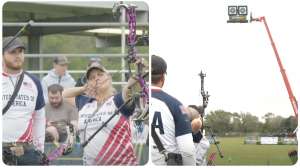
The well-traveled Schaffer, 56, is now just five animals away from completing the North American Super Slam of all 29 of the continent’s big game species. In addition, he’s an award-winning former pro shooter, and also runs a highly successful archery pro shop in Burnsville, Minnesota. His most critical gear? An inexpensive, lightweight polypropylene glove (on his bow hand only) that he believes helps him experience consistent, killer accuracy in the field, shot after shot.
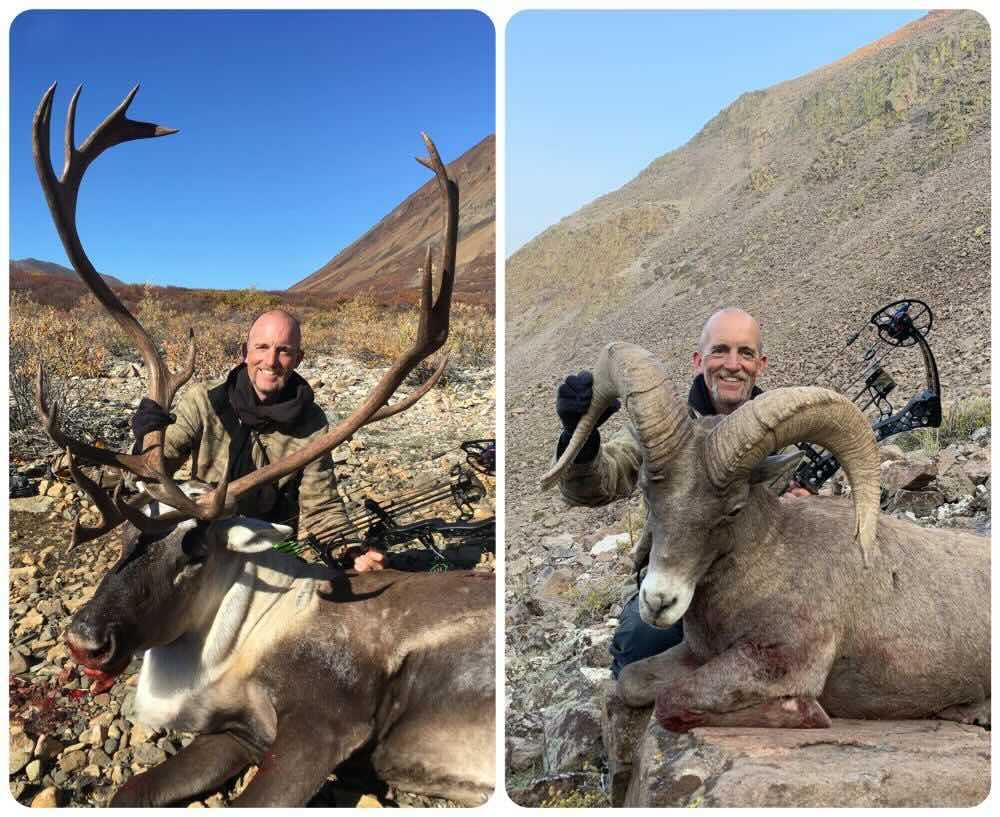
“My bow-hand glove is an absolute mandatory item; I don’t shoot a bow without it,” Schaffer explained. “It drives me insane to have my hand stick to the bow. But with that glove, the bow naturally wants to find its home, and if you have a nice relaxed grip it will naturally slide in where it’s got nice even pressure, and you don’t have to worry about torque, so you maximize your accuracy.”
Schaffer said he began using a lightweight polypropylene glove on his bow hand when he started his target archery career back in the early 1990s, and has been a fan ever since.
Schaffer buys his gloves — technically thin polypro liner gloves — in bulk from mountaineering stores or even Farm & Fleet-type stores, typically in packs of 20. The brands he uses are Wigwam and Fox River; retail is about $5 each.
“The polypropylene construction works the best because it’s slippery, and if your hand is relaxed it will go right where it’s supposed to. I usually have four or five of those with me at all times.”
As a self-made successful businessman who could own and run any premium equipment you could possibly imagine, Schaffer is an unabashed minimalist when it comes to his gear. A few more of his key pieces that he brings on every hunt include a now-ancient Sleeping Indian wool camo pullover shirt that was given to him by a friend. That was a full 35 years ago.
“From a performance standpoint, I like the temperature range I can wear it in, it’s tough, it’s tightly woven wool, it’ll take a fair amount of water. I’ve been wearing it for 35 years so there are a few holes, but the way it’s cut, the sleeves are fairly tight which I like, and the cuffs are perfect. It’s also got a nice little pocket I keep my rangefinder in; it just works.”
Two more pieces of Schaffer’s arsenal include a black fleece balaclava, and a green Filson wool hat, which he’s had for more than 30 years.
“The balaclava, when it’s warmer I keep it around my neck like a muff, and when it’s cold I can pull it over my ears, wearing it over my head under my hat. So it’s a really nice versatile piece.
“My Filson hat is made of dark green wool, with a short bill, it’s kind of like a ‘grandpa’ hat; it’s funny looking and whoever I’m hunting with always gives me crap about it, but it’s just the perfect hat. It’s got a short bill that doesn’t get in the way of my bowstring, and yet is long enough to keep the sun off my eyes, and keep the rain and snow off my binoculars. And it’s got ear flaps I can fold down when it gets cold and windy.”
D’Acquisto: Eyes of a Predator
These days plenty of bowhunters know about the big-deer-bagging skill of Andrae D’Acquisto, 65, owner of Lone Wolf Custom Gear. Chronicled in these pages have been his 55-plus record book-class bow bucks, five of which surpass 170 net B&C and even a few eclipsing the magical 200-inch mark. With a resume like that — which also includes designing some of the best treestands and climbing systems on the market, and even a cutting-edge broadhead and trail camera technology — you’d think that Andrae would tap one of his own commercially successful creations as his most critical. Nope.
Andrae’s “secret weapon” is a simple homemade head net that he believes makes him virtually invisible to point-blank bucks.

“I forgot one once, and hiked all the way back to get it, and now I always carry two,” he said. “For guys who think that’s funny, hey, when push comes to shove, you want all your ‘armor’ in place when you’re out there after top-end whitetails. You need every advantage you can get.”
One of the reasons for Andrae’s fanatical insistence on wearing a headcover? Part of it stems from the fact that he used to wear eyeglasses and was conscious of their potential for reflective glare. But it also harkens way back to the 1980s when he was bowhunting in the Wisconsin northwoods with his brother Nick. During one evening post the two weren’t far apart, and as Andrae looked over he watched his brother descend and begin to pack up his gear.
“I’ll never forget that,” Andrae recalled. “Nick was wearing old-school woodland camo, and as he got down he just disappeared. I could see a set of hands, and a face, and nothing else. It was like his head and hands were floating. Right after that I started wearing gloves on stand, too.”
Literally hundreds of big-deer encounters, and a bit of experimenting, further reinforced Andrae’s belief in the negative power of eye contact involving wary whitetails.
“Getting rid of my glasses for contacts helped a lot, and over the years, you learned what you could and could not get away with. When a big buck was closing in and looked up at me, I learned to squint, and they would still see you. And when I had one eye shut and one eye squinted, that was less of a factor.
“And then I noticed if a deer was still locked on to you and wouldn’t relax, I literally closed both eyes for a count of four. And typically, their alarm reaction would instantly be diffused. They looked, could still see a person in a tree, and yet, they would relax and go about their business. Covering your eyes is huge. I think it’s the most-important thing out there.”
As stated, over the years D’Acquisto built his own headnets, using shoot-thru material designed for use with ground blinds.
“Some of those materials are really dark, but the best ones have a light camo pattern silk-screened on the front of them. And that camo reflects subtle light, to the point where you absolutely can’t see through it.”
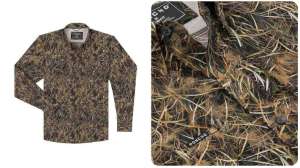
Over the years, many fans of D’Acquisto’s Whitetail Addictions Youtube show have inquired about his particular brand of headnet after seeing it in use on screen. Plans are now in the works for an Andrae-approved head net, featuring a new Lone Wolf camo pattern, to be available this summer. It will be a collaboration with Asio Gear camouflage, one of the sponsors of Whitetail Addictions.
“It’s an inexpensive little item that no one is going to get rich selling, but I got tired of sending directions to people on how to make one yourself.”
Ellyson: High-Tech Scent Reducing
Dan Ellyson, 49, is an expert in both archery gear and bowhunting, with some strong opinions on both. He’s the owner of A-1 Archery, a pro shop based in Hudson, Wisconsin, and he also co-owns Tombstone Creek Outfitters, a whitetail and turkey bowhunting outfitter based in Gilman City, Missouri.
As a pro shop owner Ellyson is regularly exposed to almost every piece of bow gear available, most coming during his yearly attendance at the annual Archery Trade Association Show in January. It’s where gear makers show off their latest wares to interested retailers from across the country.
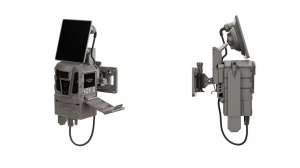
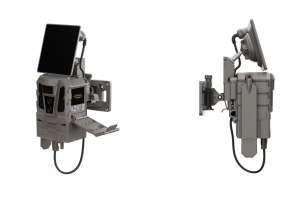
Over the years Ellyson has seen plenty of products come and go, but he considers two to be absolutely critical to his own bowhunting arsenal: An ozone-generating unit that he believes gives him a serious edge in scent control, and an electric bike that makes him a more deadly efficient bowhunter when accessing stands and blinds.

I didn’t have to remind Ellyson that the scent-control industry has been taking a hit lately on social media channels, with several people calling it everything from a scam to a waste of time and money. Ellyson has also had friends and acquaintances question his use of ozone. But to Dan, his results speak the loudest — to the point where Ellyson’s Ozonics unit goes with him on every hunt, every time. No exceptions.
“My belief in ozone generators is results-driven,” he said. “It’s just my opinion, but I’ve spent enough time and had enough opportunities, to know that they will give you an edge when it comes to mature bucks.”
Over the years Ellyson has taken more than 15 record-class whitetails, many with help from an Ozonics unit, which his pro shop at one point sold, but no longer, since the company went consumer direct in 2018. Ellyson believes his Ozonics unit also helped him arrow his largest typical ever, a Missouri giant taken last November 20 grossing more than 170 inches. That deer came in during a morning when tricky winds switched back and forth. Ellyson is adamant that his Ozonics unit helped give him the opportunity he needed.
“The way I look at it, you can hunt two ways: you can ambush hunt — sit in a spot where you have the wind in your favor, and be super quiet and stealthy, and wait for the animal to come through. And that works really well in the early season.
“And then there is hunting when you make your own luck, which really plays a factor as you get deeper into the rut. Maybe you learn to use a grunt call really well, or maybe you learn to rattle — where you find a cadence that gives you the best chance to lure in a buck. And with rattling, especially, a big mature buck is going to circle downwind of you almost every time, and that’s where Ozonics really shines.
“He’s going to circle downwind, and if you’re ready you’re going to get your opportunity. With Ozonics, I’ve found that if he does catch your wind, usually, you’ll get a few critical seconds where that buck is going to pause and kind of sort out what he’s smelling. It’s typically going to take them 2-3 seconds to figure things out, and I’ve killed quite a few deer in that scenario. Most every big mature buck, one-tenth of a second after he smells human scent he’s whirling and he’s gone.”
Many bowhunters question the prep time and other hassles of ozone-generating units that can only last so long on extended sits.
“One of the downsides is the batteries take 4 hours to fully charge, but if you’re going to depend on this regularly you’ll want extra batteries, and two chargers. But I think that because it’s so important to me, I’m going to take the time and effort to charge my batteries, and make sure it’s ready to go. Now it’s just part of my program.
“What is also very effective is to put an ozone generator in a bag with your hunting clothes versus washing them. At a bare minimum, that’s a very good way to benefit from ozone generators.”
When asked his response to non-believers who say an Ozonics unit and its mounting bracket are just more pieces of gear needlessly overloading our hunting packs, Ellyson didn’t flinch.
“If my pack is overloaded to the point of leaving my Ozonics behind, I would pull everything else out of my pack before I ever did that.”
Sidebar: The Ideal Land-Access Gear?
As co-owner of an outfitting business located in Missouri, much of the time Wisconsin’s Dan Ellyson spends in the deer woods is scouting, and hunting with friends and family on the many tracts and leases that comprise Tombstone Creek Outfitters. Many of the Tombstone Creek tracts are large, and so it’s no surprise one of Ellyson’s critical pieces of hunting gear is an electric bike.

“An electric bike just makes you so much more efficient, versus a 4x4 truck, a side-by-side ATV or walking,” Ellyson said. “I use it for everything from day-to-day activities, including checking trail cameras, and scouting the properties. I have been able to pull up on a 200-acre farm, and keep the wind in my face, and put very low pressure on that property, and so from a low-impact standpoint, they’re ideal.
“From a hunting standpoint, you make more noise walking in than riding a bike, especially when walking on noisy leaves. And when it’s time to consider your best no-scent approach, everybody knows that if you want to hunt a certain treestand at the far side of your property, that they shouldn’t walk right through the property, but go around the long way. But taking the long way in without getting sweated up is almost impossible, and when push comes to shove how many are consistently taking that longer way? An electric bike makes that possible, and for that it’s such a game-changer.
“Our outfitting business is more of a semi-guided operation, and my bet would be that 30 percent of our clients are using electric bikes. And they really haven’t been embraced as much I thought.
“I go down to Missouri with my family and friends, and almost everybody that hunts with me uses an electric bike, because of its effectiveness and efficiency. When a hunt is all on you, and you’ve got to hang your own treestands, you’re going to play the wind every day, and you may hunt a farm that's 400 acres. If the wind tells you that you have to walk a mile to that back corner, it’s just not feasible because every deer on the property will know you’re there.
“You at best are going to walk 3 mph, but with a bike, you’re getting in there with low-impact and spreading the least amount of scent. Would you rather walk at 2-3 mph or would you rather blow through there at 12 mph on a bike? Your scent stream is just so small at that point.”
Ellyson currently sells Rambo brand e-bikes in his Wisconsin-based pro shop, which he believes is one of the better hunter-focused companies. His personal bike is an older Rambo model that’s been discontinued, but he’s excited about the company’s new Revolt model for 2026 that features a step-through frame and smaller 20-inch wheels and therefore more stability in the field, and at a lower price point.
“The major downside is you need a bike rack, so transportation is somewhat of a drawback, but in the worst case you can just throw it in the back of your truck.
“They range from about $2,000 to $4,000, and most sales are in the $2,500 or less bikes. I’m just looking for a really nice and affordable, won’t-break type of bike.”