
Often, people who are looking to get their first compound bow ask me, “What bow should I buy.” Well, that’s a broad question that doesn’t have a single, simple answer. The question is akin to asking who you should date, where you should go to college, or what truck you should buy. It depends on a lot of different factors, as well as what you are personally looking for. Additionally, there is not a perfect answer for each person looking to begin their journey with a compound bow.
Rather than conforming to one specific bow brand or model, a new archer is better off choosing a bow based on their wants and needs, as well as a bow's fit and feel. You want to start your archery journey off the right way, regardless of whether you keep the new bow for only a year or two or a decade.
This article details my six top tips to consider when selecting your first compound bow. Following these suggestions will help ensure that your first experience with a compound is a pleasant one, rather than one filled with difficulties and frustrations.
1: Consider Your Goals
Determining why you want a compound bow and what your goals are is a good place to start before you ever begin looking at different models. Do you want to start off target shooting just to get your feet wet, or do you want to also start bowhunting? Are you planning to bowhunt whitetails primarily from a treestand, or elk and other big game in the mountains of the West?
Often, the answer is some combination thereof but knowing specifically what you are hoping for will narrow down your search. If your goal is to just learn the process of shooting a bow and begin 3-D shoots at your local archery club, your choices may be different than if you are planning your first big game hunt. Once you have determined what you are planning to accomplish, you can begin looking at different bow options.
2: Set a Budget
The next step in the bow buying process is deciding your budget. Before you start your shopping spree, think about how much you want to spend because these days it’s not unheard of to spend $2,000 or $3,000 on a fully rigged top-of-the-line compound setup. Don’t fret though because you don’t need to spend thousands to get into the game of archery. In fact, there are plenty of brand-new setups available on the market today ranging from $400 to $900.
Setting a budget that is realistic and obtainable will set the bar for your expectations when going into the process of finding your first bow setup. Obviously, knowing how much you are willing to spend will weed out some bows right off the bat. When setting a budget, keep in mind that you will need to purchase more than just the bow itself. You’ll also need multiple accessories, which will quickly increase your total at the checkout counter.
These accessories, at a minimum, will include a bowsight, arrow rest, stabilizer, quiver, mechanical release and arrows. While it may be your preference to hand select each accessory, a great option for starting out is one of the many ready-to-shoot bow packages available on the market. These bows come fully loaded with all the necessary accessories to get you started except for arrows and a release aid, which will need to be purchased separately. These setups provide a great way to get started in archery, for both target shooting and bowhunting alike. As you develop your shooting process and skills, you’ll learn what you like and dislike, and these accessories can be changed/upgraded as you progress.
3: You Don’t Need the Very Best
As a rule of thumb with most new pursuits, beginners shouldn’t — or rather, don’t need to — start out with the best of the best. Just like with a baseball glove, a set of skis, or a bolt-action rifle, it takes time to discover the intricacies of basic equipment versus the high dollar stuff. While you are learning, you will not know the nuances of a top tier bow vs. an entry level bow. So, why spend thousands of dollars on a new setup when you’re just starting out?
You’re better off to start with an entry or mid-level bow and then upgrade as you learn. This will help you get into the sport at a reasonable cost while also making sure you’re committed to such an investment before you dive all in. Just like with any of your archery accessories, you can always upgrade your bow in the future.

4: Shoot Multiple Models
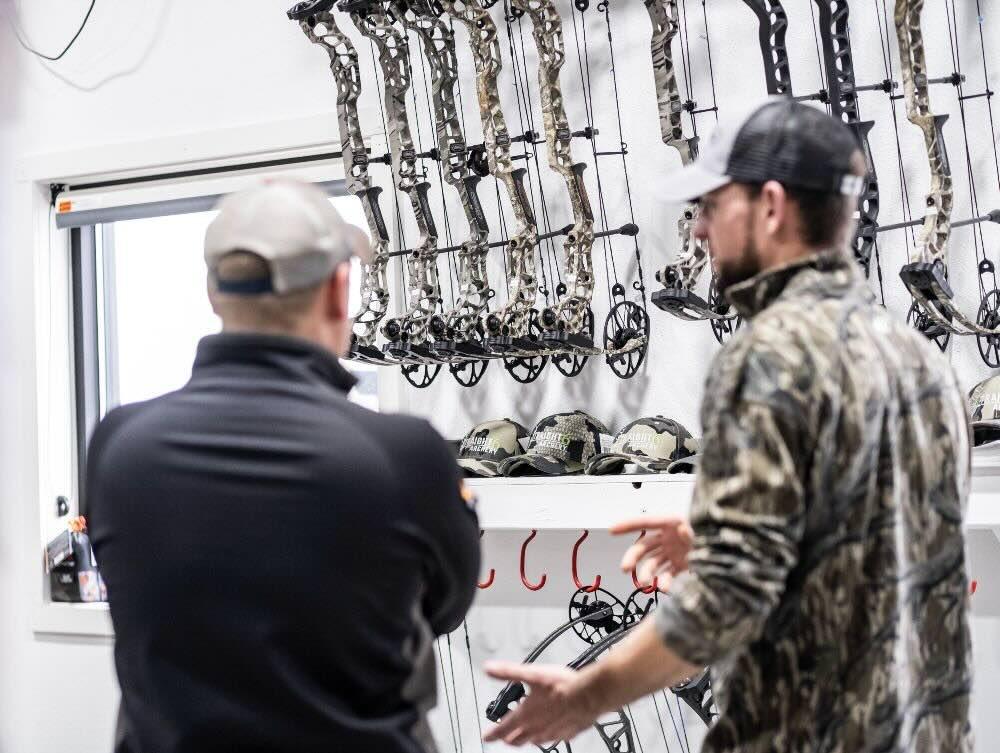
The best way to try out different models is to go into your local pro shop where professional bow dealers can assist you in testing out numerous makes and models of compounds. Trained bow technicians will make sure the draw length is fitted correctly and you’re not over bowed, meaning you are not pulling too much weight. Then, you’ll be able to try as many setups as you’d like that are within your budget.
I recommend putting at least three or four different models to the test. This will allow you to compare draw cycle, bow balance, weight, grip and overall feel. Doing so will allow you to narrow down a bow that you are happy with. And working with a pro shop will ensure you are properly set up while also getting all your questions answered about your various options.
5: Go With What Works for You
Even when you’re starting out, it is tempting to want to be like “the cool kids” and shoot what your family and friends are shooting. However, that may not be what is best for you. What model feels good to your buddy may not feel good to you. A bow or accessory that a certain bowhunting influencer recommends, you may not shoot well. It is important to make your bow and accessory selections because they work for you, not because everyone else is telling you that’s what you should use.
Following this, don’t limit yourself to specific brands or models. This is another reason why I recommend testing out multiple bows and accessories to determine what fits you well and feels good. Base your decision on what your shooting experience was and what you like. Ignore any naysayers who tell you otherwise.

6: Be Careful With Used Bows
A question that often comes up with new compound buyers is, “What about a used bow?” It seems like a good way to save money when just getting started in archery.
When I was in high school, I had the same idea. I didn’t have much money, and I was saving up for a particular new setup that I had my eye on for a while. I had been to my local pro shop multiple times, lusting over the new bows hanging on the rack. I talked to multiple bow techs about the pros and cons of the setup and even tested it out multiple times. After determining that it was the one I wanted, I continued pinching my pennies. When I finally scraped enough cash together to make the purchase of the new bow, I changed my mind and ended up buying a used model off the internet in an effort to spare some of those hard-earned dollars. However, instead of saving some extra cash to spend on better accessories, I ended up spending it on new cams, strings and cables. Because I hadn’t seen the used bow in person, I didn’t know these parts of the bow were completely shot and needed to be replaced. I would have been better off buying a brand-new model from the dealer. Dang!
Who owned the bow and how did they treat it? Was it abused in the woods? Was it ever dry-fired? Does it have the correct modules for your draw length? Are you going to have to spend more money to replace parts? If you buy a used bow on Facebook Marketplace from a private party, you really have no way of knowing the answers to these questions.
You should also factor in the time given to your local bow shop, asking them questions, and testing out their line of new bows. If you’re going to be using their services anyway, the courteous thing to do is to also support their business by purchasing a bow from them.
The minimal money you may save by buying a used model is likely not worth the headaches that can come with used bows, especially if you don’t know the owner and how they treated the bow. If you’re making your first bow purchase, I highly suggest purchasing a new compound at your local pro shop and having their technicians set it up properly. Your overall experience will be better in the end.
If you’ve decided a used compound is the way to go, then be smart and buy one from your local pro shop. They are the experts and know whether a used bow is in good shape or a lemon. Not all pro shops deal in used bows but many do.
Final Thoughts
When it comes to purchasing your first compound bow, you don’t need to spend thousands of dollars. Start by determining what your goals are, as well as a budget. Then take some time to try out a handful of models at an archery pro shop. Make sure to test several setups side by side that are properly fitted to you before making a final decision. Lastly, if you’ve been on the fence about getting a compound, don’t delay any longer. You don’t have to have the best setup to get started. Just pick something and start shooting.
Archery is a constant game of learning. Things will change as you go. Enjoy the process as you develop your skills. The sooner you start, the more you will learn. And I believe you will be glad you did.
Sidebar: The Proof is in the Pudding
Need some evidence to show you don’t need high-dollar equipment to be a successful bowhunter? Last January, while on a New Mexico mule deer rut hunt, my sister Megan slipped in on a mature buck that had bedded down after chasing does during the midafternoon. With the buck relaxed, Megan waited for the buck to stand. But with high gusts of wind and no signs of the buck rising anytime soon, she seized the opportunity to take her shot when the wind subsided for a moment. At 50 yards, a distance Megan had practiced over and over again, she settled her pin and released a perfect arrow, which passed completely through the buck’s chest.

In total, her entry-level bow setup cost less than $600, which goes to show that dollar signs and brand labels aren’t what lead to bowhunting success. Time and practice developing proficiency behind a well-tuned bow with a sharp broadhead is what results in notched archery tags.
Sidebar: 5 First-Bow Picks for 2026
The following are several bows on the market for 2026 that are great options for first-time bow purchases. Adhering to my advice, don’t simply go with one of these five bows because I listed them here. Again, go shoot several models and find what works best for you. This simply provides a springboard for you to begin the search for your first compound bow.
Bear Legit MAXX
- Draw Weight: 10-70 pounds (adjustable)
- Draw Length: 14-30 inches (adjustable)
- Bare Bow Weight: 3.8 pounds
- Axel-to-Axel Length: 31 inches
- Brace Height: 6.25 inches
- Letoff: 75%
- Fully Loaded: Yes
- MSRP: $499
- Contact: beararchery.com
Diamond Archery Infinite Edge Pro Legacy
- Draw Weight: 5-65 pounds (adjustable)
- Draw Length: 13-31 inches (adjustable)
- Bare Bow Weight: 3.3 pounds
- Axel-to-Axel Length: 31 inches
- Brace Height: 7 inches
- Letoff: 80%
- Fully Loaded: Yes
- MSRP: $379
- Contact: diamondarchery.com
Elite Terrain
- Draw Weight: 45-60, 55-70 pounds
- Draw Length: 25.5-31.5 inches (adjustable)
- Bare Bow Weight: 3.9 pounds
- Axel-to-Axel Length: 32.5 inches
- Brace Height: 7 inches
- Letoff: 85%
- Fully Loaded: No
- MSRP: $749
- Contact: elitearchery.com
Hoyt Enduro
- Draw Weight: 35-70 pounds
- Draw Length: 24-30 inches
- Bare Bow Weight: 4.65 pounds
- Axel-to-Axel Length: 30 inches
- Brace Height: 7 inches
- Letoff: 80%
- Fully Loaded: Yes
- MSRP: $899 or $999 (two packages available)
Contact: hoyt.com
Mission Range
- Draw Weight: 30-50, 50-70 pounds
- Draw Length: 22-30 inches (adjustable)
- Bare Bow Weight: 4.06 pounds
- Axel-to-Axel Length: 31 inches
- Brace Height: 7 inches
- Letoff: 80%
- Fully Loaded: No
- MSRP: $699
- Contact: missionarchery.com