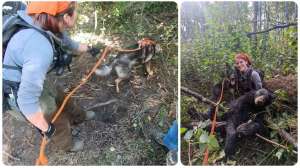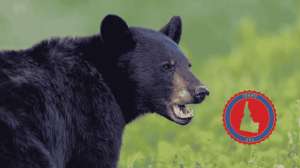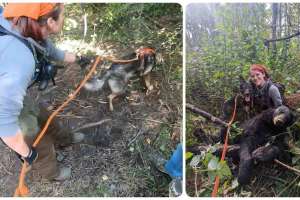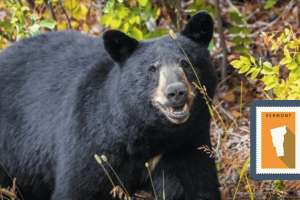

Pope and Young recently collaborated with the ongoing efforts of the Kentucky Department of Fish and Wildlife Resources to collar black bears for a research study. Pope and Young assisted with financial underwriting for expenses with the collars and study. Doug Clayton, Pope and Young’s Conservation Chair, also assisted in trapping, collaring and releasing the bears.
Money for the collaboration was raised from Pope and Young Bowhunter Bashes in Texas, Utah and Minnesota. Pope and Young used the funds to purchase radio collars to aide in the Kentucky bear study.
“We currently have a need to do some research on male bear patterns in relation to corn/crop fields in southeast Kentucky,” said Matt Catron, Kentucky DNR Regional Wildlife Biologist III. “In one area of a county that I cover, a 160-acre or so corn field had 16 bears killed legally due to destruction of property (agriculture). We would like to trap some bears causing damage in the corn, plus trap in our typical research trapping areas around there next crop season and put GPS collars on the males and release them to see their habits in relation to the agriculture around their home area.”
During September 16-18 this past year, Clayton was able to work with KDFW officials to catch and collar two female bears. A third bear was caught the day Clayton was returning home. Biologists will check several den sites in early spring to gather information on the radio-collared sows and chip any cubs.
“We’re really interested in seeing if they are local bears, just a mountain or two around the farm, or if they are traveling many miles or a couple of counties away to get to the corn,” Catron said. “This would provide valuable data that could be used for hunting season modifications or addressing concerns regarding nuisance animal harvest.
“We would be able to show them facts/maps of the bears in question to support our decisions. The last GPS data we have is from 2009, I believe, and shows a “typical” bear home range in far east Kentucky that has never seen a crop field, only woods. We have no data showing their habits, behavior and travel when they lived in an area of agriculture.”
Catron said the trapping location is where larger forests are becoming broken up due to agriculture, crop or cattle fields, or for home and business development.
“If you look at Wayne County with aerial imagery, it is split between forest/timber and open agricultural grounds,” he said. “Then the following counties going west and northwest have more open ground than forested. This data should help us get a better representation of our resident bears, and bears that are transient, being drawn in by the smell of the corn, when there is minimal food sources available at that time of year.”
Kentucky’s bear season is primarily in the eastern part of the state, which is more forested and hillier.