Loading...

Coyote

Displaying results 199-216 of 544

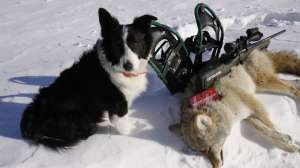
CH557 Mark Kaysers coyote dog Sage after a successful snowshoe hunt copyright Mark Kayser

Proven snow tactics for bagging more late-season coyotes

Late winter comes with numerous coyote-getting complications. Hunting educated coyotes tops the list, but one you may not have thought about with focus is snow depth. For those of you living in a snow-free zone please read along for entertainment purposes only. Yes, snow can be an issue even as days grow longer and spring begins hinting at its arrival. Why? In the majority of snowbound states the heaviest snowfalls occur in this period, ushered in by spring storms laden with precipitation yet blasted by Arctic air that excels at snowmaking. In my area of Wyoming, March and April always reign as top snow-producing months. It started early though and in late February there’s more snow on the ground than the previous winter months combined. If late-season coyote pursuits beckon you then consider defensive planning to set yourself up for success. Tire chains cut through the snow and ice. Be sure to outfit your traveling rig with all necessary possibilities for late winter travel. Remember, you can't use it if you don't have it with you. (Photo: Mark Kayser) SNOW TRAVEL Snow does one thing and it does it well. It stops access cold. Whether it’s a snowbank blocking your trail or deep snow that requires post-hole hiking, snow isn’t helpful at getting to the coyotes. At minimum make sure your vehicle has enough equipment stowed along for an easy extraction if it gets stuck. This includes a shovel, snow chains, tow rope, jumper cables, tool kit and sand to add traction to any icy spots. Your ATV should include a similar list of recovery items, plus you may want to consider swapping tires for tracks if your budget allows. I’m constantly amazed at the places a tracked ATV can go that a standard tire-equipped ATV would falter. Lastly, in the mechanized department, access to a snowmobile almost guarantees access to all snow-covered country. Some resort destinations even rent Jeeps, ATVs and snowmobiles. Check ahead as a day rental is cheaper than a fuel-eating investment. If hiking is your game then be sure to include snowshoes in your gear stash. Even in snow conditions that may only be a foot in depth snowshoes will save you thousands of calories a day. Instead of having to break your own trail you’ll be supported on top of the snow by the wider footprint of the snowshoe. Slogging through snow without snowshoes is laborious at best, but you can reduce the sweating with snowshoes. Mine just got pulled down out of the rafters again after the latest dump. Snow Tactics for Coyotes The message you send at this time of the season has a lot to do on whether the coyotes have seen more bullet testing that the shooting tunnel at the Hornady ammunition plant. One message you can’t go wrong with is coyote vocalizations. You don’t have to get fancy with your coyote vocalization calls. Simple howls work to lure coyotes into range during mating season. Start out your setup with a lone howl, repeat it several times and then sit back and wait. If nothing respond after about 30-45 minutes, move on and try again. That isn’t to say coyotes haven’t been duped by earlier hunters using howls. If your gut gives you that feeling then you may want to spice up your coyote talk. Take a look at coyote vocalizations that have a more seductive approach. Coyotes have a large library of vocalizations. If you listen to your own dog (or the neighbor’s that keeps you up all night) you can hear these various message. And although howls are heard the most, breeding-season females incorporate high-pitched yips and whines into their vocabulary. This tells neighboring males their willingness to mate. A short cadence of these whines could spike the lust in a coyote within earshot. Although coyotes fare better on snow than you and I, they still look for the path of least resistance when inches transform into feet. They also combine those travels to food-rich locations. Look for coyotes to follow any paths broken by livestock, wildlife like elk, farm tractors or windswept plains. When looking for top trails to follow consider whether they lead to food. Creek bottoms bursting with rodents, farmsteads, and borrow ditches holding a roadkill deer all have attractive qualities for coyotes during a snow event. I move closer to ranches when the snow invades because coyotes do the same. A dawn setup before ranch hands begin feeding has accounted for numerous coyotes for me over the years. There’s one bright spot even if you don’t bag a coyote in the deep snow. Spring is on its way!
Coyotes three in woods

How game cameras can improve your predator hunting success

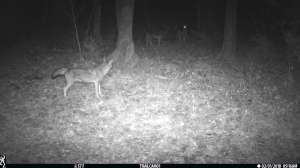
Game cameras are popular and effective tools used primarily by deer hunters, but savvy predator hunters can maximize their success by using them as your eyes in the field. Browning Trail Camera Defender 850 I got into game cameras late in the game. For years I didn't use them, partly because I didn't want to spend the money and partly because I enjoyed letting things progress naturally. Each day was like a new chapter and not knowing what I might encounter was part of the anticipation. About seven years ago, though, I put up a couple of cameras on some property I hunted. Deer were my main focus at the time and the cameras paid off. Images of whitetails visiting a mineral lick revealed does, fawns, yearlings, scrubby bucks and one trashy 12-pointer that made my toes tingle. He showed up twice in two years, both within the first two weeks of October, and never again. I don't know if he was cruising or smart, or both. But during those seasons he was always on my mind. Even better, though, were the other animals I caught on my cameras. By the time I lost access to the land (it was sold), I had eight cameras on trees in key places. Some were travel routes. One was on the mineral lick. One was on an opening. Almost all yielded photos of animals: coyotes, foxes, bobcats, raccoons, opossums and one pesky armadillo that eluded me one afternoon by diving into a hole before I could perforate him with my .22 rifle. My eyes were opened when I added game cameras to my hunting tool kit. The anticipation I once had for "whatever happens, happens" was heightened after using them. How? By being able to more effectively plan my hunting strategy: entry and exit routes, wind conditions, knowing the possibilities for sightings. Game cameras can help your predator hunting, too. Numerous options exist for game camera selections If you're new to game cameras, it can be overwhelming trying to make a selection. Today's models offer everything from simple cameras with a an off-on button to more extensive selections with HD video and images, Bluetooth capabilities and cellular versions that send images to your phone 24/7. I saw the latter in action back in 2015 on a whitetail bowhunt in Kansas. My host, John Vaca with Vista Outdoors, had some Bushnell Trophy Cam Wireless HD cameras set up in our stand locations. Vaca showed us images before we departed, at lunch before returning to our afternoon sits, and in the evening at dinner. It was cool to see what was there. I've used other models, too, including early models of the Stealth Cam G42 (they're supercharged now) and several Browning Trail Camera Recon and Spec Ops models. Primos offers some models with value prices. Spartan and Moultrie offer wireless models, as does Browning with its Defender 850 with Bluetooth and wireless. Budget considerations must be considered just as with any hunting gear. If you're just starting to use cameras, I'd suggest going with a value model at first to get your bearings and figure out if it's something you want to continue using. Knocking out a few hundred bucks for a wireless model and then deciding you don't like it wouldn't be cool. Better yet, if you have deer hunting pals with cameras ask them to show you the ropes and maybe borrow a couple of cameras to try. Then if you're on board, you could buy your own. Or maybe they're good enough friends to let you use them for several months before they get ready for deer season. Tips on using your game camera most effectively Through trial and error, and I'm still learning, a couple of mistakes to avoid with your cameras: — Know where the sun rises and sets, and don't point your cameras directly into either. You'll likely get a lot of wasted images if the sun shines directly into the camera. — Once you secure the camera on the tree or post, clear tree limbs and vegetation from in front of it. Wind can move these and trip the camera sensor. Then you'll get a bunch of wasted images. Pruning snips or a hand saw are good to create an opening. — Fresh batteries make a difference. Once my camera battery sensors show 50 percent, I put in new ones. That may not be necessary but it's just how I do it. If you want to use lithium batteries for longer life, double-check the camera's specs to make sure it can accept them. — I've used SanDisk SD cards for years because that's what I used with my Canon cameras. They're good, strong and hold up well. I've also used SD cards from Dollar General, which are less expensive and work for what I need. Each time I download my images, I format the SD card to clear off any data so it will be fresh the next time I install it in the game camera. — On property I now am hunting, I have one camera set about 6.5 feet off the ground on a tree and aimed down. The main photo (above, top) of the coyote trio is with this camera. I have two others on the property set about 4 feet off the ground. This will give me a different perspective on anything that walks in front of them. — Be sure to read the instruction manual and set the date, time and other options. Date and time are critical so you can get accurate data for your planning. Predators aren't bothered by game cameras With this new property I'm hunting, my hit list now includes a trio of coyotes that I've been watching for months. I'm still learning about the area so I wanted to use my cameras to gain some insight on what's there, their routines and how to form a hunting strategy. These three coyotes have been hanging around for months. I've found signs of their roaming elsewhere, so they're on my to-do list. The land is pretty wide open so I think setting up with a decoy and a good hide will yield positive results. These three coyotes have been hanging around together for at least several months. Surprise! A creek flowing through the property apparently is home to this slinky, cool river otter. He'll get a pass because I think he's cool.Of course, with the creek and hardwoods that means raccoons will likely be around. I have images of a few of them. This one looks like it hasn't missed any meals.This bobcat definitely was a surprise. In the few months I've had my cameras up, this is the first image of it. Between the coyotes and this bobcat, I'd have to think they're doing a number on the whitetail fawns each summer.Here's another image of one of the coyotes. One of the best things about game cameras is if you've set the date and time you can get great data on when predators are cruising through an area. Keeping track of this intel, just as deer hunters do with whitetail sightings, definitely can help you piece together the puzzle for better predator hunting.
I Stock 472333354

Why hunting coyotes near highways works

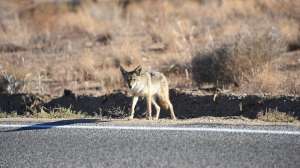
An increase of auto collisions involving deer means more roadside meals for coyotes. Here’s how you can use their meal advantage as your hunting advantage.
SW385 Checking research data online copyright Mark Kayser edit

Turning the corner on the lack of good coyote research

Have you ever tried to look up university research and studies on the behavior and lifestyle of coyotes? As a freelance writer I try to include pertinent data whenever possible. Typically I mix personal insight by experts together with research when possible. Research offers a measured examination, but for hunters a veteran’s experience may actually hold more usefulness. Studies often are conducted in non-hunting environments, refuges or in research pens. A coyote hunter with 50 years under his or her belt is gathering data in real time. That’s the world you and I hunt. That debate aside, it’s been difficult, if not impossible, to always find studies on coyotes. Until recently, few really cared about the coyote. Unlike the popular and money-making whitetail deer, coyotes were not managed. They were eradicated. Coyote management still doesn’t receive funding in state budgets, but the impact coyotes are having on big game species, like whitetail deer, has started a trickle of money toward coyote research. Why? Boots on the ground and woodsmanship may be helped by research studies, but most hunters will argue that there's no better teacher than the woods and live coyotes. (Photo: Mark Kayser) It’s in the numbers. According to the 2016 U.S. Fish and Wildlife Service National Survey of Fishing, Hunting and Wildlife-Associated Recreation, there were 9.2 million big game hunters. Most of those hunt whitetails. That compares to only 1.3 million hunters who hunt “other” stuff that includes coyotes. The cash cow of whitetail hunting attracts more research. Granted, when talking about coyote research it is a given that much of the research funding goes toward the predation impact coyotes are having on big game like whitetails. Nevertheless, some of that research does have implications for hunting. Here are several research studies and overviews that you may want to curl up with on a cold winter night. If nothing else, they give you a wider awareness of your quarry. As a disclaimer, please don’t comment back that some of these may have an anti-hunting agenda. Don’t donate; just glean helpful tips for your hunting success. For those of you hunting in and around suburbia you really need to check out the coyote research undertaken in the Chicago metropolitan area of Cook County. Referred to as the Urban Coyote Research Project, the objective is to help people understand coyotes so they can coexist in a city environment. That’s a worthy goal, but I’ve delved into this study on numerous occasions for hunting help. You’ll see where coyotes roam, their work hours, their city diet and domicile preferences, all with the help of collared, city-faring coyotes. A recent find of mine from research conducted a few years back focuses on the communication system between coyotes. This study, by Brian R. Mitchell at the Dye Creek Preserve in California, boosts confidence that you can call coyotes with the correct vocalizations. It also notes that through spectrogram deciphering barks and howls do have different messages. Plus, Mitchell also presumes coyotes can distinguish from these vocalizations individual animals in the area. Studies from the U.S. Forest Service Southern Research Station at the Savannah River Site in South Carolina demonstrate just how impactful coyotes can be in new environments. Hint, hint for those of you east of the Mississippi River experiencing increasing coyote densities. Research indicates approximately 70 percent total fawn mortality at this site. Coyotes were responsible for approximately 80 percent of these mortalities. That premise is increasing east of the Mississippi River in other locations as well. Of course declining mule deer numbers in the West have already had coyotes added to the list as a villain contender. These are just a handful of insightful research studies on coyotes that may be of interest to you. Of interest to me is the fact that every year more and more information becomes available from coyote research. Most have implications to make you and me better hunters. If you have links to other quality coyote research please share them in the comments section. WATCH: Learn how patience can help you kill more coyotes
Coyote attacks Turkey on Vimeo

Top 3 tips for taking coyotes while hunting turkeys

Springtime often means turkey hunting, but that doesn’t mean coyotes get a free pass.
Haybale 181004 100613

Is a CoyoteLight what your hunt is missing?

Author Andrew Lewand spent a hunting season with the CoyoteLight. What did he think of the product? Did it help him bag any coyotes?
TS 494282011 181004 110555

Coyote Management Success Requires Constant, Year-Round Work

Whether you're hunting or trapping for the adaptable coyote and other predators, a consistent year-round plan pays off more than a hit-and-miss approach. Hunting coyotes is a ton of fun, no doubt. I love it, although in the last few years haven't been able to do it enough. Chalk that up to the job and not taking advantage of the time I could. That's going to change, though. I have at least three coyotes on some land that I hunt and they have an appointment with some tiny, lead-tipped missles soon. Trapping also is a great form of management and a lot of fun. It takes patience, skill to build effective sets, and trappers have solid woodsmanship skills. If they don't, they either learn them or likely don't find too much fur in their traps. Mark Kayser sometimes may work a coyote for hours before getting a clean shot. Maintaining pressure on predators all year can help impact populations and benefit other wildlife, along with being great fun. One thing about coyotes is they're not going to disappear completely. Hunters and trappers can put the hammer on them and see a big decrease in the population, for sure. But eventually, because some of them roam, they'll be back. We know coyotes are pack animals and roamers. Occasionally, some of those may break away or lose one or more of their pack — possibly from trapping, hunting, natural mortality or the bumper of Uncle Fred's pickup. Some studies show that these solitary or transient coyotes move around in search of a new pack or home area. Males also roam more than females, and forage availability also impacts movements. What this means for hunters and trappers, especially those trying to help deer, turkey and small game populations, is that knocking back coyotes and predators is a year-round task. I've talked with a lot of deer hunters over the years who say they shoot five or six during the season but not in spring or summer. Predator management is, or should be, just as intense as whitetail, turkey, quail or small game management. It's all a piece of the puzzle in the bigger picture. Improving habitat, knocking back predators, setting hunting goals and then making it a year-round plan is the best way to achieve success. VIDEO: Predator Xtreme contributor Mark Kayser discusses patience while predator hunting
CH Going early for coyote success copyright Mark Kayser

The early hunter gets the coyote

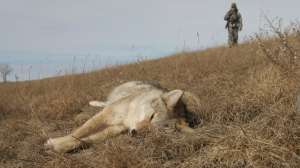
Think the best coyote hunting takes place against a snowy backdrop? Think again.

From the Readers: Don't let zombie cows ruin your coyote hunt

This coyote hunter figured out a way to clear cattle from his setups with an e-call.
I Stock 498385135

5 Reasons to Spend Your Summer Creating a New Hunter

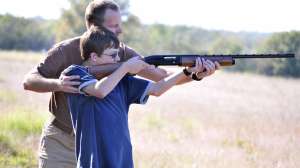
Hunters are responsible for creating new hunters. With kids out of school, now is the perfect time to teach them how to hunt.
Koby edited 1

From the Readers: His First Coyote

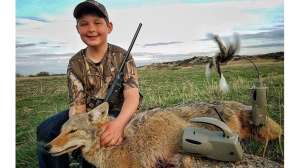
The author’s son bagged his first coyote on a family hunting trip in South Dakota.
Road Trip Background 2

Taking a Western Road Trip for Coyotes

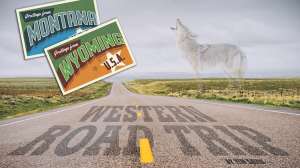
Predator Xtreme cartoonist leaves the gun-restricting borders of Chicago to run wild and free while chasing coyotes out West.
CH458 Coyote decoying frame 2 copyright Mark Kayser4

Video: Doggin' With Levi, Beyond the Thrill

It might be fun, but is it effective? Discussing hunting coyotes with dogs

The Benefits of Taking the Dog for a Walk

You’ve likely been for a hike with your dog and been spotted by coyotes — even if you don’t know. Learn how to spot the pesky predators.

4 Tips to Get Permission For Spring Predator Hunts

Spring is upon us whether you’re ready or not. Be ready, and start asking farmers for permission to help with their coyote problems for a win-win this spring.

How Does The Fur Market Look Right Now?

If you have fur sitting around and you’re waiting to sell, now could be the right time to make some extra money.
I Stock 139742845

Two Coyotes Crash a Dude’s Basement, Caught Chilling Out On a Fake Tree

This Michigan couple awoke in the middle of the night thinking someone (or something) had broken into their home. They weren’t wrong.