
Earlier this year, Grand View Outdoors published an article about Russian President Vladimir Putin’s nearly decade-long courtship of American hunters and gun owners. The story also covered the July 16 arrest of Russian operative and gun rights activist Maria Butina.
Today, Butina plead guilty to, “conspiring with a senior Russian official to infiltrate the conservative movement in the United States as an agent for the Kremlin from 2015 until her arrest in July.”
At the time of Butina’s arrest, Bloomberg.com reported the woman, “tried to create a quiet line of communication between U.S. and Russian officials and attempted to infiltrate the National Rifle Association (NRA) on behalf of the Russian government in a long-running scheme that traces its origins to at least 2013, prosecutors said.”
During the federal court hearing, Butina, 30, confirmed she had targeted South Dakota GOP advisor Paul Erickson. The two met in 2013 in Moscow, which preceded a romantic relationship. She also confirmed creating ties with other Americans with the intent of influencing U.S. politics in ways that would benefit Russia. These relationships included ties with NRA officials, conservative leaders and 2016 presidential candidates.
These admissions were made as part of a plea deal, which grants Butina less prison time.
Butina, a Russian student attending American University in Washington, D.C., presented herself as a gun-rights advocate who hoped to relax gun laws in Russia where citizens are allowed to own shotguns, but not handguns. She communicated freely on Twitter direct messages, and it didn't appear she exercised any real degree of caution when texting. This wasn't really the stuff of spies.
During the time of her arrest, questions about Butina and other Russian operatives emerged. These people are different. They don't fit the mold of what most consider a spy or agent. Perhaps she's innocent and was only looking to create friendships with others who shared similar views, just as we all do?
“Is it possible that these are just well-meaning people who are reaching out to Americans with shared interests? It is possible,” said retired CIA operative Steven L. Hall in an interview with the Washington Post. Hall retired from the CIA in 2015 after managing Russia operations for 30 years. “Is it likely? I don’t think it’s likely at all ... My assessment is that it’s definitely part of something bigger.”

Yet, on Tuesday, Putin addressed Butina’s case at a meeting of a Kremlin council in Moscow. According to the Post, he said, “I asked all the heads of our intelligence services what is happening, ‘Who is she?’ No one knows a thing about her.”
Once it appeared Butina would cooperate and a plea deal would be reached, House Democrats began to consider taking a deeper look into ties between the NRA and Russia. “Some Democrats say they specifically want to examine whether the Russians may have laundered money through the NRA to President Trump and other candidates during the presidential election,” according to an article published by The Hill, a leftist, Capitol Hill publication. “They pointed to analysis that the NRA surpassed its spending during the 2016 race by nearly $100 million compared to previous years.”
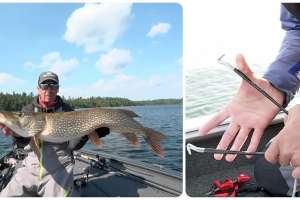
Butina’s work is the latest in a series of Russian-backed campaigns designed to appeal to American hunters, gun owners and rural Americans. In 2011 Putin granted an unlikely, exclusive interview to Outdoor Life blogger and Texas writer Gayne C. Young, which resulted in a lengthy feature story for the magazine. In 2013, images of Putin fishing were distributed by the Kremlin and were widely circulated by U.S. social media users, many of whom were hunters and anglers. In the images, the Russian President landed a huge pike wearing SITKA Gear, one of America’s popular camo brands.
These seemingly small overtures, including Butina's recent embrace of America's gun culture, are similar in style to a well-executed, but harmless public relations campaign. Yet, today was marked by the Russian student's admission of guilt. The relationships cultivated by Butina were revealed to be conspiracies instead, with intent to infiltrate the conservative movement.
Butina faces up to five years in prison, followed by deportation. She has been jailed since her arrest in July.