
When I began my bowhunting journey after finishing college, I had no idea regarding the magnitude of the sport’s highs and lows.
I remember that it didn’t take me long to get the hang of shooting my new compound. I wasn’t a complete newbie because I’d played around with a recurve as a kid and it was fun, but nothing like this. All the bells and whistles available made shooting a compound a breeze. To say I was addicted was an understatement; I shot my bow every day and sometimes twice a day.
At the time, I was single and had a good job, so my budget for archery equipment was, well, let’s just say not restricted. As with most new bowhunters, I was searching for any and all the information I could find. I devoured every magazine I could get my hands on and spent hours each week watching hunting shows on TV or VHS. Yes, I said VHS, funny enough I still have most of the original videotapes I bought almost 20 years ago.
My Path to Panic
A few things were evident by this point: I loved shooting my bow, and bowhunting was all I could think about. That said, I didn’t really know whether my shooting technique was solid.
I managed to develop some decent group sizes early on and attributed those positive results to the number of arrows I was shooting every day. However, I wasn’t very consistent.
It was about 4 years after I’d bought my first compound that I started to develop some serious anticipation issues while shooting. I didn’t know I was suffering from target panic, but as I look back now, it was the beginning of my trials with the dreaded affliction.
At the time I had no idea what I was going through, and I sure didn’t know what I needed to do to fix my anxiety issues. I had found what I considered my home pro shop, and after a few months of being too embarrassed to ask for help, I finally developed the courage to ask the pro shop owner if he could help me. I didn’t know how much Bruce McCune, the shop owner, knew about coaching, but I was starting to get to the point where my anticipation issue went from every few shots to every shot.
Here were my symptoms: My sight pins started on the left of the target and quickly moved toward the right. When I thought the pin was about in the center, I hammered the trigger on the release with some serious authority. My shots looked like a full-on drive-by, and I don’t think my pins ever hovered over the center of the bull’s-eye; I never gave them a chance to do so.
Road to Recovery
After my initial lesson with Bruce, I honestly wasn’t too impressed. He had me shooting 5 yards from the target, and Bruce basically spent the entire hour teaching me what he called “10 steps to the 10 ring.” It was a 10-step shot sequence that he covered step by step, and had me say the steps out loud as I performed each one.
I walked away from the lesson thinking I just wasted $40. Not wanting to quit after just one session, however, I took a few more lessons with Bruce, and we got a little more in-depth with release execution and yes, more shot routine practice. After my sessions with Bruce, I focused a lot on blind-baling during my own shooting time, just like we did during my lessons. I embraced the time spent up-close shooting at a target because I knew that overcoming target panic would take time and dedication.
I honestly didn’t know how valuable those archery lessons were until many years later when I had target panic come roaring back. It was then that I started using a hinge release (and blind-baling) to try and fix my issue. I’d already experienced so many wonderful and exciting in-the-field moments that I was determined to not let this mental issue get the better of me.
When I started using a hinge release for the first time, I was so nervous I was going to punch myself in the face that I was hyper-focused on each step of my shot sequence. I made sure each step was completed properly before moving on to the next one, and before I knew it, I was shooting arrows with no anxiety at all. I was able to focus on proper structure to develop new good habits that allowed me to execute a shot, no matter the target or situation. The combination of the right tool and the right approach was what it took for me to overcome my target panic.
Does Practice Make Perfect?
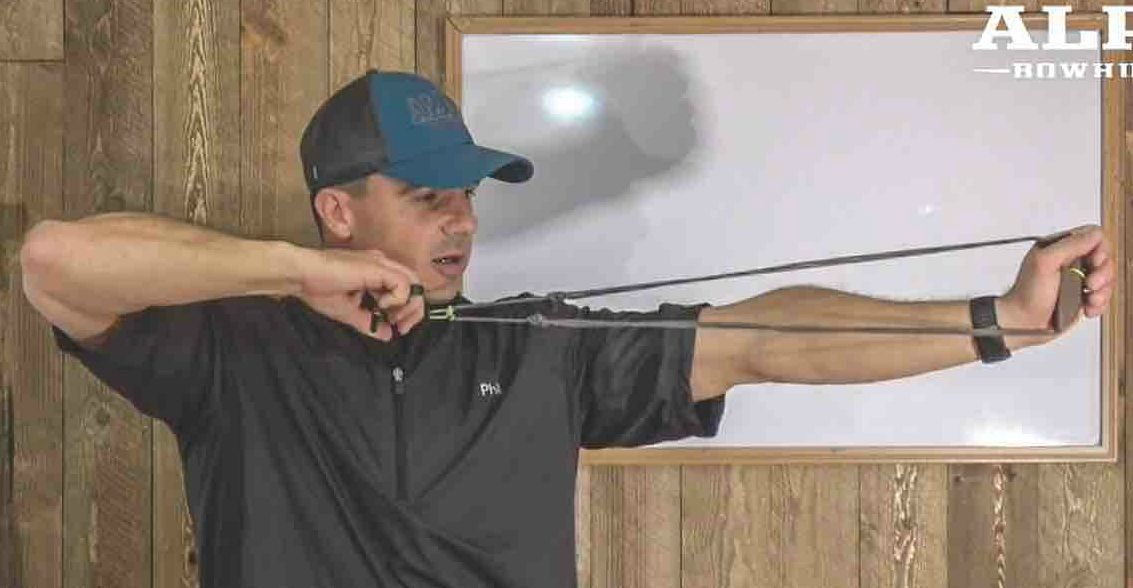
Many bowhunters have the notion that all their practice is meant for them to develop muscle memory so when they are placed in a high-pressure situation, they can rely on their practiced habits to carry them through the execution portion of the shot. They sometimes say, “I just go on autopilot and shoot.”
Well, the theory of trusting your process is good in many respects, but that approach is often flawed due to poor coaching. Allow me to explain.
Practicing an activity such as archery is similar to other disciplines like martial arts. If you simply practice a lot, you will get better, but if your practice has no structure or consistency, then you are essentially setting yourself up for failure. When you encounter a high-pressure situation such as those you experience on a bowhunt, and you rely on poor practice to carry you through, then you have no idea how to react when the variables start to unfold. Your autopilot is built on a glitched system, and you’ll fail to stay in control when it matters most.
On the other hand, if you have a well-established shot routine, with good form and proper body alignment, and your practice is centered around understanding that each step in your process is as critical as the one before and after it, then you will be more likely to stay engaged and in control during the moment of truth. Your autopilot will give you a sense of confidence because you have built your archery foundation from the bottom up.
No matter where the variables occur along the way, you have developed such good habits and have a true understanding of your entire process that you simply pause while things evolve and continue as the situation allows. When you’ve practiced properly, you’ll experience no mental disconnects and no sense of uncertainty.

Help Is Available
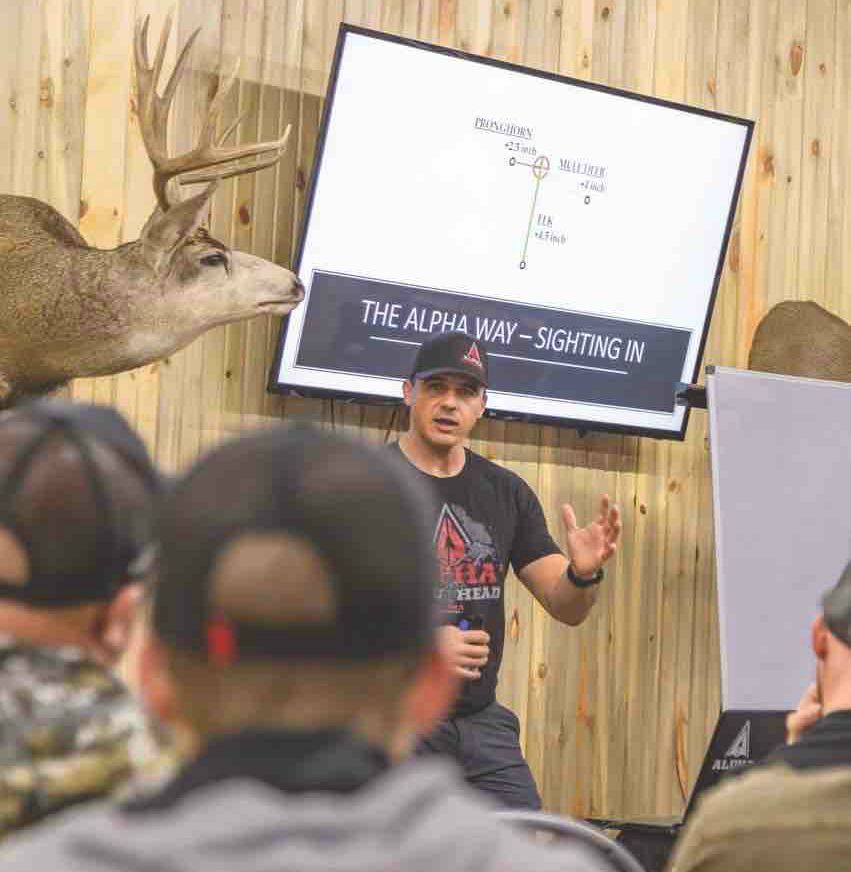
If you’re currently dealing with target panic and/or buck fever, I want to help find your roadmap to overcoming it. Not every bowhunter will have the same level of target panic, and not every shooter will have the same symptoms, and not every archer will have the same process to overcoming these issues. I truly feel that both target panic and buck fever are closely related; they are a result of becoming disengaged to the structure or process that every bowhunter should rely on. A good archery foundation is even more important than owning topnotch equipment.
After dealing with target panic and some occasional buck fever moments during my early years as a bowhunter, I found my recipe for staying in control of my shot process. In fact, I was able to continue my growth as an archer and even became a very competitive 3-D shooter on the ASA circuit from 2009 to 2014. Since then I’ve focused on running my No Limits archery pro shop in Denver, Colorado, and I’ve made a commitment to helping bowhunters become more successful both in the woods and in the competitive archery world.
I’ve also built an online coaching platform with resources to help bowhunters understand how to implement structure and how to eliminate variables, both of which are critical factors when dealing with high-pressure shooting situations. You can find out more about our online video courses at www.alphabowhunting.com.
I also have a book tilted Targeting Buck Fever; check it out by clicking here.
I’m optimistic that you will get to experience the outdoors for all it has to offer, and I hope your upcoming bowhunts end with notched tags and a heavy pack. As always, dream big and shoot straight!